
Your shopping cart is empty!
Welcome visitor you can login or create an account.
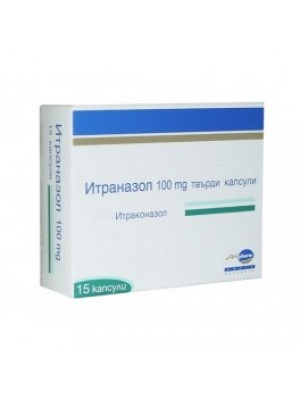
Itranazol 100mg. 15 capsules

Product viewed: 2088


WHAT IS ITRANAZOL AND WHAT IS IT USED FOR?
Itranazol belongs to a group of medicines called antimycotics (antifungal medicines) for systemic use.
Itranol is indicated for the short-term treatment of:
• infections caused by fungi / yeasts of the genus Candida: vulvo-vaginal candidiasis (inflammation of the vagina and / or the external genitalia of the female); Oral candidiasis (acute or chronic inflammation of the lining of the mouth or parts thereof); tinea versicolor (appearance of round or oval scaly patches of light yellow to dark brown color), dermatophytosis / dermatomycosis (superficial skin infections of the skin, hair and nails), fungal keratitis (fungal infection of the cornea of the eye).
• and continuous treatment of: onychomycosis caused by dermatophytes and / or yeast (fungal infection of the nails); Systemic mycoses such as aspergillosis (infections of tissues and organs caused by fungus of the genus Aspergillus) and candidiasis; Cryptococcosis (including cryptococcal meningitis - yeast infections affecting the lung, brain, skin and bones); Histoplasmosis (a fungal infection caused by Histoplasma capsulatum, which usually affects the lungs); Sporothycosis (fungal disease that primarily affects the skin, mucous membranes, lymphatic system); Paracoccidioidomycosis (systemic mycoses with development of benign self-limiting pulmonary lesions); Blastomycosis (fungal infection caused by blastomycitins, which usually affects the lungs); Other, less common systemic and tropical mycoses.
2. BEFORE YOU TAKE ITRANAZOL
Do not take Itranol:
• if you are allergic to the active substance and / or to any of the listed excipients
• if you are pregnant (only if your doctor thinks that the expected effect of itraconazole is greater than the potential risk to the fetus).
• If you are of childbearing age and can become pregnant, it is imperative to take effective contraceptive measures throughout treatment to ensure that they will not get pregnant. You should continue to use contraception until the next menstrual cycle after discontinuation of Itranazol.
• If you are breast-feeding (talk to your doctor before taking Itranazol) Itranol is present in breast milk and should not be used during breast-feeding.
• If you are taking astemizole, bepridil, dofetilide Levatsetilmetadol, mizolastine, nisoldipine, pimozide, sertindole, terfenadine, quinidine, cisapride, ergot alkaloids like dihydroergotamine, ergotamine, ergometrine, methylergometrine some statins such as lovastatin and simvastatin, and in patients receiving Oral forms of Triazolam and Midazolam.
Take special care with Itranazol
• if you have a liver disease, it may be necessary to adjust the dosage
• Tell your doctor if during the course of treatment with itranazole notice any of the following symptoms: loss of appetite, nausea, fatigue, abdominal pain or very dark colored urine. If you need to take Itranol over a period of more than 1 month, your doctor may have your blood tests checked regularly. This is done in order to establish early onset of hepatic impairment, as such lesions may occur, albeit very rarely.
• if you suffer from heart disease, tell your doctor. If he / she decides to prescribe Itranazol, he / she should inform you of the possible symptoms that could possibly occur.
• Tell your doctor if you suffer from kidney disease. It may be necessary to change the dosage of Itranazol.
Taking other medicines
Tell your doctor or pharmacist if you are taking or have recently taken any other medicines.
Tell your doctor or pharmacist about the medicines you are currently taking. Some medicines should not be taken with Itranazol at the same time; Or, in some cases, its concurrent administration with certain medicines requires a dose adjustment.
Itranazol can not be taken at the same time with the following medicines:
• Some medicines to treat allergies, mainly Terfenadine, Astemizole and Mizolastine
• Some medicines for the treatment of angina pectoris and hypertension, namely Bepridil and Nisoldipine
• Cisapride - a medicine used in some diseases of the digestive system
• Some cholesterol-lowering medicines such as Simvastatin and Lovastatin
• Some sleeping medicines such as Midazolam and Triazolam
• Pimozide and sertindole - medicines to treat psychotic disorders
• Levocetyl methadol - a medicine used to treat opioid dependence
• ergot alkaloids such as dihydroergotamine, ergotamine, ergometrine, methylergometrine used to treat migraines and obstetrics.
• Some medicines used to treat heart rhythm disorders, mainly Quinidine and Dofetilide
Some medicines can greatly reduce the effects of Itranazol. This is especially important for some medicines used to treat epilepsy (eg carbamazepine, phenytoin and phenobarbital) and some anti-tuberculosis medicines (eg rifampicin, rifabutin and isoniazid). Therefore, you should always inform your doctor if you are taking any of these medicines in order to be able to take adequate measures. Combining Itranazol with certain medicines may require adjustment of its or their dosage. Examples include:
• Some antibiotics, e.g. Clarithromycin and Erythromycin
• Some medicines acting on the heart or blood vessels (Digoxin and some calcium channel blockers (also known as calcium antagonists))
• Medicines that inhibit blood clotting
• Methylprednisolone, which is administered orally or intravenously to treat inflammatory processes
• Ciclosporin, Tacrolimus and Rapamycin (also called Sirolimus), which are usually administered after organ transplants
• Some HIV-protease inhibitors used to treat AIDS such as Ritonavir, Indinavir and Saquinavir
• Some medicines used to treat malignant tumors
• Some medicines used to treat anxious or sleeping conditions, mainly Buspirone, Alprazolam and Brotizolam
• Ebastin - an anti-allergic drug
• Reboxetine - a medicine used to treat depression
In order for the received dose of Itranazol to be absorbed and resp. Absorbed by your body, acidity in your stomach is high. Therefore, medicines that neutralize stomach acidity should not be taken earlier than 2 hours after taking Itranazol. For the same reason, if you are taking medicines that suppress the secretion of hydrochloric acid in your stomach, you need to take Itranazol with a beverage car.
If you have any doubts, contact your doctor or pharmacist for advice.
Take Itranazol with food and drink
Do not take Itranazol with food and immediately after one of the main meals.
If you are taking medicines that control stomach acidity, it is advisable to take Itranazol with a beverage car. Accepting alcoholic beverages is not recommended.
Pregnancy
Ask your doctor or pharmacist for advice before taking any medicines. Do not take Itranazol if you are pregnant. If you are at fertile (childbearing) age, you should take appropriate contraceptive measures to avoid becoming pregnant during treatment with Itranazol. Because Itranazol is present in your body for some time after you have stopped taking it, you should continue with contraceptive measures until the next menstrual period after stopping taking Itranazol.
Breastfeeding
Itranazole is present in breast milk and should not be used during breast-feeding, unless your doctor has decided otherwise.
Use in children
Itranazol should not be used in children. It may be prescribed by your doctor only in exceptional cases.
Driving and using machines
Itranol did not affect the ability to drive or use machines. Very rarely, however, you may experience nausea, as in these cases it is not advisable to drive or operate machines.
3. HOW TO TAKE ITRANAZOL?
The dosage and duration of treatment is determined by your doctor. Take the medicine as directed below if your doctor has not prescribed another dosing regimen.
Do not forget to take your medicine.
Your doctor should determine the duration of your treatment with Itranazol.
Do not stop your treatment prematurely, as you will not be completely cured.
If you have the impression that the effect of Itranazol is too pronounced or vice versa - too weak, talk to your doctor or pharmacist.
You should take Itranazol just after one of the main meals as it is best absorbed. Take the capsules with some water. The number of capsules you should take and the length of your treatment depend on the type of fungus and the location of the infection. Your doctor will tell you exactly what dose you should take.
The most frequent doses are:
TYPE INFECTION NUMBER OF CAPSULES PER DAY DURATION
Vaginal infection 2 capsules twice a day or 2 capsules once a day
One day
3 days
Skin infection 2 capsules once a day or 1 capsule once a day
7 days
2 weeks
If the skin of your palms or feet is thickened and there is a build up of a pearl substance, you may need to administer the medicine at a dose of 2 capsules twice a day for 7 days or at a dose of 1 capsule once a day for 1 month.
Infection of the oral cavity 1 capsule once daily for 2 weeks
Eye infections 2 capsules once daily 3 weeks
Internal infections Higher doses Longer period of treatment
In onychomycosis (fungal infection of the nails), in
Pulse treatment of fungal infections of the nails (see Table below): Pulse treatment consists of applying two capsules twice a day for one week; Followed by a three-week period during which Itranazol was not taken. Subsequently, the cycle is repeated once if only your fingernails are affected or twice for the toenails (with or without nails) (see attached table).
Localization-
Tion
A week
1 2 3 4 5 6 7 8 9 10
Nails
on the legs
With or without affecting the nails of the hands. Take 2 capsules twice a day
Without treatment with Itranazol
Taking 2 capsules-
Twice daily No treatment with Itra-
Sol taken 2 capsules twice a day Pre-
Stano-
Vete heche-
N-
Here it is
Only Nail-
Hands on the hands Take 2 capsules-
Twice a day
No treatment
With Itra-
Sol
Take 2 capsules twice a day
Without treatment with Itranazol
Continuous treatment for fungal infections of the nails:
TYPE INFECTION
NUMBER OF CAPSULES PER DAY CONTINUED
Prolonged treatment of fungal infections of nails 2 capsules once a day
3 months
In skin infections, injuries disappear a few weeks after the end of treatment. This is characteristic of the skin patches caused by the fungus: the drug kills the fungus, but the damaged area does not disappear until the skin is refreshed.
Nail injuries disappear 6 to 9 months after cessation of treatment because the drug only kills the fungus. The claw must grow completely and it takes a few months. So do not worry if you do not notice an improvement during treatment: the drug stays in your nails for several months and gradually releases them from the fungal infection. Therefore, you should stop treatment when your doctor decides, although you do not see any improvement. Infections of the internal organs: They may require higher doses for a longer period of treatment.
Always follow the instructions of your doctor as he will treat your treatment with your individual condition.
If you take more than the necessary dose of Itranazol
If you take more Itraconazole than you should, tell your doctor immediately. He will assess and eventually take the necessary action.
In case of sudden overdose, support measures are applied.
During the first hour after ingestion a gastric lavage may be performed. There is no specific antidote.
If you forget to take Itranazol
Do not take a double dose to make up for a missed dose. Resume the prescribed route as soon as possible.
4. POSSIBLE SIDE EFFECTS
Like all medicines, ITRANAZOL may exhibit side effects.
During treatment with Itranol, the following symptoms may occur: stomach discomfort, nausea, abdominal pain and constipation. In addition, headaches, menstrual disorders, weakness or hair loss may occur.
Hypersensitivity to Itranazol is very rare. It may appear as skin rashes, itching, wheezing or swelling of the face. If you notice such symptoms, discontinue treatment and contact your doctor. Very rarely, limb stiffness or severe skin lesions occur. If you experience such an effect, stop taking Itranol and contact your doctor.
Tell your doctor immediately if you experience wheezing, unexpected increase in body weight, swelling of your legs or abdomen, abnormal fatigue or early insomnia.
One or more of the following symptoms associated with hepatic impairment may be observed, although extremely rare: lack of appetite, nausea, vomiting, fatigue, abdominal pain, yellowish skin coloration, dark urine and pale (similar) Of the human) stools. In such cases, immediately stop the treatment and contact a doctor.
If you notice any side effects not listed here, please consult your doctor or pharmacist.
5. STORAGE OF ITRANAZOL
Store below 30 ° C.
Keep out of the reach and sight of children!
Do not use after the expiry date stated on the pack. The expiry date refers to the last day of that month.
Medicines should not be disposed of via wastewater or household waste. Ask your pharmacist how to dispose of your unnecessary medicines. These measures will help to protect the environment.
6. ADDITIONAL INFORMATION
What does ITRANAZOL contain?
- The active substance is itraconazole. Each hard capsule contains 100 mg of itraconazole.
- The excipients are: sucrose, maize starch poloxamer 188 hypromellose.
The hard capsules are composed of: gelatin purified water indigo carmine E132 quinoline yellow E104 titanium dioxide E171
What does Itraconazole look like and contents of the pack
Itranazole is available in the form of hard capsules with opaque green color.
Packed in a blister of 4 and / or 5 capsules.
One pack contains 4 capsules (1 blister) and / or 15 capsules (3 blisters).
Write a review
Your Name:Your Review: Note: HTML is not translated!
Rating: Bad Good
Enter the code in the box below:
Related Products
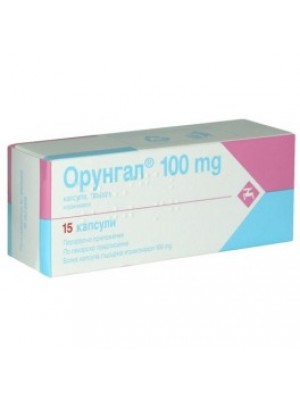
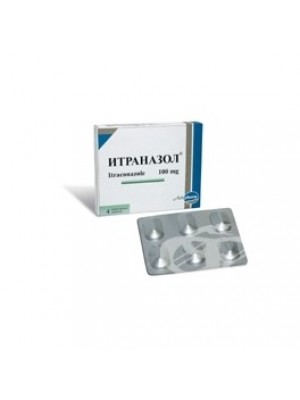
ITRANAZOLE. 100 mg. 15 capsules WHAT ITRANAZOLE 100 mg hard..
79.00€
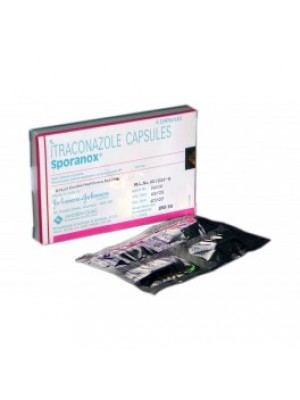
ORUNGAL 100 mg. 4 capsules JANSSEN - CILAG What is ORUNGAL..
29.00€