
Your shopping cart is empty!
Welcome visitor you can login or create an account.
HYDROCORTISONE 5ml.
Product Code: HYDROCORTISONE 5ml.
Availability: In Stock

Product viewed: 1508


HYDROCORTISONE 5ml.
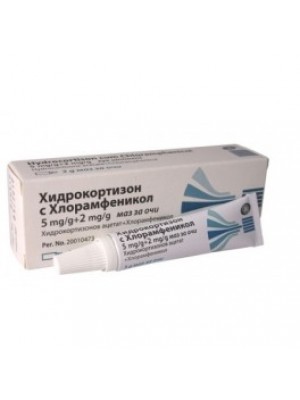
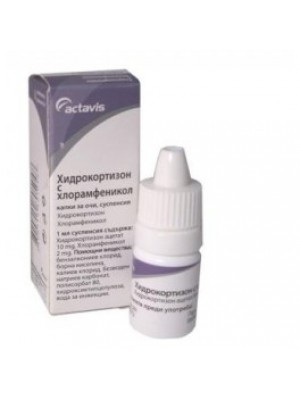
Hydrocortisone with Chloramphenicol 5 ml, eye drops, suspension
Active substances in 1 ml suspension Hydrocortisone with Chloramphenicol: Hydrocortisone acetate 10.0 mg Chloramphenicol 2.0 mg
Excipients: benzalkonium chloride, boric acid, potassium chloride, anhydrous sodium carbonate, polysorbate 80, hydroxyethylcellulose, water for injections.
Hydrocortisone in Chloramphenicol eye drops, suspension comes in vials of 5 ml, fitted with a dropper.
1. WHAT hydrocortisone chloramphenicol AND WHAT IT IS USED?
Hydrocortisone in Chloramphenicol eye drops combined medicinal product containing anti-infectious component - broad spectrum antibiotic, Chloramphenicol and anti-inflammatory component - synthetic corticosteroid hydrocortisone. Chloramphenicol destroying a large number of infectious agents by inhibiting the production of proteins in their cells and thus favorably affect eye infections. Hydrocortisone anti-inflammatory, anti-allergic and antioedematous. Inhibits the inflammatory reaction of the body against agents of mechanical, chemical or immunological nature.
Hydrocortisone with Chloramphenicol eye drops used in superficial inflammatory and allergic disorders of the eyelids, conjunctiva, cornea and anterior segment when recommended for use of a corticosteroid and is present or likely to develop a bacterial infection caused by sensitive to chloramphenicol microorganisms.
2. WHAT YOU NEED TO KNOW BEFORE hydrocortisone chloramphenicol
Hydrocortisone in Chloramphenicol does not apply to:
• allergy to any of the active or the excipients;
• corneal ulcers;
• herpes simplex corneal viral diseases of cornea and conjunctiva;
• eye infections caused by mycobacteria;
• trachoma (a chronic inflammatory disease of the conjunctiva and cornea caused by
chlamydia);
• diseases of ocular structures, caused by fungal pathogens;
• suppressed bone marrow function (myelopathy, aplastic anemia);
• Children under 3 years of age.
In the application of this product, please note the following:
Prolonged use of corticosteroids may increase intraocular pressure (glaucoma), causing damage to the optic nerve defects
field of vision and reduction in visual acuity, and lead to the emergence of reverse podkapsulna cataracts (eye cataracts). It therefore needs regular monitoring of intraocular pressure.
Prolonged use can suppress the protective response of the body and thus increase the risk of development of secondary ocular infections.
Diseases which cause thinning of the cornea or sclera is possible
use of topical steroids cause perforations.
Acute suppurative inflammations of the eye is possible to mask steroids or strengthen existing infection.
Prolonged "use can cause the development of resistant organisms, including fungi. In case of superinfection should be initiated appropriate therapy.
During treatment with this product is recommended not to wear contact lenses.
Use of Hydrocortisone with Chloramphenicol and intake of foods and drinks:
No evidence of the need for special diets or restrictions on certain types of foods and beverages during treatment with this product.
pregnancy
Before intake of any medicine, consult your doctor or pharmacist.
No evidence of fetal harm in pregnant women but recommended the product be administered only if clearly needed and after careful consideration of the benefit / risk ratio.
breastfeeding
Before intake of any medicine, consult your doctor or pharmacist.
Not recommended during breastfeeding, as due to imperfect infant metabolism possible accumulation of chloramphenicol and hence damage to bone marrow function.
Driving and using machines
Due to blurred vision and decreased; visual acuity immediately for use, ability to drive or operate machinery may be temporarily affected.
Important information about some of the ingredients Hydrocortisone in Chloramphenicol This product contains benzalkonium chlorine as an excipient, which can cause allergic reactions and discoloration soft "lenses. Due to the content of boric acid preparation should not be used in children under 3 years of age.
Taking other medicines:
Please tell your doctor or pharmacist if you are taking or have recently taken any other medicines, even if they have not been prescribed by your doctor.
The solutions of chloramphenicol are incompatible with erythromycin, tetracycline and polymyxin B.
Co-administration of anticholinergic agents (atropine) may lead to increased intraocular pressure.
In concomitant treatment with medicines that suppress hematopoietic function, can enhance bone marrow injurious effect of chloramphenicol.
3. HOW TO USE hydrocortisone chloramphenicol?
Always use Hydrocortisone in Chloramphenicol eye drops as instructed by your doctor.
For topical ocular administration.
The dose and duration of treatment is determined by the attending physician.
Is typically administered 1-2 drops in the affected eye (s), 4 to 6 times a day, depending on the severity of the disease. In more severe disease - the first 48-72
hours the dose may be increased to 2 drops in the affected eye (s) every 2 hours until improvement and gradually decrease the dosage for the improvement of the clinical symptoms. Should not be applied more than two drops once.
A better day to use eye drops, and at night - eye ointment.
Treatment continued until resolution of signs of the disease (average 5-7 days), but not more than 14 days.
Children: The safety and efficacy in children under three years has not been established.
Directions:
The eye drops are applied as follows:
- Shake vigorously before dispensing. vial.
- Tilt your head back.
- Place your finger on the cheek just below the eye and gently pull the lower eyelid down.
- In formations thus "pocket" Dispense been prescribed amount of eye drops
The vial dropper should not touch the eye!
- Look down before closing the eye.
If you have the impression that the effect of the application of Hydrocortisone with Chloramphenicol is strong or too weak, talk to your doctor or pharmacist.
If you used a higher dose of Hydrocortisone with Chloramphenicol prescribed.
When taking a higher dose than prescribed immediately contact a doctor!
In just following the instructions for use of the product, there was no overdose and toxicity topical administration.
Expressed clinical symptoms of overdose with Hydrocortisone Chloramphenicol eye drops are similar to side effects: redness, tearing, itching and swelling of the eyelid.
If symptoms of overdose, immediately contact a doctor!
If you forget to use Hydrocortisone with Chloramphenicol
If you miss a dose, use the product in the next regular intake without increasing the dose.
4. POSSIBLE SIDE EFFECTS
Like any other medicine Hydrocortisone in Chloramphenicol eye drops can cause side effects.
Adverse reactions associated with the action of the combination product with Hydrocortisone Chloramphenicol eye drops may be due to the antimicrobial component, the steroid compound or the action of the combination itself.
The most common adverse reactions associated with local ophthalmic use of chloramphenicol are: development of allergic reactions and the emergence of ocular irritation, manifested by itching, eyelid swelling and redness of the conjunctiva. Very rarely possible bone marrow depression and aplastic anemia (strong decrease in the number of blood cells from all lines due to repressed their production in the bone marrow), which is independent of dose. Adverse reactions that may be due to the steroid component (hydro-cortisone) are: possible increased intraocular pressure, glaucoma, in very rare cases, combined with damage to the optic nerve, forming a rear subcapsular cataract (eye cataracts) and delayed healing of eye wounds. Cases of perforation when corticosteroids are administered in diseases leading to a thinning of the cornea and sclera.
With continued use possible lens opacities and development of superficial keratitis.
Secondary infection, due to the use of combination drug products containing steroid and antimicrobial component, the development of secondary infection. The eyes treated with topical corticosteroids long are prone to further occurrence of fungal infections of the cornea. It is possible that the secondary infection is the result of suppressed protective reaction of the organism.
If you notice any side effects not listed in this leaflet, please tell your doctor or pharmacist.
5. Storage
Keep out of reach of children!
At temperatures below 25 ° C.
Do not freeze!
Shelf life after first opening: 28 days at temperatures below 25 ° C.
Shelf life: three (3) years from date of manufacture.
Do not use after the expiry date stated on the package!
Write a review
Your Name:Your Review: Note: HTML is not translated!
Rating: Bad Good
Enter the code in the box below:
Related Products
CHLORAMPHENICOL eye drops 5 ml.WHAT hydrocortisone chloramph..
14.00€