Your shopping cart is empty!
Welcome visitor you can login or create an account.
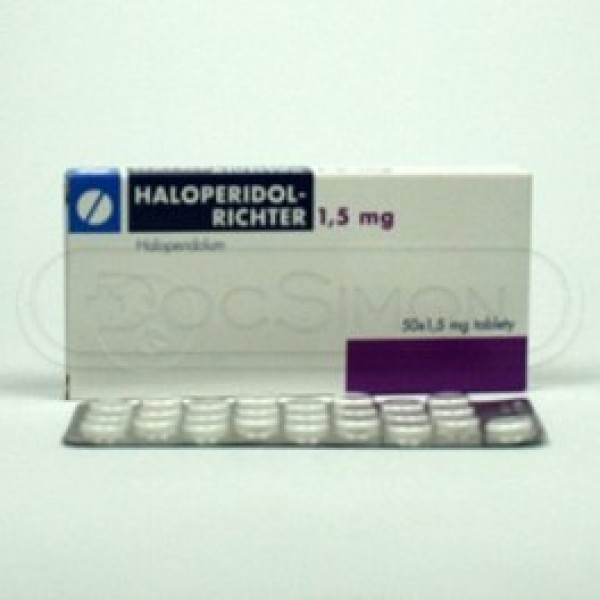
Haloperidol 1.5 mg. 50 tablets
Product Code: Haloperidol 1.5 mg. 50 tablets
Availability: In Stock
Product viewed: 1049


Haloperidol 1.5 mg. 50 tablets
What is Haloperidol-Richter and what is it used?
Haloperidol Richter contains a medicine called "Hal operas dol." It belongs to a group of medicines called "antipsychotics".
Haloperidol-Richter used for diseases that affect thinking, emotions and behaviors.
Following these diseases a person can have the following states: confusion, seeing, hearing or feeling things that are not there (hallucinations), believe in false things (illusions), feeling particularly suspicious (paranoia), agitation, severe agitation, enthusiasm or hyperactivity, aggression or strong desire for violence.
Haloperidol-Richter also be used in:
Syndrome of Gilles de la Tourette (Gilles de la Tourette) and uncontrollable movements (tics) hiccups that would not stop.
2. What you need to know before taking Haloperidol-Richter?
Do not use Haloperidol-Richter:
- If you are allergic to the active substance or to any of the other ingredients of this medicine (listed in section 6). An allergic reaction may be recognized as a rash itching, swelling of the face or lips, or shortness of breath.
- If you suffer or have suffered from certain types of heart disease as a result of which the heart beats with abnormal rhythm (arrhythmia) or unusually slow, if you are taking medicines that affect the heart rhythm.
- If your doctor told you that you have too low levels of potassium in your blood; If you suffer from Parkinson's disease.
- If your doctor told you that you have a disease that affects the part of your brain called the "basal ganglia".
- If you are not fully oriented in the things around you, or if your reactions are delayed.
Do not take this medicine if any of the above apply to you. If you are not sure, talk to your doctor or pharmacist before using Haloperidol-Richter.
Warnings and Precautions
Take Haloperidol-Richter with caution if you are elderly as you may be more sensitive to the effects of Haloperidol-Richter.
You or your relative have had blood clots, as this medication as it related to blood clots.
Consult your doctor or pharmacist before taking haloperidol, if:
- You have a heart problem or if someone in your immediate family has died suddenly due to heart problems
- You have ever had bleeding in the brain or if your doctor has told you that you are more prone than others to stroke
- The levels of minerals (electrolytes) in your blood is lower than normal feeding disturbance in a long time you have problems with your liver or kidneys
- Suffer from epilepsy or have had seizures (convulsions), as you may need additional medicine to control them
- Suffer from depression
- Have thyroid problems
- Suffer from pheochromocytoma (non-cancerous tumor in the adrenal gland).
You may need to be monitored / and more strictly, and to change the dose of Haloperidol-Richter taking. If you are not sure if any of the above applies to you, talk to your doctor or pharmacist before taking Haloperidol-Richter.
Medical examinations
Your doctor may decide to make your electrocardiogram (ECG) before and during treatment with Haloperidol-Richter. ECG measures the heart.
Blood tests
Your doctor may decide to check the level of minerals (electrolytes) in your blood. Other lskarstva and Haloperidol-Richter
Tell your doctor if you are taking, have recently taken or might take any other medicines
Mozh may need special monitoring if you are taking both lithium and haloperidol-Richter tablets.
Immediately tell your doctor and stop taking the two drugs if you experience: unexplained fever or uncontrollable movements confusion, disorientation, headache, balance problems and drowsiness. These are signs of a serious medical condition.
Haloperidol may affect the action of the following types of drugs:
Tell your doctor if you are taking medicines for:
- Calming or a sleep (tranquillizers) pain (strong painkillers)
- Depression, eg. "Tricyclic antidepressants" and "tetracyclic antidepressants" diseases that affect thinking, emotions and behavior (antipsychotics or neuroleptics)
- Lowering the blood pressure, for example. guanethidine, methyldopa
- Changes in heart rate or those that influence
- Parkinson's disease, e. levodopa
- Dilution of the blood, e. phenindione
- Severe allergic reactions, eg. adrenaline
- Coughs and colds
- Epilepsy.
If you are taking any of these medicines, talk to your doctor before taking Haloperidol-Richter.
Some medicines may affect the action of haloperidol:
Tell your doctor if you are taking medication for depression, for example. fluoxetine and paroxetine anxiety, e. buspirone malaria, e. quinine and mefloquine
- Heart rhythm problems, eg. quinidine, disopyramide and procainamide, amiodarone, sotalol and dofetilide
- Epilepsy, for example. phenobarbital and carbamazepine
- Allergies, eg. terfanadin
- Serious infections, eg. rifampicin
- Lowering the blood pressure, for example. water tablets (diuretics) infections, eg. sparfloxacin, moxifloxacin, sritromitsin intravenous
- A fungal infection, for example. ketoconazole. It is possible that your doctor may change your dose of Haloperidol-Richter. Haloperidol Richter with food, drinks and alcohol
You can take Haloperidol-Richter with or without food. Swallow the tablets with water. Alcohol
If you drink alcohol while taking Haloperidol-Richter may feel tired or decreased concentration. This means that you should be careful how much alcohol you consume.
Pregnancy, lactation and fertility
If you are pregnant or breast-feeding, think you may be pregnant or planning to become pregnant, ask your doctor or pharmacist before taking this medicine.
The following symptoms may occur in newborn babies or their mothers when they received Haloperidol-Richter in the last trimester (last three months of pregnancy): shaking, stiffness and / or muscle weakness, drowsiness, nervous agitation, breathing problems and difficulty in meal. If your child gets any of these symptoms, you may need to contact your doctor.
However, if your doctor considers it necessary, you can take Haloperidol-Richter.
If you are breastfeeding, do not take this medicine because small amounts of it can fall into the milk.
If you are pregnant or nursing, consult your doctor or pharmacist. Elderly
If you have a disorder associated with loss of memory, you must first talk to your doctor who will decide whether you can take Haloperidol-Richter will explain what are the possible risks of use.
Driving and using machines
This medicine may affect your ability to drive. Do not drive or use tools or machines before checking with your doctor.
One tablet Haloperidol-Richter contains 157 mg of lactose.
If your doctor has told you that you have an intolerance to some sugars, you should talk to him before taking this medicine.
3. How to take Haloperidol-Richter?
Always use this medicine exactly as prescribed by your doctor. If you are not sure, ask your doctor or pharmacist.
If you think the effect of haloperidol is too strong or too weak, talk to your doctor or pharmacist.
How much you should take
Your doctor will tell you how much of Haloperidol-Richter should take and over what period of time. Your doctor will adjust the dose so as to be suitable for you. It is very important that you take the right amount. Your dose depends on: your age
the severity of your symptoms presence of other medical problems your reaction to similar medicines in the past
Adults
Your starting dose is usually between 1,5 mg and 5 mg. Will take two or three times daily.
It is possible that your doctor to reduce the dose of Haloperidol-Richter, once it occurs improvement in your symptoms.
Use in children
The dose in children depends on their weight.
Usually, children receive a dose of between 0,025 and 0,05 mg per kg per day.
One half of the dose is administered in the morning and the other half - in the evening. Children can take a maximum of 10 mg daily.
Use in adults
Typically elderly starting with a lower dose.
Subsequently, the dose of Haloperidol-Richter you take is adjusted until it is established what is most appropriate for you.
Taking Haloperidol-Richter
Haloperidol Richter should be taken orally. The tablets should be swallowed with water.
When to stop taking Haloperidol-Richter
Take this medicine as long as your doctor tells you. It may take some time before you experience the effects of the drug.
Stopping the Haloperidol-Richter should be gradual, unless your doctor has told you otherwise. With abrupt discontinuation of treatment may occur as side effects
nausea or vomiting trouble sleeping Always follow the instructions of your doctor.
If you take more dose haloperidol-Richter
If you take a dose of the drug more than prescribed, or if another person has accepted a dose of Haloperidol-Richter, immediately contact your doctor or go to the nearest emergency department.
If you forget to take Haloperidol-Richter
Do not take a double dose to make up the missed dose.
If you miss a dose, take the next dose at the usual time. Then continue to take the medicine as prescribed by your doctor.
If you have any further questions on the use of this medicine, ask your doctor or pharmacist.
4. Possible side effects
Like all medicines, this medicine can cause side effects, although not everybody gets them.
Side effects may occur with certain frequencies, and according to responses are defined as follows:
Very common: may affect more than I to 10 people Common: may affect up to 1 in 10 people Uncommon: may affect up to 1 in 100 people Rare: may affect less than 1 in 000. I very Rare: may affect up to 1 in 10 000 Not known: from the available data can not be estimated.
Immediately tell your doctor or nurse if you notice or any of the following as you may need urgent treatment.
Blood clots in the veins especially in the legs (symptoms are swelling, pain or redness in the leg), which may travel through blood vessels to the lungs causing chest pain and difficulty breathing.
Sudden swelling of the face or throat. Urticaria (also known as hives), severe inflammation, redness or blistering of the skin. These may be signs of a severe allergic reaction. This happens only in a small number of people.
Serious problem, known as "neuroleptic malignant syndrome". The signs may include:
- Rapid heartbeat, change in blood pressure and sweating, then fever
- Shortness of breath, muscle cramps, decreased consciousness and coma elevated levels of protein in the blood (an enzyme called creatine phosphokinase) This may occur in less than 1 in 1000 people
May have an irregular heart rhythm (arrhythmia). Arrhythmia can cause cessation of heartbeat (cardiac arrest). In adults with dementia taking antipsychotics, reported a slight increase in mortality compared with those who do not accept psychotics. It is not known the exact frequency with which this happens. Involuntary movements and problems such as delayed reactions, stiff muscles, tremors and anxiety. Increased salivation, shudder or abnormal movements of the tongue, face, mouth, or throat, eye-rolling. If any of these effects may need to be given you an additional medicine.
Tell your doctor or nurse if you notice or suspect any of the following:
Very common:
Twitter or difficulty sleeping headache
Common:
- Tremors, stiffness in posture, masked facies, slow movements and unbalanced, shuffled
- Anxiety, depression or depression, drowsiness, vertigo or dizziness, especially when standing
- Symptoms of psychosis, e. unusual thoughts or seeing or hearing unusual things
- Vision problems, including blurred vision, rapid eye movement
Uncommon:
- Liver problems, including yellowing of the skin and eyes, lightening
- Stools and dark urine
- Confusion
- A decrease in the number of white blood cells, which can cause frequent infections or seizures (convulsions), shortness of breath or wheezing hormonal changes that can cause, changes in weight
- Sexual difficulties, e. erectile dysfunction in some men have breast enlargement or painful and prolonged erection
- Some people lose their desire for sex
- Some women menstruation became irregular, painful or accompanied by severe bleeding, or completely lacking in some women suddenly appeared breast or chest pain
Rare:
- Inability to open the mouth
Not known:
the available data can not be estimated
Easier than usual bleeding or bruising. This may be due to a decrease in the number of small cells, called platelets.
Fluid retention, which affects the brain and leads to weakness, fatigue or confusion. Other side effects
Common
- Rash
- Slow movements dry mouth nausea, vomiting, constipation
- Difficulty in urination Uncommon
- Skin sensitivity to light increased sweating fever swelling of the ankles
The following adverse reactions have been reported, although their exact frequency can be determined and are therefore classified as effects of unknown frequency:
- Flaking or peeling of the skin
- Inflammation of the skin (red, hot and painful to the touch), low body temperature
- In newborns of mothers who received haloperidol-Richter in the last trimester (last three months of pregnancy): shaking, stiff muscles, drowsiness, nervous agitation, breathing problems, and difficulty in feeding. If your child gets any of these symptoms, you may need to contact your doctor.
Results of research:
Abnormal results of liver function tests, low blood sugar (hypoglycemia)
Abnormal results of studies tracking cardiac function (electrocardiogram or ECG)
If you get any side effects, tell your doctor or pharmacist. This includes any possible effects not listed in this leaflet.
5. How to store Haloperidol-Richter?
This medicinal product does not require any special storage conditions
Write a review
Your Name:Your Review: Note: HTML is not translated!
Rating: Bad Good
Enter the code in the box below:
Related Products