Your shopping cart is empty!
Welcome visitor you can login or create an account.
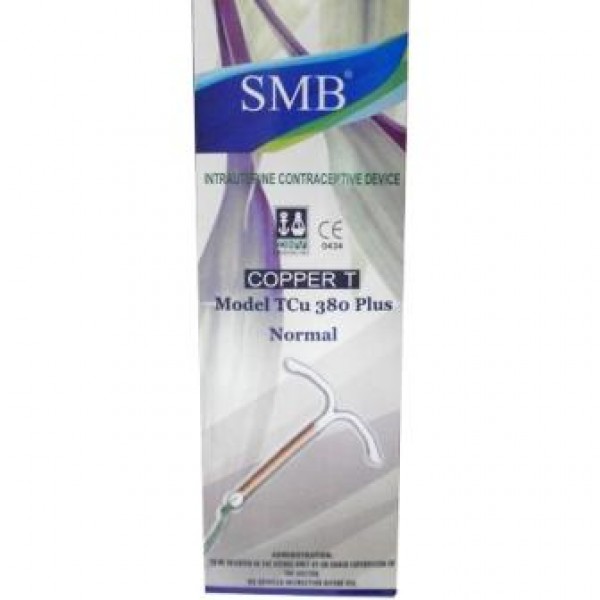
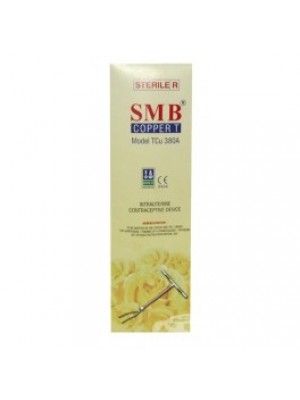
GYNECOLOGICAL Coppert T Cu 380 A
Product Code: GYNECOLOGICAL Coppert T Cu 380 A
Availability: In Stock
Product viewed: 989


The intrauterine spiral does not protect against sexually transmitted diseases / incl. and AIDS.
Instructions for use:
The TCu 380A intrauterine coil should only be inserted and removed from or under the supervision / training of a gynecologist / physician.
General information:
Approximately 176 mg of copper filament is wound in each intrauterine spiral and additionally each of the two spiral arms is clad in a 66.5 mg copper sleeve. The total copper surface is 380 mm² +/- 23 mm².
Parts of the intrauterine spiral:
Copper sleeves;
Horizontal arms;
Vertical arm;
Copper thread;
Threads;
Limiter;
Applicator tube;
Piston.
Indications
TCu 380A intrauterine spiral for pregnancy prevention in women of childbearing age.
Dimensions:
Vertical width: 36 +/- 0.5 mm;
Horizontal width: 32 +/- 0.5 mm;
Approximate measurement range with probe: 6 - 9 cm.
The information above is for guidance only. The final decision on choosing the right model should be made by a gynecologist / doctor.
The TCu 380A intrauterine spiral is recommended for women who:
are of childbearing age;
have a monogamous relationship;
did not suffer from pelvic inflammatory disease;
have decided not to use hormonal contraceptives.
The TCu 380A intrauterine spiral should NOT be placed on a woman who:
is pregnant or has a suspected pregnancy;
there is still another intrauterine coil inserted;
suffers or is suspected of suffering from a malignant disease of the genital tract, including undiagnosed vaginal bleeding or abnormal results of a cytoplasm, or severe uterine abnormalities;
has had postpartum endometritis or infection following an abortion in the last three months;
suffers from Wilson's disease or has an allergy to honey;
there is genital actinomycosis.
The TCu 380A intrauterine coil should not be the first choice for contraception in women who:
have a painful or long monthly cycle;
have severe anemia;
have cervical stenosis or narrowing of the cervical canal;
have no access to a health facility for follow-up;
have suffered an ectopic pregnancy.
Shelf life: Seven years.
Nuclear magnetic resonance imaging
According to the literature, a NMR of up to 1.5 Tesla in women with a copper intrauterine coil is not affected, and the coil does not affect the result of the NMR study.
Placement time
The TCu 380A intrauterine coil can be inserted at any time of the monthly cycle, provided that the woman is not pregnant and has been using an effective contraceptive continuously since her last menstrual cycle. Many clinicians prefer to put it within seven days of the onset of menstruation, because the opening of the cervical canal is slightly widened at this time. This makes it easier to place, and a possible pregnancy is almost impossible. Putting a spiral during this period in many cases leads to less discomfort, cramps and secretion.
The TCu 380A intrauterine coil can be inserted immediately after sweeping or abortion without complication in the first trimester of pregnancy. The practitioner should ensure that there is sufficient time for consultation and appropriate screening.
Recommended placement method
Clarification of the procedure for the client. This helps him relax, making placement easier and less painful.
Prevention of infection, which involves the use of highly disinfected tools, sterile gloves and cleansing of the cervix with a water-based antiseptic such as chlorhexidine gluconate or iodophore (eg, Betadine). This minimizes the risk of uterine infections after spiral placement using a contactless technique.
Speculative examination and gynecological examination with both hands. The speculum is checked for signs of genital tract infection. The manual examination with both hands aims to determine the size, position, condition and mobility of the uterus and to identify possible soreness. The folded uterus requires special care during the placement of the spiral. Using the vaginal speculum, the cervix is detected. The neck and vaginal walls are cleaned with a sterile cotton swab soaked in an antiseptic solution. The secret is completely wiped from the outer opening of the neck.
Examine the uterus with a probe, slowly and carefully, to determine its depth and direction. This reduces the risk of uterine perforation, which is usually caused because the probe or intrauterine coil has reached too deep or at an incorrect angle.
Careful and slow handling during all phases of the probe study and the placement of the spiral. This reduces the inconvenience for the client and reduces the likelihood of uterine perforation, rupture of the cervix and other complications.
Placing the spiral high in the uterus (which means at the bottom). This minimizes the likelihood of ejection, unintended pregnancy or bleeding.
Follow the instructions
Fitting procedure
1. Clean the cervix with antiseptic.
2. Hold the anterior lip of the cervix deep enough with a single-tooth tenaculum to allow the cervical axis to straighten down evenly, without risk of rupture of the cervix. To avoid reflex contraction that causes the uterus to contract while working with the tenaculum, local anesthesia in the anterior lip may be injected or a paracervical block may be administered.
3. Carefully push the loaded applicator through the cervical canal until the restraint rests on the neck. The folded shoulders are in contact with the uterus.
4. Hold the plunger stationary and pull the applicator tube to the thumb position at the end of the plunger to release the shoulders of the T-shaped part.
5. Carefully push the applicator tube upwards to the uterine base until slight resistance is felt. Then the T-shaped part is close to the bottom.
6. Pull out the plunger while keeping the applicator tube stationary. Carefully pull the applicator tube with a swivel. Cut the threads so that they fit only 2-3 cm into the vagina.
7. Remove the tonakulum and ask the woman to get out of the chair slowly (if dizzy, put her to rest for 5-10 minutes) and instruct her how and when to check the threads. Ask her if she has any questions, and ask her for a follow-up review and what to do, and who to ask for help if she needs to.
Contraindications:
Pregnancy;
Acute pelvic inflammatory disease or pelvic inflammatory disease;
Sexually transmitted diseases, including genital tract infections such as gonorrhea or chlamydia;
High risk of sexually transmitted diseases in women whose relationships are not monogamous or those whose partner is non-monogamous;
Presence or suspicion of a malignant disease of the genital tract, including undiagnosed dysfunctional uterine bleeding;
Congenital uterine anomaly;
Untreated acute cervicitis or vaginitis, including bacterial vaginosis - until infection is controlled;
Conditions associated with increased susceptibility to infections with microorganisms. These include, but are not limited to, leukemia, Acquired Immune Deficiency Syndrome (AIDS) and intravenous drug abuse;
Small uterine cavity;
In order to avoid burns / perforations, therapy and diathermy are considered contraindicated, especially if applied to the pelvis;
Patients with uterine fibroids.
Unwanted reactions
The following side effects and side effects are common in intrauterine spirals and may occur after insertion. Visit your doctor in any of the following situations:
Pregnancy while the spiral is inside the uterus, or when it has been partially or completely ejected;
Bleeding or spotting between monthly cycles;
Missing or delayed monthly cycle;
Heavy or prolonged monthly cycle;
Painful monthly cycle;
Anemia;
Pain or cramps during or after placement;
Vaginal secretion and infection;
Back pains;
Leg pain and tenderness;
Skin allergic reaction caused by intrauterine copper copper.
Warnings:
Ectopic pregnancy
If a woman becomes pregnant with a spiral inserted, there is a possibility of an ectopic pregnancy (a fertilized egg that has not secured inside the uterus but, for example, in the fallopian tube), which needs to be established.
Pelvic infection
Although pelvic inflammatory disease is rare in women who use an intrauterine spiral, the risk is relatively higher than with other forms of contraception or without any contraception. This disease usually occurs within 20 days after the spiral is inserted. Therefore, it is important to treat any woman who presents with signs or symptoms of pelvic inflammatory disease in a timely manner.
Discard
Sometimes the intrauterine spiral is pushed from the uterus to the vagina during a heavy menstrual cycle, as the uterus remains slightly open during this period. Failure to do so may result in unwanted pregnancy.
Perforation
Rarely, partial or total perforation of the uterine wall or cervix may occur during insertion, although it may be established at a later stage. There have also been cases of spontaneous relocation. However, if perforation is obtained, the removal of TCu 380A should be carried out without delay. The use of an intrauterine spiral in nursing mothers increases the risk of uterine perforation.
The rate of ejection or perforation of the uterus may increase when the insertion of the spiral occurs before the normal retraction of the uterus after birth or abortion. The administration of T 380A should not be made earlier than six weeks after birth or after an abortion. If the uterus is very delayed, wait 12 weeks. In case of difficult insertion and / or extreme pain or bleeding during or after insertion, a medical examination and ultrasound should be performed immediately to exclude
Table 1: Perforation cases per 1000 placements for the entire study group, broken down by breastfeeding indicator and placement time by birth (at delivery).
Breastfeeding at the time of placement Do not breastfeed at the time of placement
Placement ≤ 36 weeks after birth 5.6
(95% CI 3.9 - 7.9;
n = 6047 Placements) 1.7
(95% CI 0.8 - 3.1;
n = 5927 Placements)
Placement> 36 weeks after birth 1.6
(95% CI 0.0 - 9.1;
n = 608 positions) 0.7
(95% CI 0.5-1.1;
n = 401910 Placements)
Revision 08. Date: 07/17/2015
References:
Heineman and the team. Risk of uterine perforation with levonorgestrel-release and copper-coated intrauterine spirals in the European Surveillance Study of Intrauterine Contraceptives, Contraception 2015; 91: 274-279
The risk of perforation may be increased in women with abnormal uterine abnormalities or a fixed recessed uterus.
Perforation may result in perforation of or penetration into the wall of the uterus or cervix, although perforation may not be immediately apparent. This can lead to pregnancy. The TCu 380A intrauterine coil should be located and removed. The late detection of perforation can lead to migration of the spirals outside the uterine cavity, adhesions, peritonitis, bowel perforation, bowel obstruction, abscesses and erosion of adjacent internal organs.
Nonsteroidal anti-inflammatory drugs
The use of non-steroidal anti-inflammatory drugs (including ASA, naproxen and ibuprofen) reduce the efficacy of all intrauterine spirals (as recommended by the WHO).
Removal
Remove the TCu 380A with surgical forceps by gently pulling open threads. The shoulders of the intrauterine spiral will fold up while the T-shaped portion is removed from the uterus.
Sometimes partial penetration or adhesion of the intrauterine helix into the myometrium may make it difficult to remove it. Surgical removal of the helix may be necessary.
Darkening of copper
The copper-silver filament of the spiral can be discolored in its sterile packaging. This is not a cause for concern. Copper darkens as air passes through the sterile pack of the spiral. This results in the formation of a thin oxide or sulfide layer on the surface. The packaging must be permeable in order for the intrauterine coil to be sterilized. If the package is not damaged and the expiry date stated on it does not expire, the spiral will be sterile even if there is a darkening of copper. Laboratory studies have shown that darkening does not affect the safety or efficacy of the intrauterine spiral.
Reuse
Do not reuse the spiral. This can cause infections in the lower abdomen, leading to the risk of infertility.
Write a review
Your Name:Your Review: Note: HTML is not translated!
Rating: Bad Good
Enter the code in the box below:
Related Products
SPIRAL MIRENA intrauteralna - SCHERING PLOUGH What is Miren..
199.00€