Your shopping cart is empty!
Welcome visitor you can login or create an account.
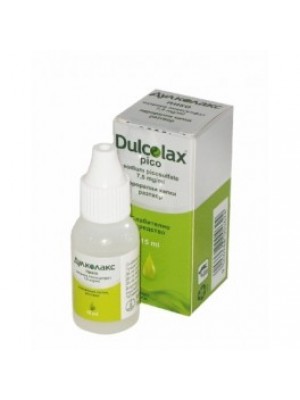
GUTTALAX 7.5 mg. / Ml. 15 ml.
Product Code: GUTTALAX 7.5 mg. / Ml. 15 ml.
Availability: In Stock

Product viewed: 1243


GUTTALAX 7.5 mg. / Ml. 15 ml.
Qualitative and quantitative composition:
1 ml (= 15 drops) contains 7,5 mg sodium picosulfate
3. Pharmaceutical form:
Oral drops, solution
4. Clinical data:
4.1. Indications:
It is used for constipation and in conditions which require ulesnyavyane defecation.
4.2. Dosage and method of administration:
Unless otherwise prescribed by the doctor following dosages are recommended:
Oral drops, solution 7.5 ma / 1 ml (= 15 drops)
Adults and children over 12 years: 10-20 drops (5 -10 mg)
Children 4-12 years: 5-10 drops (2.5 to 5 mg)
For children 2 to 4 years, the recommended dose is 250 mcg / kg, ie 1/2 drop / kg body weight. Eg. when the child's weight 10 kg, the recommended dose is 5 drops (2.5 mg).
Children under 2 years old. - Does not apply.
Guttalax should be taken at night to produce a bowel movement the next morning.
4.3. Contraindications:
Guttalax is contraindicated in patients with ileus, acute surgical abdomen, such as acute appendicitis, acute inflammatory bowel diseases and severe dehydration.
Guttalax is also contraindicated in patients with hypersensitivity to sodium picosulphate or any component of the formulation.
4.4. Special warnings and special precautions for use:
Guttalax should be taken daily for a long period of time.
Recommended before use of Guttalax and other laxatives prior to clarify the cause of constipation.
Prolonged or application in large doses can lead to fluid imbalance in fluid and electrolyte balance and hypokalemia, and to accelerate the recurrence of constipation.
Children should not take Guttalax only prescription in those age groups.
C Patients intolerant Sodium methylparahydroxybenzoate and 70% sorbitol solution should not use Guttalax, due to the presence of these ingredients as excipients in the medicinal product.
4.5. Interactions:
If adopted by larger doses Guttalax, particularly in concomitant use of diuretics and or adrenocorticosteroids, can increase the risk of electrolyte imbalance.
Electrolyte abnormalities can cause increased sensitivity to cardiac glycosides.
There is a possibility of simultaneous administration of broad-spectrum antibiotics to reduce laxative action Guttalax.
4.6. Pregnancy and lactation:
When used during pregnancy continued observations revealed no evidence of undesirable or damaging effects. However, during pregnancy Guttalax use should be limited only by prescription.
Not recommended intake of Guttalax of nursing mothers.
4.7. Effects on ability to drive and use machines:
There are no known effects of Guttalax on ability to drive and use machines.
4.8. Undesirable effects:
Adverse reactions are rare and are expressed manifestations of abdominal discomfort and diarrhea.
4.9. Overdose:
Symptoms
If you are taking high doses, can be observed watery stools (diarrhea), elastic abdominal pain, significant alterations of fluid and electrolyte balance of the body and hypokalemia. For administration of higher doses than recommended for routine response of constipation have been reported cases of ischemia the mucosa of the colon. It is known that laxatives in overdosage cause chronic diarrhea, abdominal pain, hypokalemia, secondary hyperaldosteronism and kidney stones. In connection with the chronic abuse of laxatives were also described renal tubular damage, metabolic alkalosis and muscle weakness secondary to hypokalaemia after.
Therapy
Shortly after the adoption of the high dose, the absorption may be reduced or prevented by inducing vomiting or gastric lavage. If necessary, carry out fluid intake and correction fluid elektropitniya imbalance and use of antispasmodics.
5. Pharmacological properties:
5.1. Pharmacodynamic properties:
The active ingredient of Guttalax - sodium picosulphate is locally acting laxative substance from triarylmethane group, which after bacterial cleavage in the colon to the diphenol, stimulates mucosa of the large bowel, causing peristaltic motion of the colon.
5.2. Pharmacokinetic properties:
After oral administration sodium picosulphate the colon without significant absorption in the digestive system. As a result, avoiding the enterohepatic circulation. After its bacterial degradation in the colon forms the active current form, free diphenol, which is virtually irritant colonic motility. As a result, the onset of action is between the 6th-12th hour, which is determined by the release of the active substance of the preparation diphenol. After the adoption of Guttalax availability in tissues of the body is minimal. This is confirmed by the low urinary excretion after oral administration.
There is no link between the laxative effect and plasma levels of the active diphenol.
5.3. Toxicology
Acute toxicity Sodium picosulphate been investigated in mice, rats and rabbits. The data show that the acute toxicity was> 17 (mice)> 16 (rat) and> 6g / kg (rabbits), respectively. Major signs of toxicity in mice and rats were polydipsia, piloerection, and diarrhea. Of all tested species, rabbits were the most insensitive.
In studies lasting up to 6 months of sub-chronic and chronic toxicity of Sodium picosulphate in rats and dogs found that doses in excess of more than 1000 times the human therapeutic cause diarrhea and weight loss. In subsequent high doses were observed isolated cases of atrophy of the gastric mucosa. Changes related to treatment were caused by chronic intestinal irritation associated with cachexia. All toxic side effects were reversible. Picosulphate sodium did not affect heart rate, blood pressure and breathing in awake animals and animals under anesthesia. Sodium picosulphate showed no mutagenic effects. No chronic bioassay for carcinogenic activity.
Sodium picosulphate was studied for effects on fertility / segment I (treatment before mating - to implantation), teratogenicity / segment II (administered during organogenesis) and peri- and postnatal development / segment III (treatment late gestation phase, during lactation in rats and rabbits (only segment II). The selected dosage levels were 1, 10 and 100mg / kg body weight. The toxic with respect to the mother, the doses causing diarrhea were associated with embryotoxicity (increased early resorptions) without
cause teratogenic effects or adverse effects on reproduction of offspring
6. Pharmaceutical particulars:
6.1. List of excipients and their amounts:
100 ml contains:
Sodium methyl parahydroxybenzoate 0,206 g
Sorbitol solution 70% 64,375 g Hydrochloric acid 38% to adjust to pH 6,5-7,5 ca. 0,122 g
purified water 50,047 g
6.2. Incompatibilities:
He is known.
6.3. Stability:
The expiry date of Guttalax is 48 months from date of manufacture. Do not apply after the expiration date printed on the package.
Write a review
Your Name:Your Review: Note: HTML is not translated!
Rating: Bad Good
Enter the code in the box below:
Related Products
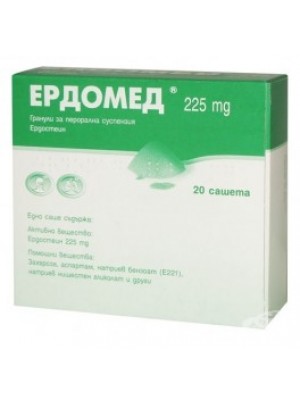
ERDOMED sachets 225 mg. 20 sachets Qualitative and quantitat..
18.00€