
Your shopping cart is empty!
Welcome visitor you can login or create an account.
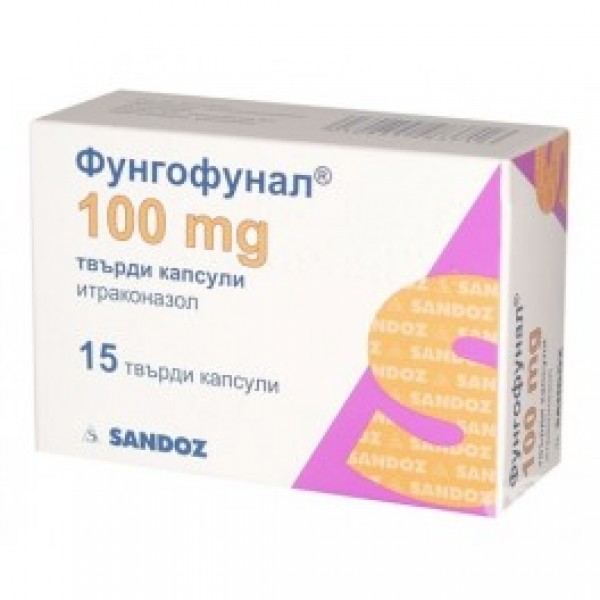
FUNGOFUNAL caps. 100 mg. 15 caps
Product Code: FUNGOFUNAL caps. 100 mg. 15 caps
Availability: In Stock
Product viewed: 855


FUNGOFUNAL caps. 100 mg. 15 caps

FUNGOFUNAL WHAT IS AND WHAT IT IS USED
Fungofunal belongs to a group of medicines called antifungals.
Fungofunal used in cases of:
Superficial fungal infections if external treatment is not effective or appropriate.
These include fungal infections:
Skin
Tinea versicolor. This is a fungal infection of the skin, which flakes are formed after grooming. Affected parts of the skin are paler or darker than normal skin.
Fungal infections of the mucous membranes and / or internal organs caused by certain types of fungus.
WHAT YOU SHOULD KNOW BEFORE YOU TAKE FUNGOFUNAL
Do not take Fungofunal
if you are hypersensitive (allergic) to itraconazole or any of the other ingredients.
if you are taking any of the following:
Medications that are broken down by the enzyme cytochrome P450 ZA4 and which may change heart rhythm, astemizole, mizolastine, terfenadine, bepridil allergy medications, medicine for heart constricted vessels quinidine, dofetilide, medicine for heart rhythm disturbances cisapride, vehicle the stomach and intestines, or levatsetilmetadol levometadir used to treat opiate dependence pimozide and sertindole used in schizophrenia
Some drugs to lower cholesterol such as atorvastatin, lovastatin and simvastatin
Triazolam cure for sleep disorders
Midazolam oral intake, medication to calm (sedation) before examinations or operations or intensive care
Dihydroergotamine used in case of low blood pressure or certain types of headaches
Ergometrine or ergonovine, methylergonovine or metilergometrin, medicines used to stop bleeding after childbirth
Ergotamine and eletriptan, medicines for migraine
Nisoldipine, a medicine for high blood pressure and heart constricted vessels
Vardenafil in men over 75 years of age, a drug to treat erectile dysfunction
In case of signs of severe cardiac dysfunction or prior heart failure, except for the treatment of life-threatening or serious fungal infections
Take special care with Fungofunal
Always inform your doctor if any of the following apply to you:
Taking other medicines
See also section "Taking other medicines"
Heart problems or if you have heart problems in medical history
Immediately tell the doctor if there is shortness of breath, sudden weight gain, swelling of the legs or abdominal swelling, unusual tiredness or first arises inability to sleep.
Decreased content of heartburn
In patients with little gastric juice, some AIDS patients or in case of use of drugs that prevent the formation of gastric acid, it is recommended to drink drive when taken Fungofunal. Medicines that neutralize stomach acid, such as aluminum hydroxide, should be taken as early as 2 hours after taking Fungofunal.
Elevated liver enzymes, or previous liver disease
Treatment can be initiated only if the expected benefit is greater than the risk of liver damage. In these cases, your doctor will monitor liver enzyme levels and adjust if necessary.
Impaired renal function
Your doctor will adjust the dose if necessary.
suppress protective system, in order to reduce the number of white blood cells, AIDS or after organ transplants
Patients with AIDS who are treated for internal fungal infections and are at risk of relapse. Your doctor will determine whether you need treatment.
Previous allergic reactions to drugs used to treat fungal infections.
It's mostly for drugs, active substances of which end in "azole".
Children and the elderly.
There is not enough data available to recommend the use of Fungofunal in children and elderly patients unless the potential benefit outweighs the risk.
Women of childbearing potential must use contraception while taking Fungofunal (see section "Pregnancy" below).
Taking other medicines
Please. tell your doctor if you are taking or have recently taken any other medicines, including medicines obtained without a prescription.
Drugs listed above in "Do not take Fungofunal."
Should not be exercised during concomitant treatment with these drugs and Fungofunal.
Concomitant use not recommended Fungofunal when taken:
Rifampicin, rifabutin, medicines against tuberculosis and leprosy
Phenytoin, a medicine against convulsive seizures and nerve-induced pain conditions
Carbamazepine, phenobarbital, drugs convulsive seizures, and some painful conditions
Isoniazid, a medicine against tuberculosis and leprosy
Medicines containing St. John's wort, which is used for mild to moderate depression
Vardenafil, a drug to treat erectile dysfunction (see "Do not take Fungofunal")
Some medications can increase the content of itraconazole in the body:
Clarithromycin, erythromycin, antibiotics so-called
Indinavir, ritonavir, AIDS medicines
Medicines to reduce or neutralize stomach acid.
See also "Take special care with Fungofunal."
Blood concentrations, effects or side effects should be observed in connection with the following medicines. If necessary, your doctor will reduce the dose in the case of concomitant use with Fungofunal.
Drugs preventing blood clotting, such as warfarin or phenprocoumon
indinavir, ritonavir, saquinavir and similar medicines against AIDS
busulfan, docetaxel, trimetrexate and vinca alkaloids.
These are treatments for cancer.
Verapamil, nifedipine and similar drugs for high blood pressure
Cyclosporin, rapamycin, also known as sirolimus, tacrolimus, drugs to suppress the body's defense system and prevent rejection of transplanted organs
Atorvastatin and similar drugs to lower cholesterol
Some cortisone as budesonide, dexamethasone, methylprednisolone used against various inflammations
Alfentanil, analgesics during anesthesia
Alprazolam, a drug against the states of agitation and anxiety
Brotizolam, medicine for sleep disorder characterized by difficulty in falling asleep and waking up too early
buspirone, a drug against the states of agitation and anxiety
Carbamazepine, a drug against convulsive seizures, and some painful conditions
cilostazol, a medicine against a narrowing or blockage of arteries in the legs or arms
Digoxin, a medicine against heart failure
Disopyramide, medicine for heart rhythm disturbances
Ebastin, cure for allergies and itching
Eletriptan, a drug for migraine
Fentanyl, a powerful painkiller
halofantrine, a medicine against malaria
Midazolam, injected into a vein, for sedation before examinations or operations
Reboksetin, a medicine for depression
Repaglinide medication for diabetes
Rifabutin, a medicine against tuberculosis and leprosy
Pregnancy and lactation
Itraconazole should not be used during pregnancy except for life-support therapy for internal fungal infections, the potential benefit outweighs the risks.
Experience in the use during pregnancy is small, some cases of malformations. The short-term treatment (fungal infections of the female genital organs) during the first three months of pregnancy does not lead to an increased risk of malformations.
For women of childbearing age:
Use contraceptive measures during treatment and until your next cycle after the end of therapy.
Tell your doctor immediately if you become pregnant while taking this medicine.
Fungofunal can be taken during lactation only after the doctor has to do.
Only very small amounts of itraconazole pass into breast milk.
Ask your doctor or pharmacist before taking any medicine.
Driving and operating machinery
From Fungofunal may feel dizzy and experience visual disorders or loss of hearing. Do not drive or operate machines if this happens to you.
Important information about some of the ingredients of Fungofunal
This medicine contains sugar (sucrose). If you have been notified by your doctor that you have an intolerance to some sugars, consult your doctor before taking Fungofunal.
HOW TO TAKE FUNGOFUNAL
Always Fungofunal exactly as your doctor tells you. If you're not sure, ask your doctor or pharmacist.
Unless otherwise prescribed by a doctor, the usual dose and duration of treatment are:
Superficial fungal infections
Skin
1 capsule once a day for 2 weeks
the palms and soles of feet
1 capsule once daily for 4 weeks
tinea versicolor
2 capsules once daily for 7 days
The doctor can double the dose in the case of repressed defense system, such as reducing the number of white blood cells, AIDS or after organ transplantation.
Itraconazole remains in the skin significantly longer than in blood. Therefore, fungal skin infections optimum cure is achieved 2-4 weeks after
treatment.
Fungal infections of the mucous membranes and / or internal organs caused by:
fungus Aspergillus hyphae
2 capsules once daily for 2 to 5 months
If the fungus is spread to adjacent tissues or in the body, 2 capsules twice daily
Drozhdepodobni fungus Candida
1-2 capsules once daily for 3 weeks to 7 months
If the fungus is spread to adjacent tissues or in the body, 2 capsules twice daily
• Fungi Histoplazma
2 capsules once daily for 8 months
Directions for use:
Take the capsules without chewing them with a glass of water after eating, and if possible, always at the same time of day.
Take the capsules morning and evening if your dose twice daily.
Please consult your doctor or pharmacist if you have the impression that the effect of Fungofunal is too strong or too weak.
If you take more than the dose Fungofunal:
In this case, immediately consult your doctor.
If you forget to take Fungofunal:
Take the missed dose as soon as you remember unless it is soon time for the next dose. Do not take a double dose if you forgot to take the previous dose.
If you stop taking Fungofunal:
Stop treatment or change the dose after the express consent of your doctor. Otherwise, the success of the treatment can be threatened.
If you have any further questions on the use of this product, ask your doctor or pharmacist.
POSSIBLE SIDE EFFECTS
Like all medicines, Fungofunal can cause side effects, although not everybody gets them.
Immediately stop using Fungofunal and tell your doctor if you notice any of those described below. You may need urgent medical attention. The incidence of these adverse reactions is not known to date.
severe allergic reactions with symptoms such as:
Sudden difficulty in breathing, speaking and swallowing
Swelling of the lips, tongue, face and neck
Extreme dizziness or collapse
heavy or itchy skin rash that may develop blisters, peeling and pain in the eyes, mouth or genitals (life-threatening toxic epidermal necrolysis, Stevens-Johnson syndrome, erythema multiforme, exfoliative dermatitis, leukocytoclastic vasculitis)
liver damage with possible symptoms such as:
Loss of appetite,
Nausea, vomiting,
Unusual fatigue,
Abdominal pain
Yellowing of the skin or whites of the eyes (jaundice)
Unusually dark urine, or pale stools
Hair loss.
There have been severe liver injury, including some fatal cases of acute liver failure and liver inflammation (hepatitis).
heart failure, with symptoms such as:
Shortness of breath
Unexpected weight gain
Swelling of the legs or abdomen
Feeling unusual fatigue
Wake up short of breath at night
nerve damage called peripheral neuropathy, which is manifested as a feeling of numbness, decreased sensation or numbness in the hands and feet.
Other side effects may occur with the following frequencies:
Common, seen in about 1 in 10 of 100 patients
abdominal pain
nausea
rash
Uncommon, seen in about 1 in 10 of 1000 patients
allergic reactions of varying severity
headache
dizziness
feeling of numbness (paresthesia)
vomiting
diarrhea
constipation
indigestion
flatulence
impaired taste
elevated liver enzymes
hives (urticaria)
hair loss
itching
menstrual disorders
swelling due to accumulation of fluid beneath the skin (edema)
Rare, seen in about 1 in 10 of 10,000 patients
reduced number of white blood cells, which can increase the risk of infections
reduced skin sensation (hypoesthesia)
visual disturbances
ringing in the ears (tinnitus)
inflammation of the pancreas
elevated results of liver function tests
more frequent need to urinate (empty your bladder)
fever
Not known, can not be estimated from available data
decreased number of platelets and certain white blood cells, which may increase the risk of bleeding, bruising or infection (thrombocytopenia, neutropenia)
Serum sickness, this disease is a hypersensitivity reaction of the body to foreign substances
increased levels of triglycerides (fats) in the blood
low levels of potassium in the blood
blurred vision and double vision
hearing loss (may be permanent)
accumulation of fluid in the lungs (pulmonary edema)
Sensitivity to light
muscle or joint pain
unexpected loss of urine
disorders of erection in men
If any of the side effects gets serious, or you notice other effects not listed in this leaflet, please tell your doctor or pharmacist.
HOW TO STORE FUNGOFUNAL
Keep out of reach of children.
Do not use after the expiry date stated on the carton and outer carton. The expiry date refers to the last day of that month.
Storage Conditions:
Do not store above 30 ° C.
Keep the blister in the outer carton to protect from light.
Medicines should not be disposed of via wastewater or household waste. Ask your pharmacist how to dispose of medicines no longer required. These measures will help to protect the environment.
ADDITIONAL INFORMATION
What Fungofunal
The active substance is itraconazole
One capsule contains 100 mg of itraconazole.
The other ingredients are:
Gelatin, hypromellose, macrogol, sucrose, corn starch, coloring erythrosine (E127), indigo carmine (E132), titanium dioxide (E 171).
Contents of the pack
Hard gelatin capsules, size 0, filled with white to off-white pellets.
Cap capsule: light blue opaque.
Body: pink, transparent.
Fungofunal 100 mg capsules are packaged in blister of PVC, Aluminium or PVC / Aluminium-RVDS.
Write a review
Your Name:Your Review: Note: HTML is not translated!
Rating: Bad Good
Enter the code in the box below:
Related Products
ORUNGAL 100 mg. 4 capsules JANSSEN - CILAG What is ORUNGAL..
29.00€

ORUNGAL syrup 10 mg. / Ml. 150 ml.WHAT ORUNGAL AND WHAT IT I..
119.00€