Your shopping cart is empty!
Welcome visitor you can login or create an account.
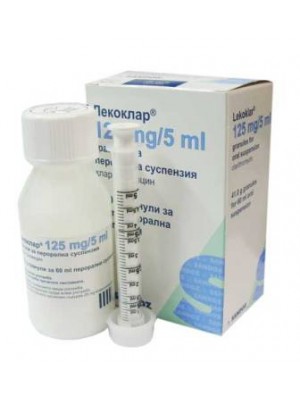
Fromilid 125 mg. / 5 ml. 60 ml.

Product viewed: 2824


What Fromilid is and what it is used for
Fromilid belongs to the group of macrolide antibiotics. Formilid is indicated for the treatment of:
respiratory tract infections (inflammation of the middle ear, sinuses, throat,
tonsils, bronchi and lungs),
infections of the skin and subcutaneous tissues,
treating mycobacterial infections and preventing these infections. It is also used to eradicate Helicobacter plyori bacteria in patients with duodenal ulcer (duodenal ulcer) or gastric ulcer. For ulcer treatment, your doctor will prescribe other medicines at the same time.
Formilly granules for oral suspension are for the treatment of children from 6 months to 12 years of age.
2. What you need to know before taking Fromilid
Do not give Fromilid to your child:
if it is allergic to the active substance or any of the other ingredients of this medicine (listed in section 6)
if you have a low blood potassium level (hypokalaemia), if you have severe liver failure and kidney problems if you are taking high cholesterol medicines (such as lovastatin or simvastatin if you and / or someone in your family have had conditions with heart rhythm abnormalities ventricular arrhythmia including Torsade de Pointer) or a change in the electrocardiogram (ECG) called "QT prolongation syndrome"
If you are already taking any of the following medicines:
ergotamine or dihydroergotamine (for migraine),
cisapride (for stomach upsets),
pimozide (for some mental illness),
terfenadine or astemizole (for hay fever or allergy),
other medicines that are known to cause serious heart rhythm abnormalities,
ticagrelor (blood thinner), allyllazine (for angina pectoris (chest pain)), colchicine (for gout).
Warnings and precautions
Talk to your doctor or pharmacist before giving Fromilide to your child:
if there are severe kidney problems if there is liver damage,
if you develop severe or prolonged diarrhea during or after taking Fromidil, you should consult your doctor immediately,
if you already take colchicine, as this may cause serious side effects,
prolonged use of Formilide may lead to overgrowth of resistant bacteria (superinfection),
if there is any heart disease,
if there is a slow heartbeat (bradycardia), if there are low levels of magnesium in the blood,
if you suffer from porphyria (an inherited liver disease where the body does not produce enough hemoglobin), it should not take clarithromycin if your child is under 6 months of age or if your child is infected with Mycobacterium avium complex bacteria, less than 20 months of age. No studies were conducted in this age group.
Children and adolescents
For children and adolescents over 12 years of age, it is recommended to use Formilol film-coated tablets.
For children under 2 years of age, Formilid oral granules are usually given for oral suspension.
Other drugs and Formilid
Tell your doctor or pharmacist if your child is taking, has recently taken or is likely to take other medicines.
The effect of treatment may be affected if Formilide is taken together with some other medicines. You may need to change the dose, take other precautions or, in some cases, stop taking one of the medicines. This is especially true for the following medicines:
carbamazepine, phenobarbital, phenytoin, valproate (medicines for the treatment of asthma), warfarin (blood thinner), ergotamine or dihydroergotamine (for migraine), triazolam, midazolam or alprazolam (sedative) or verapamil (for the treatment of heart rhythm disorders),
statins (for the treatment of high cholesterol),
pimozide (for the treatment of schizophrenia or other mental illness
fluconazole or itraconazole (for the treatment of fungal infections),
rifabutin, rifampicin (antibiotics acting against some infections), etravirine, efavirenz, nevirapine, zidovudine, ritonavir, atazanavir or saquinavir (medicines for HIV),
cyclosporine, sirolimus or tacrolimus (after organ transplantation), terfenadine or astemizole (for hay fever or allergy), cisapride or omeprazole (for stomach upsets)
aminoglycoside antibiotics - gentamicin, streptomycin (for the treatment of many types of bacterial infections), colchicine (for the treatment of gout),
amlodipine, diltiazem (for the treatment of high blood pressure), tolterodine (for bladder problems), insulin or oral antidiabetic medicines (for diabetes), St. John's wort (herbal medicine)
cilostrazole (to improve leg blood circulation), methylprednisolone (inflammatory diseases), sildenafil, tadalafil or vardenafil (erectile dysfunction), vinblastine (for cancer treatment).
Formilide with food, beverages and alcohol
You can give Fromilid to your child, regardless of food. It is recommended that children take up some liquid after swallowing the suspension. The suspension contains small granules that the child should not chew because they are bitter to taste.
Pregnancy, breastfeeding and fertility
If you are pregnant or breast-feeding, you think you may be pregnant or planning a pregnancy,
talk to your doctor or pharmacist before using this medicine.
Since the safety of Formilide during pregnancy has not been established, your doctor
you will prescribe this medicine only when it is really necessary.
Breastfeeding is not recommended during treatment with Formilide.
Driving and using machines
Formilid may make you feel confused, disoriented or dizzy, cause seizures, panic or changes in the sense of reality, or see things that are not there. Make sure it does not affect you before driving or using machines.
Formylide contains sucrose
If your doctor has told you that your child has an intolerance to some sugars, you should consult with him before you start taking this medicine.
3. How to take Formilide
Always give this medicine to your child just as your doctor or pharmacist has told you. If you are not sure, ask your doctor or pharmacist.
The recommended doses of Fromilide are:
The dosage and duration of treatment depend on the type of infection, the site of the infection, the patient's age, and the response to the treatment. Take the medicine as instructed by your doctor.
Adults and children over 12 years of age usually receive from 250 mg to 500 mg every 12 hours. Usually, treatment lasts for 6 to 14 days. For adults and children over 12 years of age, the use of Formilid film-coated tablets is recommended.
Use in children
Children under 12 years of age usually receive an oral suspension of 7.5 mg / kg of oral suspension every 12 hours.
Children are advised to take some liquid after taking the oral suspension. The suspension contains small granules that the child should not chew because they are bitter to taste. A syringe for oral administration is administered for proper dosing. One full syringe contains 5 ml of the suspension containing 125 mg clarithromycin. After each use of the syringe, it should be rinsed with water.
Treatment usually lasts for 5 to 10 days.
Patients with kidney problems
If you have severe kidney problems, your doctor may prescribe a different dose.
Preparation of the suspension
For the preparation of 60 ml of your suspension, 42 ml of purified or boiled and cooled water is required. The bottle is shaken in advance to make the granules whiten. Add approx. / G of the required amount of water. Immediately shake well to mix all the water, then add the rest of the water. The reconstituted suspension should reach the marked bottle level.
If you think the effect of the medicine is too strong or too weak, you should consult your doctor or pharmacist.
If you have given your child more than the appropriate dose of Formilide
If you have given your child an overdose, you should consult your doctor
pharmacist immediately!
Overdose usually causes gastrointestinal disorders (nausea, vomiting, abdominal pain), headache and confusion. Treatment is symptomatic.
If you forget to give Fromilid to your child
Do not give a double dose to make up for the missed dose.
If you have missed the dose at the scheduled time, do so as soon as you remember. If this is near the next dose, give the next dose at the usual time.
If you stop taking Formilid
It is important to give your child medicine for as long as your doctor prescribes. If you stop treatment prematurely, the infection may resume.
If you have any further questions on the use of this medicine, you should check with your doctor or pharmacist.
4. Possible side effects
Like all medicines, this medicine can cause side effects, although not everyone gets them.
Common: may affect up to 1 in 10 people
insomnia,
headache, changes in the sense of taste,
diarrhea, nausea or vomiting, indigestion (dyspepsia), stomach pain, impaired hepatic function test
tinnitus, dizziness (vertigo) and ear disorders, changes in heart rate, palpitation sensation,
bleeding from the nose,
inflammation of the mouth (stomatitis),
inflammation of the tongue (glossitis),
stomach inflammation (gastritis),
severe episodic rectal pain (proctalgia),
constipation, dry mouth, burning, gas, excess gas in the stomach and vomiting,
return of gastric acid to the esophagus (GERB)
bile flow disorder (cholestasis),
inflammation of the liver (hepatitis),
itching, hives,
appearance of small and red spots on the skin (maculo-papular rash),
muscle pain (myalgia),
muscle spasms and cramps (muscular perceptions),
fever,
chest pain,
a feeling of general discomfort (malaise)
tiredness (fatigue),
weakness (asthenia),
cold chills,
changes in the values of some chemicals in the blood (observed in blood tests).
Not known: frequency can not be estimated from available data
severe or long-lasting diarrhea with blood or mucus (pseudomembranous colitis), skin infection (erizipel), severe decrease in the number of certain white blood cells, which increases the likelihood of infections (agranulocytosis), decreased blood platelets (thrombocytopenia),
severe allergic reaction that causes breathing or dizziness,
swollen face, mouth and throat (anaphylactic reaction, angioedema),
unusual dreams,
confusion, disorientation, seeing or hearing things (hallucinations), mental disorder, depression, convulsions,
inability to taste, changes in sense of smell, feeling tingling,
pricking or burning of the skin,
hearing loss,
irregular heart rhythm,
accelerated heart rhythm,
bleeding,
inflammation of the pancreas, tongue and discoloration of the teeth,
yellowing of the skin and other liver disorders,
a severe disease associated with blistering of the skin, mouth, eyes and genitals (Stevens-Johnson syndrome),
severe skin scaling (toxic epidermal necrolysis),
acne,
drug-induced rash,
breakdown of the transverse muscle cells, which may lead to kidney problems (rhabdomyolysis),
muscle pain or weakness (myopathy),
kidney failure,
increased risk of bleeding, changes in the color of the urine.
How to store Formilid
Keep out of the reach and sight of children.
Do not use this medicine after the expiry date which is stated on the carton after EXP. The expiry date refers to the last day of that month.
Store below 30 ° C.
The prepared suspension can be used for 14 days at a temperature below 25 ° C and stored in a protected area.
Do not dispose of medicines in the sewage system or in the household waste container. Ask your pharmacist how to dispose of medicines you no longer use. These measures will help to protect the environment.
6. Package Contents and Additional Information
What Fromilid contains
The active substance is clarithromycin.
The other ingredients of the 125 mg / 5 ml oral suspension are carbomer, povidone, hydroxypropyl methylcellulose phthalate, talc, castor oil, xanthan gum, banana flavor, citric acid anhydrous, potassium sorbate, colloidal anhydrous silica, titanium dioxide E171) and sucrose.
What Fromilid looks like and what the package contains
125 mg / 5 ml oral suspension granules are white to off-white, small, unformulated granules.
Fromilid is available in boxes of:
25 mg granules for reconstitution in 60 ml oral suspension in a bottle and syringe for oral administration.
Write a review
Your Name:Your Review: Note: HTML is not translated!
Rating: Bad Good
Enter the code in the box below:
Related Products
FROMILID UNO 500 mg. 7 tabletsWHAT FROMILID UNO AND WHAT IT ..
12.00€
Klacid syrup 125 mg. / 5 ml. 100 ml.WHAT Klacid granules for..
19.00€