
Your shopping cart is empty!
Welcome visitor you can login or create an account.
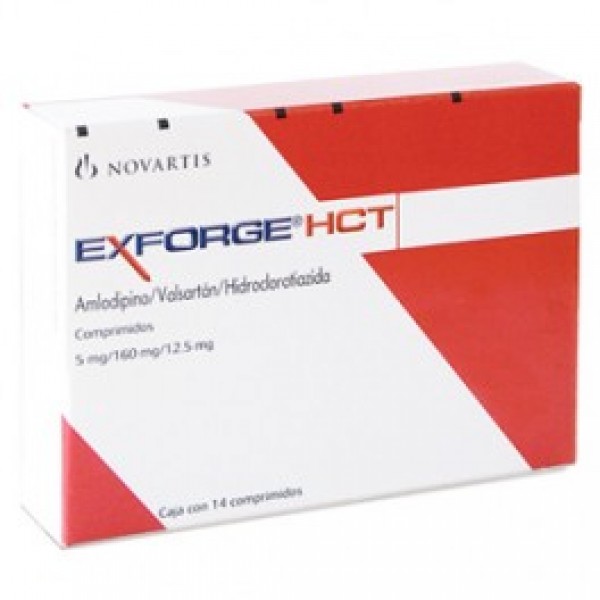
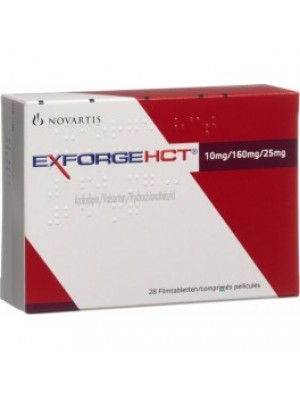
EXFORGE HCT 10 mg. / 160 mg. / 12.5 mg. 14 tablets
Product Code: EXFORGE HCT 10 mg. / 160 mg. / 12.5 mg. 14 tablets
Availability: In Stock
Product viewed: 1583


EXFORGE HCT 10 mg. / 160 mg. / 12.5 mg. 14 tablets
What is Exforge HCT is and what it is used
Exforge HCT tablets contain three substances called amlodipine, valsartan and hydrochlorothiazide. All three substances help to control high blood pressure.
Amlodipine belongs to a group of substances called "calcium channel blockers". Amlodipine stops the passage of calcium in the blood vessel wall, which prevents the contraction of blood vessels;
Valsartan belongs to a group of substances called "angiotensin-II receptor blockers". Angiotensin II is produced by the body and causing the constriction of blood vessels, thereby increasing blood pressure. Valsartan works by blocking the effects of angiotensin II;
Hydrochlorothiazide belongs to a group of substances called "thiazide diuretics". Hydrochlorothiazide increases urine output, which also lowers blood pressure.
As a result of the action of three mechanisms, the blood vessels relax and blood pressure is lowered.
Exforge HCT is used to treat high blood pressure in adult patients whose blood pressure is well controlled by taking amlodipine, valsartan and hydrochlorothiazide and who would be useful to take one tablet containing all three substances.
2. What you need to know before taking Exforge HCT
Do not take Exforge HCT:
if you are pregnant after three months. (It is also recommended to avoid the use of Exforge HCT in early pregnancy - see "Pregnancy");
if you are allergic to amlodipine or other calcium antagonists, valsartan, hydrochlorothiazide, sulfonamide derivatives (medicines used to treat chest or urinary infections) or any of the other ingredients of this medicine (listed in section 6). If you think you may be allergic, do not take Exforge HCT and talk to your doctor;
if you have liver disease, destruction of the small bile ducts in the liver (biliary cirrhosis), leading to the accumulation of bile in the liver (cholestasis);
if you have severe kidney problems or if you are on dialysis;
if you can not urine (anuria);
if you have too low levels of potassium or sodium in the blood despite treatment to increase the levels of potassium or sodium in the blood;
if you have too high levels of calcium in the blood despite treatment to reduce the levels of calcium in the blood;
if you have gout (uric acid crystals in the joints);
if you have very low blood pressure (hypotension);
if you have narrowing of the aortic valve (aortic stenosis) or cardiogenic shock (a condition in which the heart is unable to supply enough blood to the body);
if you have heart failure after a heart attack;
if you have diabetes or renal impairment and are treated with medication to lower blood pressure, containing aliskiren.
If any of the above applies to you, do not take Exforge HCT and talk to your doctor.
Warnings and Precautions
Talk to your doctor or pharmacist before taking Exforge HCT:
if you have low levels of potassium or magnesium in the blood (with or without symptoms such as muscle weakness, muscle spasms, abnormal heart rhythm);
if have low levels of sodium in the blood (with or without symptoms such as fatigue, confusion, muscle twitching, convulsions);
if you have high levels of calcium in the blood (with or without symptoms such as nausea, vomiting, constipation, abdominal pain, frequent urination, thirst, muscle weakness and fibrillation);
If you have kidney problems, have undergone a kidney transplant or you have been told that you have a narrowing of the renal arteries;
if you have liver problems;
if you have or have had heart failure or coronary artery disease, particularly if prescribed maximum dose of Exforge HCT (10 mg / 320 mg / 25 mg);
if you had a heart attack. Carefully follow your doctor's instructions for the initial dose. It is also possible for your doctor to examine your kidney function;
if your doctor has told you that you have a narrowing of the valves of the heart (called "aortic or mitral stenosis") or that the thickness of the heart muscle is abnormally increased (called "obstructive hypertrophic cardiomyopathy");
if you aldosteronism. This is a condition in which the adrenal glands produce too much of the hormone aldosterone. If this applies to you, do not recommend the use of Exforge HCT;
if you have a disease called systemic lupus erythematosus (also called "erythematosus" or "SLE");
if you have diabetes (high blood sugar);
if you have high levels of cholesterol or triglycerides in the blood;
if you experience skin reactions such as rash after sun exposure;
if you have had allergic reactions to other medications to treat high blood pressure or diuretics (a type of medicine known as "water tablets"), especially if you have asthma or allergies;
if you are sick (vomiting or diarrhea);
If you have swelling, especially of the face or throat while you are taking any other medications (including angiotensin converting enzyme). If you get these symptoms, stop taking Exforge HCT and contact your doctor immediately. You should never take more Exforge HCT;
if you have dizziness, and / or you faint during treatment with Exforge HCT, tell your doctor immediately;
if you have loss of vision or eye pain. These may be signs of increased pressure in the eye can occur within hours to weeks after you start taking Exforge HCT. This can lead to permanent visual impairment if not treated;
if you are taking any of these medicines used to treat high blood pressure:
ACE inhibitor (e.g. enalapril, lisinopril, ramipril), especially if you have kidney problems associated with diabetes;
aliskiren.
Your doctor may periodically check your kidney function, blood pressure and the amount of electrolytes (eg. Potassium) in your blood.
See also the information titled "Do not take Exforge HCT".
If any of the above applies to you, consult your doctor.
Children and adolescents
Not recommended the use of Exforge HCT in children and adolescents under 18 years.
Elderly (aged 65 and over)
Exforge HCT can be used in patients aged 65 years and over in the same dose as for other adults and in the same manner as the one currently three substances called amlodipine, valsartan and hydrochlorothiazide. Elderly patients, particularly those taking the maximum dose of Exforge HCT (10 mg / 320 mg / 25 mg), should monitor their blood pressure regularly.
Other medicines and Exforge HCT
Tell your doctor or pharmacist if you are taking, you have recently taken or might take any other medicines. You may need your doctor may change your dose and / or take other precautions. In some cases, you may need to stop taking one of the drugs. This is especially important if you are taking any of the medicines listed below:
Do not take together with:
lithium (a medicine used to treat some types of depression);
drugs and substances that increase the level of potassium in the blood. These include potassium supplements or salt substitutes containing potassium, potassium-sparing medicines and heparin;
Or an ACE inhibitor aliskiren (see also information entitled "Do not take Exforge HCT" and "Warnings and Precautions").
Take caution with:
alcohol, hypnotics and anesthetics (medicines that allow patients to undergo surgery and other procedures);
amantadine (medicine for the treatment of Parkinson's disease, and for treating and preventing certain diseases caused by viruses);
anticholinergic agents (drugs that are used for the treatment of various diseases such as gastrointestinal spasms, spasms of the bladder, asthma, motion sickness, muscular spasms, Parkinson's disease and as a part of the medication in anesthesia);
anticonvulsants and mood stabilizers, drugs used to treat epilepsy and bipolar disorders (eg. carbamazepine, phenytoin, fosphenytoin, primidone);
cholestyramine, colestipol or other resins (substances used mainly to treat high levels of lipids in the blood);
simvastatin (a medicine used to control high cholesterol);
cyclosporin (a medicine used in transplantation to prevent rejection of a transplanted organ or for other conditions, eg., rheumatoid arthritis or atopic dermatitis);
cytotoxic drugs (used to treat cancer), such as methotrexate or cyclophosphamide;
digoxin or other digitalis glycosides (medicines used to treat heart problems);
verapamil, diltiazem (heart medicine);
iodinated contrast agents (agents used in imaging studies);
medicines to treat diabetes (oral agents such as metformin or insulin);
medicines for gout such as allopurinol;
drugs that may increase the blood sugar level (beta blockers, diazoxide);
drugs that may induce "torsades de pointes" (irregular heartbeat), as antiarrhythmics (drugs used to treat heart problems) and certain antipsychotics;
drugs which can reduce the amount of sodium in the blood, such as antidepressants, antipsychotics, antiepileptics;
drugs which can reduce the amount of potassium in the blood, such as diuretics (water tablets), corticosteroids, laxatives, amphotericin or penicillin G;
drugs for high blood pressure, such as epinephrine or norepinephrine;
drugs used for HIV / AIDS (eg. ritonavir, indinavir, nelfinavir);
drugs used to treat fungal infections (eg. ketoconazole, itraconazole);
drugs for the treatment of ulceration and inflammation of the esophagus (karbenolokson);
medications to relieve pain and inflammation, especially non-steroidal anti-inflammatory drugs (NSAIDs), including selective cyclooxygenase 2 inhibitors (COX-2) inhibitors;
muscle relaxants (drugs used to relax the muscles used during operations);
nitroglycerin and other nitrates, or other substances called "vasodilators";
other medications for the treatment of high blood pressure, including methyldopa;
rifampicin (used e.g. for the treatment of tuberculosis);
St. John's Wort;
dantrolene (infusion for severe body temperature abnormalities);
Vitamin D and calcium salts.
Exforge HCT with food, drink and alcohol
People who are prescribed Exforge HCT, should not consume grapefruit or grapefruit juice. The reason for this is that the grapefruit and grapefruit juice may lead to increased plasma levels of the active ingredient amlodipine, which in turn can lead to unpredictable enhance the antihypertensive effect of Exforge HCT. Talk to your doctor before drinking alcohol. Alcohol can lead to severe drop in blood pressure and / or increase the possibility of dizziness or fainting.
Pregnancy and lactation
Pregnancy
You should tell your doctor if you think you are pregnant or might become pregnant. Your doctor will advise you to stop taking Exforge HCT before you become pregnant or as soon as you know you are pregnant and will advise you to take another medicine instead of Exforge HCT. Exforge HCT is not recommended in early pregnancy and must not be taken if you are pregnant after three months, as it may cause serious harm to your baby if used after the third month of pregnancy.
Breastfeeding
Tell your doctor if you are breastfeeding or plan to breastfeed. Treatment with Exforge HCT is not recommended for mothers who are breastfeeding, and your doctor may prescribe another treatment if you wish to breastfeed, especially if your baby is newborn, or was born prematurely.
Ask your doctor or pharmacist before taking any medicine.
Driving and using machines
This medicine may make you feel dizzy, sleepy, feel sick or have a headache. If you experience these symptoms, do not drive or operate machinery.
3. How to take Exforge HCT
Always take this medicine exactly as you have been told by your doctor. If you're not sure, ask your doctor. This will help you achieve the best results and lower the risk of side effects.
The usual dose of Exforge HCT is one tablet daily.
It is best to take the tablets at the same time each day, preferably morning.
Swallow the tablet whole with a glass of water.
It can take Exforge HCT with or without food. Do not take Exforge HCT together with grapefruit or grapefruit juice.
Depending on how you respond to treatment, your doctor may suggest a higher or lower dose.
Do not exceed the prescribed dose.
If you take more dose of Exforge HCT
If you accidentally take too many tablets of Exforge HCT, immediately contact your doctor. It may need medical attention.
If you forget to take Exforge HCT
If you forget to take a dose, take it as soon as you remember and then take the next dose at the usual time. If it is almost time for your next dose, just take your next tablet at the usual time. Do not take a double dose (two tablets at once) to make up for forgotten tablet.
If you stop taking Exforge HCT
Stopping treatment with Exforge HCT may lead to worsening of your condition. Do not stop taking your medicine unless your doctor tells you to do.
Always take the medicine even if you feel well
People who have high blood pressure often do not notice any signs of the problem. Many feel normal. It is very important that you take this medicine exactly as your doctor tells you to get the best results and reduce the risk of side effects. Keep your appointments with the doctor even if you feel well.
If you have any further questions on the use of this medicine, ask your doctor or pharmacist.
4. Possible side effects
Like all medicines, this medicine can cause side effects, although not everybody gets them.
As for any combination containing three active substances, side effects associated with each of the individual components can not be excluded. Adverse reactions reported with administration of Exforge HCT or any of the three active ingredients (amlodipine, valsartan and hydrochlorothiazide) are listed below and can arise from the use of Exforge HCT.
Some side effects can be serious and need immediate medical attention.
Consult your doctor immediately if you experience any of the following serious side effects after taking this medicine:
Common (may affect up to 1 in 10 people):
dizziness;
low blood pressure (feeling of faintness, light-headedness, sudden loss of consciousness).
Uncommon (may affect up to 1 in 100 people):
greatly reducing the amount of urine output (decreased kidney function).
Rare (may affect up to 1 in 1000 people):
spontaneous bleeding;
irregular heartbeat;
hepatic impairment.
Very rare (may affect up to 1 in 10,000 people):
sudden wheezing, chest pain, shortness of breath or difficulty breathing;
swelling of eyelids, face or lips;
swelling of the tongue and throat that very difficult to breathe;
severe skin reactions including intense skin rash, hives, redness of the skin all over the body, severe itching, blisters, peeling and swelling of the skin, mucosal inflammation (Stevens-Johnson) or other allergic reactions;
infarction;
inflamed pancreas, which can cause severe abdominal pain and back pain accompanied by severe malaise;
weakness, bruising, fever and frequent infections;
stiffness.
Other side effects may include:
Very common (may affect more than 1 in 10 people):
low levels of potassium in the blood;
raising blood lipids.
Common (may affect up to 1 in 10 people):
drowsiness;
palpitations;
flushing;
swelling of the ankles (edema);
abdominal pain;
stomach discomfort after meals;
fatigue;
headache;
frequent urination;
high levels of uric acid in the blood;
low levels of magnesium in the blood;
low sodium levels in the blood;
dizziness, fainting upon standing;
decreased appetite;
nausea and vomiting;
itchy rash and other types of rash;
inability to achieve or maintain an erection.
Uncommon (may affect up to 1 in 100 people):
palpitations;
dizziness;
visual disturbances;
stomach discomfort;
pain in the chest;
increase of urea, creatinine and uric acid in the blood;
high levels of calcium, sodium or fat in blood;
decrease of potassium in the blood;
bad breath;
diarrhea;
dry mouth;
weight gain;
loss of appetite;
taste disturbances;
back pains;
swelling of the joints;
muscle cramps / weakness / pain;
pain in the extremities;
violations during standing or walking;
weakness;
coordination disorders;
dizziness on standing up or after exercise;
lack of energy;
sleep disorders;
tingling or numbness;
neuropathy;
sudden, brief loss of consciousness;
decrease in blood pressure upon standing;
cough;
shortness of breath;
sore throat;
Write a review
Your Name:Your Review: Note: HTML is not translated!
Rating: Bad Good
Enter the code in the box below:
Related Products
EKSFORDZH HCT table . 10 mg. / 160 mg. / 25 mg EXFORGE HCT ..
39.00€
EXFORGE HCT. 5 mg. / 160 mg. / 12.5 mg. 14 tablets WHAT EXF..
29.00€
EXFORGE HCT. 10 mg. / 160 mg. / 25 mg. 14 tablets WHAT EXFO..
39.00€
EXFORGE 10 mg. / 160 mg. 28 tabletsWHAT EXFORGE IS AND WHAT ..
39.00€