Your shopping cart is empty!
Welcome visitor you can login or create an account.
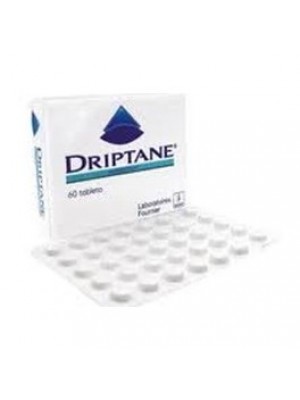
DRIPTAN table. 5 mg. 60 tablets
Product Code: DRIPTAN table. 5 mg. 60 tablets
Availability: In Stock

Product viewed: 1440


DRIPTAN table. 5 mg. 60 tablets

Pharmaco-therapeutic class
DRUG PRODUCTS FOR UROLOGY / OTHER UROLOGICAL medicinal products, including antispasmodics / Urinary antispasmodics (G 04 BD04: Genitourinary system and sex hormones)
INDICATION
This drug is recommended in the following cases:
Urinary incontinence (involuntary bed wetting or day);
Urgency of urination (need to urinate immediately) and excessive urinary frequency in unstable bladder which Mozhe be due to idiopathic detrusor instability (instability of the unknown origin of the muscle of the bladder) or neurogenic vezikalni disorders (disorders of bladder associated with certain diseases of the nervous system)
INFORMATION REQUIRED BEFORE medicinal use
a) CONTRAINDICATION
This medicine should not be used in cases of:
Allergy to any component of this medication;
Risk of urinary retention (discomfort when emptying the bladder), prostate-related disorders suretro;
Intestinal obstruction (blocked passage of material or gas contained in a segment of the intestine);
Toxic megacolon (an extension of part of the intestine);
Intestinal atony (strong decrease of intestinal tone);
Severe ulcerative colitis (inflammation of the colon), myasthenia (muscle weakness disease);
A risk of narrow-angle glaucoma (increased eye pressure);
Chronic bronchitis.
If in doubt, consult with your doctor or pharmacist.
b) Special precautions for use
Your doctor should examine you again after 4 to 6 weeks to reassess your treatment.
Oxybutynin should be used to treat urinary shkontinentsiya caused by stress shi effort.
After administration of oxybutynin is a possible increase in complaints in patients with hyperthyroidism (overactive thyroid), certain heart problems (coronary artery disease, congestive heart failure, cardiac arrhythmias, tachycardia) and prostatic hypertrophy (enlarged prostate volume). If you have any of these conditions, talk to your doctor.
Prolonged use of oxybutynin may cause discomfort due to salivary insufficiency, which may cause the occurrence of caries periodontoklaziya (damage to tissues that support the teeth) or candidiasis in the oral cavity (mouth infection due to microscopic fungi).
Due to the presence of lactose, the drug is contraindicated in congenital intolerance, malabsorption of glucose and galactose syndrome or lactose deficiency (rare metabolic diseases).
Tell your doctor in case of:
Neurological symptoms;
Hiatus hernia or other gastrointestinal disorders;
Liver or kidney disease;
Urinary tract infection;
Certain heart rhythm abnormalities;
Certain diseases of the brain.
If in doubt, consult with your doctor or pharmacist.
c) DRUG INTERACTIONS AND OTHER
To avoid possible reactions with other medications, PLEASE INFORM IN ADVANCE YOUR DOCTOR OR PHARMACIST FOR ALL OTHER DRUG PRODUCTS TAKE IN THIS MOMENT, and all unusual symptoms occur during therapy.
d) Pregnancy and lactation
This medicine should not be taken during pregnancy unless clearly necessary judged by your doctor. It should not be taken during karmeneto.VAV ALL CASES IT IS IMPORTANT TO ALWAYS tell your doctor or pharmacist before taking ANY medications during pregnancy and lactation.
e) EFFECT ON ABILITY TO DRIVE AND USE MACHINES
This medicine may cause drowsiness or blurred vision. Not recommended driving, operating machinery or performing hazardous activities.
f) LIST OF OTHER SUBSTANCES C notorious EFFECT
Lactose
INFORMATION FOR PROPER USE
The dosage and length of treatment is determined by a physician. If your doctor advises otherwise, the most common dose is as follows:
a) Dosage
Adults
The starting dose is half a tablet three times daily. The usual dosage is one tablet 2 or 3 times a day.
Your doctor may increase your dose to a maximum of 1 tablet 4 times daily.
If you are an elderly patient, the initial dose is half a tablet twice a day. The usual dosage is one tablet twice daily.
Children
Children over 5 years: The starting dose is half a tablet twice a day.
The usual dose is:
1/2 tablet 3 times a day - for children 5 to 9 years;
1 tablet twice daily, for children 9 to 12 years;
1 tablet 3 times daily for children over 12 years.
Not recommended for use of this medicine in children under 5 years of age.
IN ALL CASES strictly follow your doctor's instructions.
b) AND METHOD OF APPLICATION
Oral.
c) How often and when should take the medicine
Tablets should be taken before meals with a glass of water. They may accept a meal or a glass of milk if stomach pain.
d) Duration of treatment
JUST FOLLOW prescribing physician.
e) OVERDOSE
Tell your doctor or hospital.
f) MEASURES missed dose
If you forget to take a dose, take it as soon as you remember and then continue as normal.
SIDE EFFECTS
Like all medicines, use of DRIPTAN CAN cause some side effects, known as side effects.
The most commonly reported side effects are: dry mouth, constipation, blurred vision, mydriasis (pupil expansion), tachycardia (rapid heartbeat), nausea, abdominal pain, flushing, agitation, difficulty in urinating (difficulty urinating).
Less common side effects include headache, urinary retention, dizziness, drowsiness, dry skin, diarrhea, heart arrhythmias (irregular heart beat), certain eye disorders (increased intraocular pressure and glaucoma), seizures, hallucinations and confusion koshmari.Umstvena , anxiety and paranoia (personality disorders) are also reported in the elderly
Rarely, allergic skin reactions.
SPECIAL STORAGE CONDITIONS
The medicine should be stored at temperatures below 30 ° C. Keep out of reach of children.
Do not use after the expiry date stated OUTSIDE THE PACKAGE
Shelf life: three years.
DRIPTAN 5 mg, scored tablets.
QUALITATIVE AND QUANTITATIVE COMPOSITION
Oxybutynin (INN) hydrochloride / Oxybutynin hydrochloride ............ 5.00 mg
Excipients (additional ingredients) microcrystalline cellulose (17, 80 mg),
calcium stearate (1.90 mg),
anhydrous lactose (153,30 mg).
For a tablet 178.00 mg
Write a review
Your Name:Your Review: Note: HTML is not translated!
Rating: Bad Good
Enter the code in the box below:
Related Products
INKONTAN table. 30 mg. 20 tablets What Inkontan 30 mg?1 tabl..
21.00€
Table-LIT spasms. 20 mg. 30 tablets WitnessFor the treatment..
22.00€