
Your shopping cart is empty!
Welcome visitor you can login or create an account.
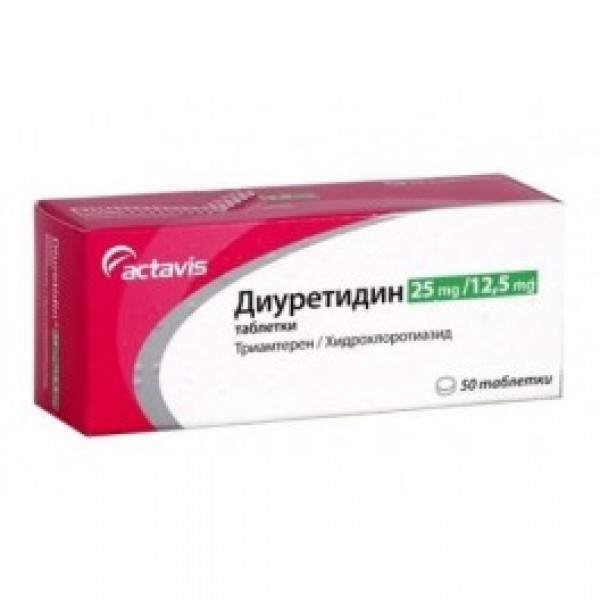
DIURETIDIN 25 mg. 50 tablets
Product Code: DIURETIDIN 25 mg. 50 tablets
Availability: In Stock
Product viewed: 1312


DIURETIDIN 25 mg. 50 tablets
Active substances in one tablet:
Triamterene: 25.0 mg
Hydrochlorothiazide 12.5 mg
Excipients: lactose monohydrate, corn starch, povidone, sodium starch glycolate, talc, magnesium stearate.
Diuretidin is available in packs of 50 tablets.
1. WHAT DIURETIDIN AND WHAT IT IS USED
Diuretdin combined diuretic medicine (increase urine output), which lowers blood pressure. Each of the ingredients it complements the other.
• hydrochlorothiazide component lowers blood pressure by reducing the volume of circulating blood, increasing the excretion of sodium and chloride ions and urine output.
• At the same time helps to maintain triamterene potassium ions necessary for the proper functioning of the cardiovascular system.
• The combination of hydrochlorothiazide and triamterene lead to the strengthening of their diuretic effect at a reduced dosage and reducing side effects.
This medicine is used for:
• Treatment of hypertension - as part of combination therapy;
• In the treatment of edema of cardiac, renal, hepatic or other origin, especially in cases where it is necessary to prevent the loss of potassium;
• As an accompanying therapy to cardiac glycosides in treating congestive heart failure, for preventing loss of potassium;
• adjunctive therapy in the treatment with potassium-sparing diuretics for prevention of hypokalemia (low blood potassium).
2. WHAT YOU NEED TO KNOW BEFORE DIURETIDIN
Diuretidin not apply to:
• Allergy to any of the active or the excipients or to other sulfonamide;
• Hyperkalemia (high potassium in the blood);
• When stopping the flow of urine (anuria);
• Severe renal impairment (creatinine clearance <30 mL / min);
• Severe liver failure (hepatic coma and coma);
• refractory to therapy hypokalemia;
• Severe hyponatremia (low sodium in the blood);
• Co-administration with other potassium-sparing diuretics and other potassium containing products (especially intravenous);
• Significantly reduced blood pressure;
• Pregnancy and lactation.
In the application of this product, please note the following:
• Changes in electrolyte and acid composition of blood (hyperkalemia, hyponatremia, metabolic acidosis and other electrolyte and fluid imbalance): A regular monitoring of serum electrolytes. When planned chronic administration, the potassium concentration should be tested before and 3-4 weeks afterwards. If potassium balance is not disturbed further monitoring should be performed every 4 to 6 months.
When data for hyperkalemia (high potassium content), application of the product should be discontinued. Particularly strict control of serum electrolytes required in the following patient groups: adults, digitalis therapy, treatment with corticosteroids and laxatives or intravenous infusions.
Thiazide diuretics may increase urinary excretion of magnesium and provoke hypomagnesemia (low magnesium in the blood).
Calcium excretion can be reduced by thiazide diuretics and cause a transient increase in serum calcium. Triamterene can reduce the alkaline reserve, which can lead to the development of metabolic acidosis (acidification).
• Renal failure: thiazide diuretics should be used with caution in patients with moderate renal impairment (they are ineffective in advanced renal insufficiency - creatinine clearance <30 mL / min) as may worsen renal dysfunction or provoke the development of azotemia (elevated content of residual nitrogen units). This requires periodic monitoring with determination of serum urea and creatinine.
• Hepatic impairment: Diuretidin and other thiazide diuretics should be used with caution in patients with severely impaired hepatic function or progressive liver disease, since minor alterations of fluid and electrolyte balance may precipitate hepatic coma.
• Hyperuricemia (high uric acid) and gout: Serum concentrations of uric acid may be increased in patients treated with thiazide diuretics and show clinical signs of gout. It therefore needs a periodic monitoring of serum levels of uric acid during the treatment.
• Glucose Tolerance (blood glucose levels) during treatment with thiazide diuretics may occur hidden diabetes or increase insulin requirements in diabetic patients. It is therefore recommended periodic monitoring of blood sugar.
• lipids (fat levels in the blood): With prolonged use, thiazide diuretics can cause mild and partly reversible increases in some of the fat fraction (total cholesterol, triglycerides and low density cholesterol).
• folic acid deficiency: If in doubt about folic acid deficiency (eg. In liver cirrhosis and chronic alcohol consumption) recommends regular monitoring of blood counts, since the active ingredient triamterene, can favor the development of anemia (megaloblastic by type).
• Systemic lupus erythematosus (an autoimmune disease): Thiazides may exacerbate or activate systemic lupus erythematosus, you need to take care with Diuretidin.
Application of Diuretidin and intake of foods and drinks:
No evidence of the need for special diets or restrictions on certain types of foods and beverages during treatment with this product.
pregnancy
Before taking any medicine, consult your doctor or pharmacist.
Thiazides cross the placental barrier and can cause toxic effects on the fetus and newborn. Therefore, this product not be used during pregnancy.
breastfeeding
Before taking any medicine, consult your doctor or pharmacist.
Triamterene and hydrochlorothiazide are excreted in human milk. Due to the potential risk of
harm to the infant must decide or discontinue breast-feeding or discontinuation of therapy with Diuretidin.
Driving and using machines
Diuretidin not affect alertness but can sometimes occur different reactions in relation to lowering blood pressure, especially at the beginning of treatment or when the other antihypertensive agents. As a result, it can temporarily impair the ability to drive and use machines.
Important information about some of the ingredients of Diuretidin
Due to its composition of wheat starch, can not be used in people with gluten intolerance.
This medicinal product contains lactose as an excipient, which makes it unsuitable for patients with lactose intolerance.
Taking other medicines:
Please tell your doctor or pharmacist if you are taking or have recently taken any other medicines, even if they have not been prescribed by your doctor.
• Other antihypertensives (blood pressure lowering)
Can complement or enhance the effects of other antihypertensive agents. Co-administration with other potassium-sparing diuretics, such as Amiloride and Spironolactone or potassium-containing products may lead to the development of severe hyperkalemia.
Concomitant administration of ACE inhibitors may increase the risk of hyperkalemia.
• Non-steroidal anti-inflammatory products:
Concomitant administration (especially indomethacin) may weaken the diuretic and antihypertensive activity of hydrochlorothiazide and even provoke the development of acute renal failure in sensitive or dehydrated patients.
• Cholestyramine:
Absorption of thiazide diuretics is decreased, and therefore can be expected weaker pharmacological effect.
• Lithium products:
Diuretics including hydrochlorothiazide should not be administered concomitantly with lithium because they reduce its renal excretion, increasing the risk of lithium toxicity.
• Digitalis products:
Hypokalemia and hypomagnesemia induced by thiazides, precipitates toxic digitalis effects (arrhythmias). It is monitoring for serum potassium and for any changes in electrocardiogram.
• Insulin and oral antidiabetic products:
You may need to adjust the dose of insulin or oral antidiabetic products due
changes in blood sugar levels.
• Corticosteroids and laxatives:
The combined administration of corticosteroids or laxative products may result in increased excretion of potassium.
• Chlorpropamide:
Concomitant use of chlorpropamide may lead to a risk of severe hyponatremia.
• antigout products:
Hydrochlorothiazide may increase manifestations of hypersensitivity to allopurinol. Reduce the performance of the funds, increasing renal excretion of uric acid.
• Curare derivatives and ganglion blocking products:
Thiazides may enhance the response to these drugs.
• antineoplastic agents (eg. Cyclophosphamide, methotrexate): concomitant use of thiazides may reduce renal excretion and strengthen their effects on suppression of bone marrow function).
• Anticholinergic agents (eg. Atropine, biperidin)
Absorption of thiazide diuretics may increase because of the reduced gastrointestinal movement - intestinal tract and delayed gastric emptying.
• Vitamin D:
Concomitant use with hydrochlorothiazide may decrease urinary calcium excretion and increase serum calcium.
• Cyclosporin:
Povishen risk for hyperuricemia and gout events.
• Oral anticoagulants (drugs to reduce blood clotting)
The apartment can reduce the effect of oral anticoagulants, which may require dose adjustment.
The following products are given simultaneously with Diuretidin can cause the development of hyperkalemia: blood from a blood bank, milk with a low content of salt, potassium and potassium containing drugs, potassium salt, as a substitute for sodium.
3. HOW TO TAKE DIURETIDIN
Always take Diuretidin as instructed by your doctor.
With a prescription. It is orally.
The dose and duration of treatment with Diuretidin be determined by the physician depending on the severity of the condition and the tolerance of patient to the product.
• For the treatment of arterial hypertension, the initial dose is 1 tablet every 12 hours.
Maintenance treatment: 1 tablet daily.
• In edema treatment begins with 1 -2 tablets in 12 hours. Maintenance treatment: 1 -2 tablets
day taken in the morning. If necessary, this dose may be increased to 2 x 2 tablets in 12 hours.
• As an accompanying therapy for the treatment of heart failure with cardiac glycosides: dose determined by clinical condition. The usual dose is 2 tablets per day, which may be increased to up to 4 tablets per day, divided into two doses.
Maximum daily dose: 4 tablets daily.
• If impaired renal function (creatinine clearance 30-50 ml / min), the dose should not
exceed 1 tablet daily.
Tablets should be taken after meals, without chewing, with a sufficient amount of water.
If you have the impression that the effect of the application of Diuretidin is strong or too weak, talk to your doctor or pharmacist.
If you have used more than the prescribed dose Diuretidin:
When taking a higher dose than prescribed, immediately contact a doctor!
Symptoms of overdose:
Overdose can occur:
increased excretion of urine, nausea, vomiting, weakness, fatigue, confusion, fever,
flushing, increased neuromuscular excitability, abnormal heart rate, electrocardiogram changes, low blood pressure, convulsions to coma. These events are determined by hyperkalemia, other electrolyte disturbances, dehydration and changes in alkaline - acid balance.
Treatment of overdose:
Immediate removal of gastric contents, gastric lavage, administration of activated charcoal to reduce absorption.
In hipotononiya - infusions, use of vasopressors (elevated blood pressure) medication. Track fluid and electrolyte and metabolic balance and correct them.
There is no specific antidote.
If symptoms of overdose, immediately contact a doctor!
If you forget to use Diuretidin
If you miss a dose, take it at the next regular intake without
increasing the dose.
4. POSSIBLE SIDE EFFECTS
Like all medicines, Diuretidin can cause side effects. Most adverse reactions to treatment with Diuretidin are related to the size of the dose. For the most part they are mild, transient and resolved after dose reduction or discontinuation of therapy. Some of them, such as nausea, vomiting and diarrhea can be avoided when the drug is taken after meals.
Adverse reactions are ranked in lowering the frequency of monitoring, the most serious adverse reactions are presented first, regardless of their frequency. Serious side effects associated with the administration of Diuretidin usually observed in less than 0.1% of patients treated with this product.
They can be observed the following side effects:
• Studies (changes in electrolyte, metabolic and acid composition of the blood), elevated potassium levels, blood sugar, uric acid (hyperkalemia, hyperglycemia, hyperuricemia), reduced levels of potassium, sodium, chlorine (hypokalaemia, hyponatraemia, hypochloraemia), metabolic acidosis, changes in the fat content (increase of cholesterol, triglycerides and low density cholesterol), elevation of liver enzymes.
• Gastrointestinal disorders: pancreatitis, dry mouth, loss of appetite, upset stomach, nausea, vomiting, abdominal pain, constipation or diarrhea, cholestatic jaundice.
• Immune system disorders (allergic) in isolated cases severe alergichini reactions (hypersensitivity pneumonitis, anaphylaxis, Stevens-Johnson syndrome Lyle / toxic epidermal necrotic /). Rashes, hives, itching, pinpoint bleeding, photosensitivity, vascular involvement (vasculitis, erythema multiforme), exacerbation of existing lupus.
• Nervous system disorders: paraesthesia, dizziness, vertigo, weakness, fatigue, depression, headaches, muscle spasms and cramps.
• Eye disorders: yellow vision, transient blurred vision.
• Respiratory disorders: pulmonary edema, respiratory distress (severe impairment of respiratory function).
• Cardiac disorders: heart rate, blood pressure lowering in borrowing upright (which can be provoked and exacerbated by alcohol, barbiturates and narcotics).
• Blood and lymphatic system disorders: disorders of blood cell composition (aplastic anemia, thrombocytopenia, leukopenia, megaloblastic anemia, agranulocytosis and eosinophilia).
• Renal and urinary disorders: acute renal failure, urinary frequency, increased urine output, night urination, increased urea and creatinine, decreased libido, isolated cases of interstitial nephritis. There was an increased incidence of kidney stone formation in the use of high-dose triamterene.
• In newborns whose mothers were taking thiazide during pregnancy have been reported rarely
thrombocytopenia and pancreatitis.
If you notice any side effects not listed in this leaflet, please tell your doctor or pharmacist.
5. Storage
• Keep out of reach of children.
• At temperatures below 25 ° C!
• Do not use after the expiry date stated on the package!
• Shelf life: 5 (five) years from date of manufacture.
Write a review
Your Name:Your Review: Note: HTML is not translated!
Rating: Bad Good
Enter the code in the box below:
Related Products

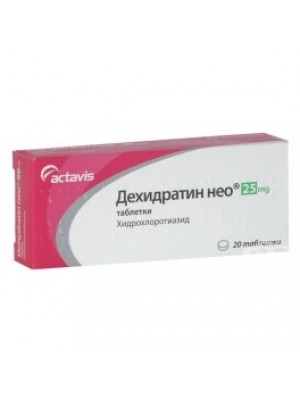
DEHIDRATIN NEO 25 mg. 20 tabletsWhat is Dehidratin Neo and w..
9.00€
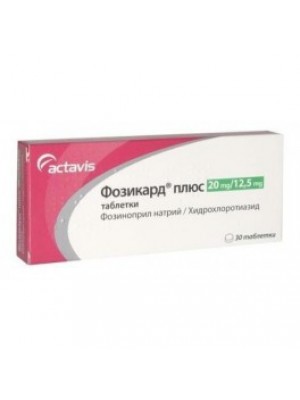
FOZIKARD PLUS 20 mg. / 12.5 mg. 30 tabletsWHAT FOZIKARD PLUS..
14.00€