
Your shopping cart is empty!
Welcome visitor you can login or create an account.
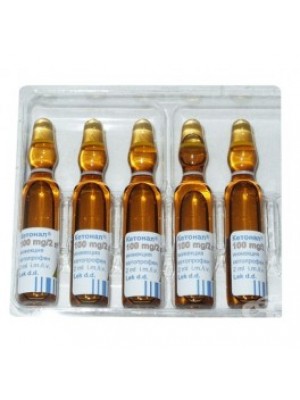
DEXOFEN. 2 ml. 5 ampules
Product Code: DEXOFEN. 2 ml. 5 ampules
Availability: In Stock

Product viewed: 2857


DEXOFEN. 2 ml. 5 ampules

What is in your medicine?
One ampoule of a 2 ml injection solution contains :
Drug veshtestvo50 mg dexketoprofen as dexketoprofen trometamol.
Excipients Ethanol ( 96% ), sodium chloride , sodium hydroxide, water for injections. Packaging Keral in packs of 5 or 10 ampoules. Hospital pack of 50 ampoules (5x10).
How does Keral !
Deksofen inzhekt'e analgesic and anti-inflammatory drug ( group of nonsteroidal anti-inflammatory drugs , NSAIDs).
What cures Keral !
Keral be used for the treatment of acute , moderate to severe pain , such as pain after surgery , renal colic , pain in the back, when the administration of drugs orally , e. tablet , it is not appropriate .
When not to apply Keral !
Keral should not be administered to :
• hypersensitivity to dexketoprofen, to other nonsteroidal anti-inflammatory drugs (NSAIDs - certain medicines for fever, pain and inflammation) or to any of the excipients ;
• evidence that substances with a similar action (eg Acetylsalicylic acid or other NSAIDs), cause attacks of bronchial asthma, bronchospasm , hives ( urticaria), allergic swelling of the skin and mucosa ( angioedema ) or allergic rhinitis (acute rhinitis) , especially in the case of nasal polyposis ;
• active gastrointestinal ulcer , ulcer or suspected in the data of gastrointestinal ulcer in the past;
• bleeding from the gastrointestinal tract , of different origin , or other conditions associated with blood loss;
• some disorders of the gastro -intestinal tract (Crohn's disease , ulcerative colitis ) ;
• history of bronchial asthma ;
• untreated severe heart failure ;
• moderate to severe renal insufficiency (creatinine clearance <50 ml / min);
• severe hepatic impairment (estimated Child-Pugh score 10-15 ) ;
• in pathological bleeding, other bleeding disorders koagulatsiionni breaches or administration of drugs that inhibit blood clotting ( antikoagulano treatment) ;
• during pregnancy and lactation (see section 4.6 . ) .
Because it contains alcohol Keral should not be applied directly to the nerve fibers .
What you should know before you start treatment with Keral ?
Not investigated safe use in children. Be used with caution in data alergii.Patsienti with gastrointestinal symptoms and diseases should be closely monitored for digestive disorders or bleeding. If in rare cases bleeding occurs from gastrointestinal ulcers, use of Keral should be immediately discontinued.
All NSAIDs , as is Keral can inhibit platelet aggregation and prolong bleeding time . Patients who are concomitantly treated with drugs that inhibit blood clotting (except low molecular weight heparin for the prevention of blood clots after surgery ) should be monitored closely.
Like other NSAIDs , Keral may lead to an increase in blood metabolites excreted by the kidneys ( urea, creatinine ) . Like other NSAIDs in this group , their application may experience side effects from the kidneys, which would lead to a violation of their function ( glomerulonephritis, interstitial nephritis, papillary necrosis , nephrotic syndrome, acute renal failure).
Like other NSAIDs , Keral can lead to a temporary slight increase in the blood of some liver samples and a significant increase in certain liver enzymes ( AST and ALT) . In a substantial increase , therapy should be discontinued.
Keral should be used with caution in patients with impaired hematopoiesis and certain rheumatic diseases (systemic lupus erythematosus, mixed connective tissue disease) . Like other NSAIDs , Keral may mask the symptoms of infectious diseases. In isolated cases described aggravation of soft tissue infections during administration of NSAIDs. Therefore, when signs of bacterial infection or deterioration during treatment with Keral , you should immediately see your lekar.Pri patients with impaired hepatic, renal , or cardiac function, and in patients with other factors predisposing to fluid retention , caution is required in the application . In these patients, administration of NSAIDs can result in renal function and fluid retention . Caution should be exercised in patients with increased risk of kidney damage - using drugs to increased urine output ( diuretics) or prone to fluid loss ( hypovolemia ) .
Caution is advised when treating elderly patients as they are generally more prone to and adverse reactions. Complications , e. gastrointestinal bleeding and / or perforation of ulcer are dose-related , are often serious and can occur at any time during treatment without warning signs or prequel. Elderly patients often suffer from impaired renal , cardiac or hepatic function. Therefore should be monitored hepatic and renal function.
The administration of this drug , like other nonsteroidal potivovazpalitelni funds can reversibly inhibit the ability of pregnancy in women and therefore is not recommended for women who want to conceive.
One ampoule Keral contains 200 mg of ethanol .
What interactions occur between Keral and other medicines you are taking ?
In general, NSAIDs are typical these interactions :
Combinations not recommended ;
• Other NSAIDs, including high doses of salicylates (> 3 g / day ): because they have similar effects , concomitant use of other NSAIDs may increase the risk of gastrointestinal ulceration and bleeding.
• Drugs that inhibit blood clotting , such as anticoagulants, to be taken orally, injection of heparin in doses higher than those applied for the prophylaxis and ticlopidine : increased risk of bleeding, by inhibition of platelet function , and impairment of the gastrointestinal mucosa .
• Lithium ( contained in a drug for the treatment of certain psychiatric disorders ) : NSAIDs increase plasma levels of lithium , which can reach toxic levels . Therefore, it is necessary to monitor the levels of lithium in the blood at the beginning of treatment, at any change in dose and after treatment Keral .
• methotrexate ( anticancer drug) in high doses > 15 mg / week : increase of the toxic effect due to its reduced metoreksata excretion by the kidneys .
• hydantoin (drugs for epilepsy ) and sulfonamides (drugs for infections) : the toxic effect of these agents may increase .
Combinations that require attention :
• Diuretics , ACE inhibitors ( medicines used to lower blood pressure and treat heart failure ): patients with fluid loss ( hypovolemic patients ), treatment with NSAIDs is associated with risk of acute renal failure. NSAIDs can reduce their blood pressure lowering effect . When appointing concomitant Keral diuretic should ensure that the patient has excessive fluid loss . At the beginning of treatment should be examined renal function.
• methotrexate at doses <15 mg / week : increased toxic effects of methotrexate on the blood by reducing its elimination from the kidneys. During the first weeks of combined treatment , blood counts should be monitored weekly. In the presence of even mild renal impairment and in elderly patients require close monitoring.
• pentoxifylline ( a drug that increases blood flow ): increased risk of bleeding. To provide intensive clinical monitoring and frequent blood counts .
• Zidovudine ( AIDS drug ): one week after the beginning of treatment with a NSAID can be observed anemia, as zidovudine inhibits the formation of red blood cells. To make a complete blood count , including the ancestors of red blood cells ( reticulocytes ) 1-2 weeks after initiation of therapy .
• Sulfonylureas (medicines for diabetes that are taken by mouth ): NSAIDs may enhance the blood glucose lowering effect of sulfonylurea drugs.
• Low molecular weight heparin ( a drug that inhibits blood clotting) : co-administration of Deksofen inzhekts low molecular weight heparins for prevention of venous thromboembolism after surgery , there was no significant change in coagulation parameters .
Nevertheless, caution is advised due to increased risk of bleeding.
Combinations to be taken into account:
• Beta-blockers (medicines for cardiovascular disease ): treatment with NSAIDs may reduce the blood pressure lowering effect.
• Cyclosporine and tacrolimus (medicines for transplant rejection and certain immune disorders ): may increase the toxic effect of these substances on the kidney. Combination therapy should be monitored for renal function.
• Thrombolytics ( medication for destruction and prevent the formation of blood satretsts ): increased risk of bleeding.
• probenecid (a medicine to prevent gout attacks ): may increase plasma concentrations of dexketoprofen. This may require dose adjustment of Keral .
• Cardiac glycosides (medicines for heart failure) : NSAIDs may increase the plasma concentrations of the glycosides .
• Mifepristone ( a medicament for the termination of pregnancy ): theoretical risk that NSAIDs may affect the effectiveness of mifepristone NSAID should be administered 8-12 days after administration of mifepristone.
• Quinolone ( antibacterials ): Data from animal experiments show that high doses of quinolones in combination with an NSAID may be an increased risk of developing convulsions.
Please keep in mind that the warnings apply to medicines that you have taken recently .
Can be used Deksofen injected children?
Not studied the application of Keral in children and adolescents. Since no data on the safety and effectiveness of the drug in this age group , it should not apply.
Can be used Keral in the elderly ?
In elderly patients may need a change in dose (see " How and how much time should be used Keral ?) .
Can be used Keral during pregnancy and lactation ?
Keral should not be used during pregnancy and lactation . There are insufficient data to assess the safety during pregnancy has a reputation for tackling whether dexketoprofen passes into breast milk .
Keral affect you ability to drive and use machines ?
Keral may be slightly to moderately affect the ability to drive and use machines as it can cause dizziness and drowsiness.
How and how much time should be used Keral ?
adults
The recommended dose is 50 mg dexketoprofen ( one ampoule Keral ) every 8-12 hours. If necessary, the administration may be repeated 6 hours. The total daily dose should not exceed 150 mg dexketoprofen ( three ampoules Deksofenn injecting ) .
Keral is intended for short-term treatment and should be used only in acute pain period ( no more than 2 days). As early as possible should move to use of pain medication by mouth.
If necessary , in moderate to severe pain after surgery , Keral may be combined with an opioid analgesic ( strong analgesics of the morphine type ) at the same dosage , which is recommended for adult patients.
Elderly
In principle , no dose adjustment is required in elderly patients . However, as you age renal function decreases with mild renal impairment is recommended lower dose - 50 mg total daily dose equivalent to one ampoule of Keral (see " What you should know before you start treatment with Deksofen injecting ? ") .
Impaired liver function
In patients with mild to moderate hepatic impairment (estimated by Child-Pugh 5-9), the dose should be reduced to 50 mg total daily dose equivalent to one ampoule Keral as regular monitoring of liver function (see " What you need to know before you start treatment with Keral ? ") . Keral should not be used in patients with severe hepatic impairment .
Impaired renal function
In patients with mild renal impairment (creatinine clearance 50-80 ml / min), the total daily dose should be reduced to 50 mg dexketoprofen, equivalent to one ampoule of Keral (see " What you should know before you start treatment with Deksofen injecting ? ") . Keral should not be used in patients with moderate to severe renal impairment (creatinine clearance <50 ml / min).
Method of administration
Keral may be administered intramuscular or intravenous :
• intramuscular administration : the contents of one ampoule ( 2 ml) Keral apply slow, deep muscle ;
• intravenous administration :
- Iv infusion ( " system " ): the contents of one vial ( 2 ml) was diluted Keral in 30-100 ml of sodium chloride , glucose, or lactated Ringer's solution . The solution was prepared under aseptic ( germ free ) conditions and away from daylight. The diluted solution should be clear . It should be administered by slow intravenous infusion over 10-30 minutes .
- Intravenous bolus administration ( injection by syringe into a vein ) : if necessary, the contents of an ampoule ( 2 ml), Keral may slow bolus administered intravenously over not less than 15 seconds.
Incompatibility with other drugs
Keral should not be mixed with other medicinal products except those mentioned in the " Route of administration " .
Keral may be blended in small amounts (eg a syringe) with infusion solutions with heparin , lidocaine, morphine and theophylline.
Diluted infusion solution may be mixed with the injection solutions of dopamine , heparin, hydroxyzine , lidocaine, morphine , pethidine , and theophylline. Keral should not be mixed in small amounts (eg a syringe ) a solution of dopamine, promethazine, pentazocine, pethidine or hydroxyzine , as this can lead to precipitation of the solution with raztvora.Infuzionen DeksofeyR injecting , prepared as described above method should not be mixed with promethazine and pentazocine .
Recommendations for use
For intramuscular or intravenous bolus administration of Keral , the solution should be used immediately after withdrawal from the color ampula.Deksofen injecting is intended for single use only and any unused solution should be discarded . Should be used only clear and transparent solutions .
In intravenous infusion ( "system" ), the solution must be diluted by respecting the rules of antisepsis and away from daylight (see " How to store Deksofe - inject ?") . Substance was not absorbed if diluted solution injecting Deksofen ® is stored in plastic sacs or application devices prepared from ethylene vinyl acetate (EVA), cellulose propionate (CP), low density polyethylene (LDPE), polyvinyl chloride (PVC).
What side effects may cause Keral !
With proper application Keral well tolerated. However , as with all medications during the administration of Keral some patients may also be side effects, especially in patients with risk factors.
May experience the following side effects , as observed with other NSAIDs : non-infectious ( aseptic ) meningitis, which occurs mostly in patients with certain rheumatic diseases ( systemic lupus erythematosus, mixed connective tissue disease ), blood diseases ( localized cutaneous bleeding [ purple ] , anemia [ aplastic and hemolytic anemia ]) rarely a reduction or lack of certain blood cells ( agranulocytosis) , abnormal development of the bone marrow ( bone marrow hypoplasia ) .
In the event of an adverse effect , even if not listed in this leaflet, tell your doctor ! It will determine the severity of side effects and whether it will be taken care measures.
How to store Keral ?
After dilution according to the instructions in " How to use " diluted solution showed chemical stability for 24 hours at a temperature below 25 ° C and protected from daily svetlina.Ot microbiological point of view , the drug should be administered immediately . If not used immediately , the time and storage conditions before and during application are the responsibility of the user. Generally should not be kept for more than 24 hours at 2-8 ° C, unless dilution has taken place in controlled and validated aseptic usloviya.Ampulite be stored in the carton .
Keep out of reach of children! Expiration date
5 years
Write a review
Your Name:Your Review: Note: HTML is not translated!
Rating: Bad Good
Enter the code in the box below:
Related Products
Almiral. 75 mg. 3 ml. 10 ampules Almiral WHAT IS AND WHAT ..
39.00€
Dexketoprofen 25 mg. 20 tabletsWhat is dexketoprofen Sandoz ..
15.00€
XEFO vial 8 mg. 2 ml. with solventIngredients:One vial conta..
17.00€