Your shopping cart is empty!
Welcome visitor you can login or create an account.
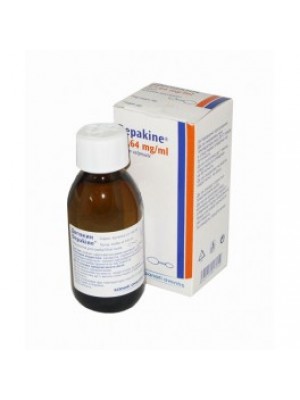
DEPAKINE 400 mg / 4ml
Product Code: DEPAKINE 400 mg / 4ml
Availability: In Stock

Product viewed: 1583


DEPAKINE 400 mg / 4ml
Description of the product
a) Name of the medicinal product
DEPAKINE® 400 mg / 4 ml, solution for injection (IV) Valproate 400mg / 4 ml, solution for injection
b) Composition
Active substance: Sodium valproate .................. 400 mg
Support staff: solvent: water for injections ......... 4 ml
c) Formulation
Powder for injection / infusion 4 vials of lyophilized powder +4 solvent ampoules
d) Pharmaco-therapeutic group
Antiepileptic drug. (N: nervous system)
2. When using DEPAKINE
Depakine is intended for the treatment of epilepsy in patients who temporarily not possible the use of tablets.
3. Warnings
a) When you must not take Valproate Eng.
Depakine should not be used if:
• You have jaundice
• you (or someone in your immediate family) have a history of liver disease, especially if caused by drugs
• in combination with mefloquine (for the treatment of malaria)
• previous use you received hypersensitivity to sodium valproate or any of the ingredients of the medication
• suffer from hepatic porphyria (an inherited metabolic diseases) .This medication should not be used in combination with lamotrigine unless it has been prescribed by your doctor. If in doubt, seek the advice your doctor or pharmacist.
b) Special warnings
At baseline seizure frequency may increase or that new, then immediately consult your doctor. Risk of tissue necrosis. Administered intravenously. Do not inject intramuscularly. In rare cases, the preparation can lead to diseases of the liver and pancreas, which can endanger the patient's life. This occurs in the first six months of treatment. Tell your doctor if:
- Sudden weakness, loss of appetite, fatigue, sleepiness
- Shortness of seizures, even when properly comply with the dosing instructions Your doctor will decide the need for blood tests or to stop or change treatment. Important information:
- Never stop treatment without first consulting a doctor
- To comply with the prescribed dose,
- Regularly visit a doctor, as it may be necessary to perform liver function tests, especially during the first 6 months of treatment
- Tell your doctor about all medications you are taking, even medicines obtained without a prescription.
c) Special precautions for use
In children to avoid concomitant use of medications containing aspirin. Depakine inj Harbor park declaration
Tell your doctor if you have kidney disease. If you are surgery tell the surgeon and the anesthetist that you are using this medicine.
If in doubt, seek advice from their doctor or pharmacist.
d) medicinal products and other forms of interaction
Do not use mefloquine (for malaria treatment) during treatment with Depakine Eng. To avoid any possible interactions between several drugs regularly tell your doctor about all medications you take.
e) Pregnancy - Breast-feeding
If you are pregnant or planning to become pregnant, immediately consult a doctor. Consult your doctor if you are breast feeding or wish to breast-feed.
f) Effects on driving and operating machinery.
If the disease is not controlled drug, driving or operating machinery dangerous. Possible drowsiness in combination with other drugs, particularly those that affect the central nervous system.
4. Directions
a) Dosage
Strictly determined by the attending physician.
b) Method of administration
Intravenous: When switching from the tablet to the injectable form (for example, in a planned surgery), intravenous administration of sodium valproate in a solution of 0.9% NaCl at a daily average dose of about 20 to 30 mg / kg / day, after 4-6 hours from the final oral dose
- Or by continuous infusion over 24 hours.
- Or 4 daily infusions over 1 hour
Upon reaching the rapid plasma concentrations:
Upon intravenous injection of the bolus 15 mg / kg for 5 minutes followed by an infusion of 1 mg / kg / h, the speed is adjusted to achieve a blood concentration of valproate 75 mg / 1. Speed is adjusted according to the progression of clinical response. When changing to the tablet forms at usual doses, perfusion gradually interrupt (fast compensate for the eliminated amounts)
If in doubt, ASK FOR ADVICE TO DOCTOR.
c) Frequency of use
Frequency of use is determined by the doctor.
d) Duration of use
Determined by a doctor.
e) In case of overdose
Immediately contact your doctor or go to the nearest hospital 5. Adverse reactions.
Like all DRUGS AND THIS COULD RESULT IN THE EMERGENCE OF SIDE EFFECTS.
- When using intravenous Depakine few minutes after injection were observed nausea and dizziness, which disappear in a few minutes.
- Risk of local tissue necrosis repeated injections.
- Abnormal liver function or pancreas
- Digestive disorders (nausea, stomach pain) were observed in some patients early in treatment; temporal or dose-related side effects: hair loss, fine positional tremor, weight gain, amenorrhea, or irregular cycles
- Confusion or convulsions, described several cases of stupor when treated with sodium valproate; they are isolated or associated with an increased incidence of seizures
- Bleeding (nose, gums, etc.). Immediately inform your doctor as it may be necessary laboratory tests.
- Changes in blood cell counts (reduced number of platelets, leukocytes, erythrocytes and fibrinogen; prolonging bleeding time increased serum ammonia.
- Rare cases of renal impairment
- Rash over the body with or without fever, with or without sores in the mouth or genital organs. In these cases, immediately notify your doctor or ambulance. Tell your doctor about any side effects not listed in this leaflet.
6. Shelf life
Do not use after the expiry date stated on the packaging.
7. Special storage conditions
At temperatures below 25 ° C. Infusion solution is stored at a temperature between 2-8 ° C.
Write a review
Your Name:Your Review: Note: HTML is not translated!
Rating: Bad Good
Enter the code in the box below:
Related Products