
Your shopping cart is empty!
Welcome visitor you can login or create an account.
DAKTARIN oral gel 2% 40 g.
Product Code: DAKTARIN oral gel 2% 40 g.
Availability: In Stock
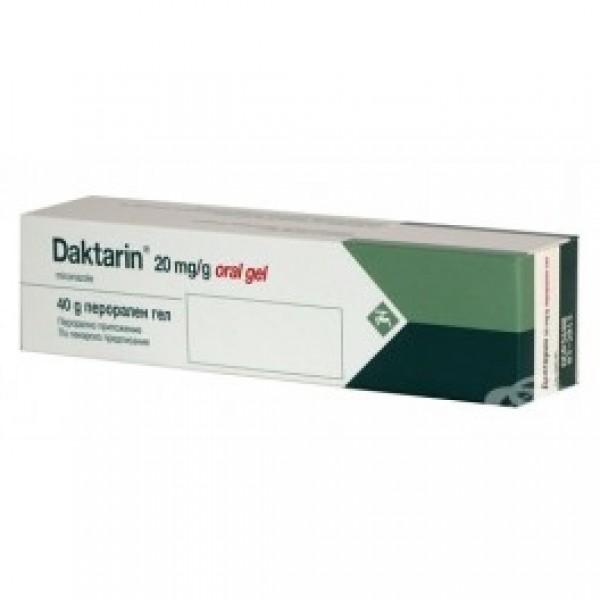
Product viewed: 1295


DAKTARIN oral gel 2% 40 g.
WHAT DAKTARIN AND WHAT IT IS USED FOR?
DAKTARIN medicine for the treatment and prophylaxis of infections caused by fungi, including. and yeasts (e.g., Candida).
DAKTARIN oral gel is used for infections of the oral cavity, throat, esophagus, stomach or intestine.
2. BEFORE YOU TAKE DAKTARIN
DAKTARIN oral gel not be used in children less than 6 months of age, or those whose swallowing reflex is not sufficiently developed due to the risk of choking. Do not take DAKTARIN if:
- Suffer from any liver disease;
- If you know that you are hypersensitive to the active ingredient miconazole or to any of the excipients;
- If you are taking other prescription drugs unless the application is not advised by your doctor. (See. Section "Taking other medicines") effects and / or side effects of many drugs can increase or decrease by concomitant DAKTARIN. If you need to take another medicine while using DAKTARIN ask for advice your doctor or pharmacist (see. Section "Taking other medicines").
Take special care with DAKTARIN
Infants over 6 months of age and young children
DAKTARIN oral gel is sticky, which are retained in the mouth as long as possible. Caution is advised in the use in infants (over 6 months) and children to prevent the possibility of choking.
Important: make sure that the gel is not located near the throat. Due to the possibility of choking, must comply with the following requirements:
- Divide each intake into smaller parts - never place the child's mouth the whole amount at once;
- Put the gel on the affected areas of the mouth (white deposits) in accordance with the advice you were given by your doctor or pharmacist;
- Never put a large amount of gel in the back of the throat. Taking other medicines
Tell your doctor or pharmacist about all the medicines you are taking at the moment. Some medicines should not be taken concomitantly with DAKTARIN and others where possible, may require some change (eg dosage).
Examples of drugs that should never be taken if you are taking oral gel DAKTARIN: some allergy medicines, named after terfenadine, astemizole and mizolastine; cisapride, a medicine used for certain problems associated with the digestion; some cholesterol-lowering drugs such as simvastatin and lovastatin; midazolam (orally) and triazolam medicines used in the case of anxiety or help you sleep (tranquillizers);
- Pimozide and sertindole, drugs used in certain psychotic disorders; halofantrine, a medicine against malaria;
- Some drugs used for the treatment of migraine, such as ergot alkaloids (Kafergot); some medicines used to treat heart rhythm disorders, such as bepridil, quinidine and dofetilide.
Combination with certain other medicines may require additional monitoring or dose modification, both DAKTARIN and other medicines. Examples include: drugs that thin the blood, such as warfarin;
- Some medicines that are taken orally and are used to treat diabetes (sulphonylureas);
- Certain AIDS drugs such as HIV protease inhibitors; certain drugs used for treatment of cancer;
- Some drugs acting on the heart and blood vessels (calcium channel blockers);
- Cyclosporin A, tacrolimus and sirolimus, which are applied usually after organ transplantation;
- Phenytoin, a drug for the treatment of epilepsy;
- Certain anesthetic agents used in hospitals, such as alfentanil;
- Sildenafil used for male impotence;
- Some medicines used in cases of anxiety and help you sleep (tranquillizers); certain drugs for the treatment of tuberculosis;
- Methylprednisolone, taken orally or by injection, in the case of inflammation; trimetrexate used to treat certain forms of pneumonia; ebastine, a medicine used in allergies; reboxetine, a drug used to treat depression. If you are taking any of these medicines, and any other prescribed medication, please discuss this with your doctor or pharmacist. While taking DAKTARIN oral gel, do not start any other treatment without you inform your doctor or pharmacist.
Please tell your doctor or pharmacist if you are taking or have recently taken any other medicines, including medicines obtained without a prescription.
Taking DAKTARIN with food and drink
DAKTARIN oral gel should be taken after meals.
Pregnancy and lactation
If you are pregnant or plan to become pregnant, you should tell your doctor who will decide whether you can take DAKTARIN oral gel.
If you are breastfeeding, you should first consult your doctor who will decide whether you can take DAKTARIN oral gel.
Ask your doctor or pharmacist before taking any medicine.
Driving and using machines
There are no restrictions as DAKTARIN oral gel does not affect your attention and opportunities to drive.
Important information about some of the ingredients of DAKTARIN
This product contains small amounts of ethanol (alcohol), less than 100 mg per dose.
3. HOW TO TAKE DAKTARIN?
Always take DAKTARIN oral gel exactly as prescribed by your doctor. If you are not sure, ask your doctor or pharmacist.
DAKTARIN comes in the form of oral gel administered orally. The gel should be taken after a meal. How much DAKTARIN should take and the length of time depends on the type of fungus and the localization of the infection. Your doctor will tell you exactly what to do.
Continue treatment for at least one week after the disappearance of symptoms.
The gel should not be immediately swallowed, but remain in the mouth as long as possible. Thus the drug may be retained for a longer period of time in contact with the oral mucosa. If you wear dentures, it is preferable to download them before bedtime and smear them with gel. In this way you can prevent the spread of fungal infection on your dentures.
In the treatment of mouth is recommended in the following dose:
• Adults and children over 2 years of age: 1/2 scoop (2,5 ml) of gel four times daily.
• For children 6 months to 2 years of age: 1/4 scoop (1,25 ml) of gel four times daily.
Recommended dosage in the treatment of digestive tract with or without mouth: Babies over 6 months, children and adults who have difficulty swallowing tablets can use DAKTARIN oral gel.
• Adults: 2 spoons (10 ml) from the gel, four times daily.
• For infants and children, the dose depends on the weight of the baby / child:
to 11,9 kg: Vi scoop (1,25 ml) of gel four times daily;
from 12 to 24,9 kg: Vz scoop (2,5 ml) of the gel, four times a day
from 25 to 36,9 kg: 1 spoonful (5 ml) of the gel, four times a day;
from 37 to 49,9 kg: 11A scoop (7,5 ml) of the gel, four times a day;
50 kg up: 2 spoons (10 ml) from the gel, four times a day;
The tube is opened by turning the cap. Then drill a hole in the tube using the tip of the cap.
If you take more dose DAKTARIN
In case you take too much DAKTARIN, you can get vomiting and diarrhea. However, for greater certainty, consult your doctor.
Information for doctor in case of overdose
Treatment is symptomatic and supportive. There is no specific antidote.
Ingestion of large amounts should be using an appropriate method of gastric lavage. If the patient accepts also other drugs (eg. Warfarin, oral agents to lower blood sugar levels and phenytoin), their effects and / or side effects may be intensified.
If you forget to take DAKTARIN
Do not take a double dose to make up the missed dose DAKTARIN oral gel. If you stop taking DAKTARIN
If you have any further questions on the use of this product, ask your doctor or pharmacist.
4. POSSIBLE SIDE EFFECTS
Like all medicines, DAKTARIN oral gel can cause side effects, although not everybody gets them.
If DAKTARIN clog the throat, infants and children can suffocate. Common reactions are nausea, vomiting, regurgitation, loss of taste or abnormal taste, dry mouth, oral discomfort or unusual taste of the products. Also, but very rarely encountered diarrhea, inflammation of the mouth and discoloration of the tongue.
Cases of hypersensitivity (allergy) to DAKTARIN are very rare. May be recognized by the following symptoms: itching, skin rash, hives, shortness of breath and / or swelling of the face. Very rare are the cases of serious skin reactions with a widespread rash with peeling skin and blisters in the mouth, eyes and genitals (toxic epidermal necrolysis or Stevens-Johnson). If you have difficulty breathing, seek emergency medical care. The suspected allergy should stop taking DAKTARIN and consult your doctor or pharmacist.
Very rare inflammation of the liver that may lead to one or more of the following symptoms: loss of appetite, nausea, vomiting, fatigue, abdominal pain, jaundice, dark urine, and very pale stools. In this case, stop taking DAKTARIN and contact your doctor immediately.
If any of the side effects gets serious, or if you notice other effects not listed in this leaflet, please tell your doctor or pharmacist.
5. HOW TO STORE DAKTARIN?
Do not store above 30 ° C (normal room temperature). Keep out of the reach and sight of children.
Do not use DAKTARIN oral gel after the expiry date stated on the carton and tube.
The expiry date refers to the last day of that month. Shelf life after opening the immediate packaging: 28 days.
Do not use DAKTARIN oral gel if you notice visible signs of deterioration.
Medicines should not be disposed of via wastewater or household waste. Ask your pharmacist how to dispose of medicines no longer required. These measures will help to protect the environment.
6. FURTHER INFORMATION
What DAKTARIN?
The active substance is miconazole.
Other ingredients are:
- Potato starch
- Sodium saccharin
- Polysorbate 20
- Orange and cocoa flavor
- Ethanol
- Glycerol
- Water
Write a review
Your Name:Your Review: Note: HTML is not translated!
Rating: Bad Good
Enter the code in the box below:
Related Products

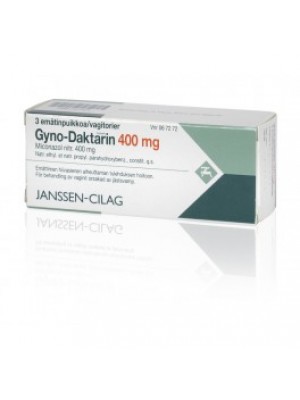
GYNO - DAKTARIN 400 mg. 3 capsulesWhat is GYNO-DAKTARIN and ..
17.00€