Your shopping cart is empty!
Welcome visitor you can login or create an account.
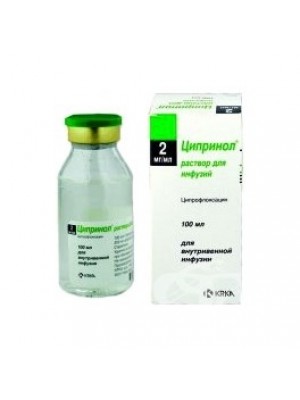
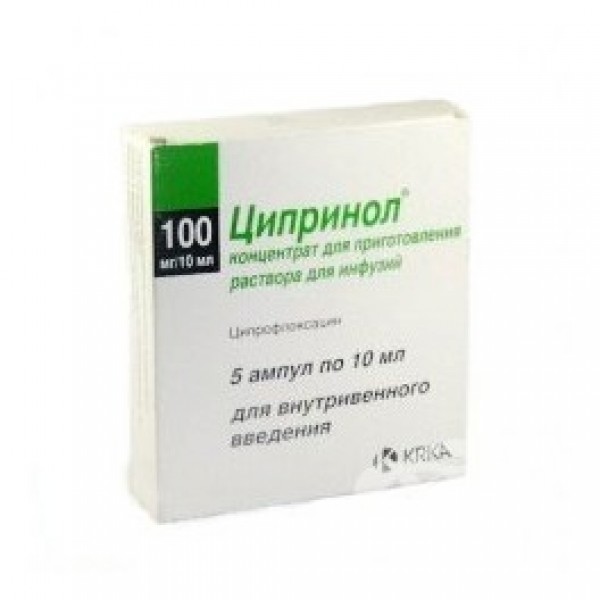
CIPRINOL. 100 mg. 10 ml.
Product Code: CIPRINOL. 100 mg. 10 ml.
Availability: In Stock
Product viewed: 1248


CIPRINOL. 100 mg. 10 ml.

QUALITATIVE AND QUANTITATIVE COMPOSITION
10 ml of solution ( 1 ampoule ) contains 100 mg Ciprofloxacin lactate form . / 1 ml of concentrate containing 10 mg Ciprofloxacin lactate like . /
3 . PHARMACEUTICAL FORM :
Concentrate for solution for infusion : clear , zhaltozelenikav solution.
4 . CLINICAL DATA
4.1. indications
Treatment of infections caused by microorganisms susceptible of Ciprofloxacin and in cases where oral treatment is not possible:
* Urinary tract infection : uncomplicated ( in the case of polirezistentnost ) and complicated infections of the upper and lower urinary tract / urethritis , cystitis , epididymitis , prostatitis , pyelonephritis / .
respiratory tract infections : pneumonia (except pneumococcal pneumonia) , acute and chronic bronchitis, bronchiectasis , exacerbation of cystic fibrosis (especially if caused by Ps. aeruginosa);
infections of the ear, nose and throat acute middle ear infection , sinusitis, mastoiditis , after infection with Gram- negative bacteria (Ps. aeruginosa); pelvic infections : gynecological infections ( salpingitis , endometritis , oophoritis , abscess and peritonitis in the pipes pelvis ) ;
abdominal and hepatobiliary infections: peritonitis , intra- abdominal abscesses , cholecystitis , cholangitis (in combination with clindamycin or metro nidazol ) infections of bones and joints, osteomyelitis , septic arthritis;
infections of the skin and other soft tissues : infected wounds, ulcers , abscesses , cellulitis, an infection of the external auditory move infected burns , severe systemic infections: sepsis , infections in neutropenic patients ( in combination with other antibiotics) ;
perioperative prophylaxis of infections , especially in urology , gastroenterology (in combination with metronidazole) and orthopedics . Anthrax / treatment of the three forms of anthrax prevention in individuals who have been in contact, with an aerosol form of Anthrax bacillus /
4.2 . Dosage and method of administration
Is the most appropriate short intravenous infusion (it should last at least 60 minutes). Following doses are recommended :
Uncomplicated ( in the case of polirezistentnost ) infections of upper urinary tract : 2 x 200 mg daily /
Complicated infections of the upper urinary tract : 2 x 400 mg daily
Severe respiratory tract infections ( pneumonia ): 2 x 400 mg daily Other infections: 2 x 200 to 400 mg daily for an extremely severe infections , and low sensitivity of the pathogen (e.g., infection by Ps. Aeruginosa in cystic fibrosis ) , the daily dose can be increased to 3 times 400 mg intravenously .
In acute gonorrhea single dose of 100 mg intravenously sufficient. Chronic bacterial prostatitis : 2 x 400 mg. daily.
In elderly patients Ciprinol dose should be adjusted according to creatinine clearance, type and severity of the disease.
For prevention of perioperative infection administered 200 to 400 mg Ciprinol intravenous infusion as a half to one hour prior to surgery. If the operation lasts more than four hours , the dose should be repeated.
For treatment and prevention of anthrax in adults exposed to an aerosol of Bacillus anthracis is necessary to apply 400 mg. Ciprinol, twice daily for a period of 60 days. For treatment and prevention of anthrax in children exposed to an aerosol of Bacillus anthracis is administered 10 mg. / Kg twice daily for two 60 . At the beginning it is recommended that the infusion can then be switched to oral administration.
Dosage in patients with severely impaired renal function:
If creatinine clearance was less than 20 ml / min (0.33 ml / sek; serum creatinine over 400 m mol / 1 ) , the usual dose is administered once a day or half the dose - twice a day. In patients with end stage renal disease who are treated with chronic hemodialysis , the maximum dose is 500 mg daily. Due to the relatively insignificant removal of product during hemodialysis , Ciprinol should not be compensated after hemodialysis.
In patients with peritonitis , which are treated with continuous ambulatory peritoneal dialysis , it is recommended that the intraperitoneal administration of Ciprofloxacin, i.e. 4 x 50 mg / L dialysate dnevno.Prodalzhitelnostta of treatment depends on the severity of the disease , clinical and microbiological findings. The initial infusion treatment can be continued with tabletki.Lechenieto usually lasts 3 to 14 days, chronic prostatitis, osteomyelitis 4 to 6 weeks or more.
Preparation of the solution for infusion
Kontsenratat for infusion can be used only after dilution with an appropriate amount of a solution for infusion and is compatible with physiological saline , Ringer's solution or Hartmann's , 5% or 10% glucose, 10% fructose, 5% glucose and 0.225% NaCl with or 0.45% NaCl ( the lowest volume is 50 ml). Ciprinol must not be mixed with the solutions and products that are physically or chemically unstable at pH 3-4 Penicillin , Heparin / . In parallel intake of another product, it should always be administered separately from Ciprinol.
4.3 Contraindications
Hypersensitivity to the product or other quinolone chemotherapeutics children during growth , pregnant women and nursing mothers. Ciprinol not recommended for the treatment of infections in children during growth, unless the potential benefit justifies the risk (eg, recurrent respiratory tract infections with resistant strains of Ps. Aeruginosa in cystic fibrosis ) . Pregnant women , nursing mothers and children can be treated with Ciprinol if they were in contact with an aerosol of Bacillus anthracis.
4.5 . Interaction with other drugs :
Concomitant use of Ciprinol and theophylline or caffeine can cause unwanted increase in plasma levels of theophylline or caffeine and prolong their elimination .
Coadministration of Ciprinol cyclosporine nephrotoxicity increases tsiklosporina.Preporachva be more frequent monitoring of serum concentrations of theophylline and tsiklosporina.Vremeto bleeding may be prolonged by concomitant use of Ciprinol anticoagulant therefore recommended more frequent monitoring of prothrombin time . Concomitant Phenytoin may lead to changes in the serum concentrations of the latter. In patients who are taking corticosteroids there is a higher risk of rupture suhozhiliyata.Osobeno attention should be paid in diabetic patients because of the risk of hypoglycaemia in relation to the potentiation of the effect of glibenclamide .
The concomitant use of nonsteroidal anti-inflammatory drugs / fenbufen / and high doses of quinolones can lead to convulsions.
4.6 . Pregnancy and lactation
Ciprofloxacin should not be prescribed to pregnant women. This limitation is due to the effects of the quinolones , seen in young animals , in which some quinolones have caused damage to the cartilage. So far, no link has been established between the use of Ciprofloxacin and cartilage damage in humans. Ciprinol use during pregnancy is permitted only if the potential benefit to the mother outweighs the risk to the fetus. Since Ciprinol is excreted in breast milk , use during lactation is not recommended or breast-feeding should be discontinued if treatment Ciprinol absolutely necessary.
4.4 . Warnings and precautions for use
Need attention when this product is used in elderly patients or patients with CNS disorders (epilepsy , low seizure threshold , a history of seizures , decreased brain attack, stroke , myasthenia , psychiatric diseases , toxic psychosis, suicidal ) , severe hepatic impairment , any type and renal deficiency of glucose- b - phosphate dehydrogenase , wherein may develop hemolytic anemia . Should be avoided alkalinity of the urine because of the risk of crystalluria . Patients should also avoid excessive exposure to sunlight and artificial sources of UV light due to the risk of fototoksichnireaktsii .. Before starting treatment and during treatment with Ciprinol should provide enough hydration patsienta.Pri presence of renal impairment , the dose should to reduce or applicated in longer interval.Ima , cases of tendonitis and even tendon rupture during treatment with quinolones , particularly in elderly patients treated with corticosteroids . Although it has not been established causal relationship to drug administration is recommended discontinuation of treatment if pain occurs in the tendons or any sign of tendinitis . During treatment and immediately after it the patient should avoid excessive exercise. Patients should not drink alcohol during treatment .
4.7 . Influence on psycho- motor activity / drive and use machines.
Typical doses can reduce Ciprinol concentration , which can further be reduced with the concomitant consumption of alcohol . The patient should be warned that his ability to drive or operate machinery during treatment may be limited .
4.8 . side effects
The most frequently occurring side effects on the gastrointestinal tract : nausea , vomiting , abdominal pain, flatulence , anorexia, diarrhea. If severe or persistent diarrhea and pseudomembranous colitis , treatment should be discontinued.
Reported other side effects CNS : dizziness , headache, fatigue , agitation , anxiety , convulsions , increased intracranial pressure , toxic psychosis , hallucinations and sensory disturbances ( impaired vision, diplopia, bad taste , tinnitus ) .
Allergic reactions: skin reactions ( exanthema, erythema, pruritus) , fever, face edema, photosensitivity and rare anaphylactic reaction , eosinophilia , Steven-Jonson system , Lyell - syndrome / epidirmalnanekroza / interstitsialninefriti , vasculitis .
Cardiovascular: a fall in blood pressure , hypertension, paroxysmal tachycardia, migraine.
Ciprinol can result pokochvane of the blood sugar level .
Other: arthralgia, myalgia , a local reaction at the injection site , crystalluria .
During treatment with Ciprinol can exacerbate the disease Myasthenia gravis.Pri inadequate fluid intake may develop kristaluriya.Efekti the results of laboratory tests : a transient increase in the activity of transaminases and alkaline phosphatase can be observed mainly in patients with impaired liver function , may occur and transient increase in urea, creatinine and bilirubin in serum.
Fluoroquinolones can cause tendinitis or tendon rupture , but it happens very rarely, usually in combination with other damaging factors. Treatment should be discontinued if severe adverse reactions (especially hypertensive reactions , pseudomembranous colitis , neurological disorders , hallucinations , pain in the tendons ) and badeuvedomen for this doctor.
4.9 . overdose
Overdose can cause mainly nausea, vomiting , diarrhea , headache and dizziness in more severe cases - confusion , tremors, hallucinations and cramps. We need to reduce the dose or the infusion temporarily stopped. The patient should be carefully monitored. Treatment is symptomatic . Particularly important is proper hydration . Intoxication , hemodialysis is not effective .
5 . Pharmacological Properties
5.1. FarmakodinamikaCiprinol a synthetic chemotherapeutic agents from the group of fluoroquinolones with a broad spectrum of antimicrobial action. Its antimicrobial efficiency is mainly related to the cyclopropane ring in position 1, fluorine in position 6 and piperazine ring at position 7 . The main mechanism of action is the inhibition of Ciprofloxacina subunit A of the bacterial DNA gyrase , an enzyme which is responsible for replication of bacterial DNA required for the synthesis of proteins. It acts on the bacterial cell at rest and during reproduction. It has antibacterial activity against most gram-negative and some gram- positive organisms.
The following microorganisms are sensitized in vitro to Ciprofloxacin:
Gram- negative micro-organisms :
- Enterobacteriaceae: E.soli , Shigella spp., Salmonella spp., Citrobacter, Klebsiella spp., Enterobacter spp., Proteus mirabilis and vulgaris, Serratia marcescens, Hafnia alvei, Edwardsiella tarda, Providencia spp., Morganella morganii, Vibrio spp., Yersinia spp.
Other Gram- negative bacteria : Aeromonas spp., Plesiomonas shigeloides, Pasteurella multocida, Haemophilus spp., Campylobacter jejuni, Pseudomonas aeruginosa, Neisseria spp., Moraxella (Branhamella) catarrhalis;
- Some intracellular pathogens : Legionella pneumophila, Brucella spp., Chlamydia trachomatis, Listeria monocytogenes, Mycobacterium tuberculosis, Mycobacterium kansasii, Mycobacterium avis intracellulare.Potvardena and in vitro sensitivity of these Gram- positive bacteria : Staphylococcus spp. (S.aureus, S.haemolyticus, S.hominis and S.saprophyticus), Streptococcus spp. (S.pyogenes and S.agalctiae) and slightly less sensitivity S.pneumoniae and Streptococcus faecalis.
Bacteria from the group consisting of Corynebacterium spp., Bacteroides fragilis, Pseudomonas cepacia and maltophila, Ureaplasma urealyticum, Clostridium difficile, Nocardia asteroides, Streptococcus faecium , and Treponema pallidum are resistant Ciprofloxacin.
Table of antimicrobial activity inhibitory (MIC90) in vitro, wherein Ciprofloxacin is most effective :
Bacterial strain MIC90 (mg / 1 ) Enterobacteriaceae * 0.008-1
Providencia spp. 0.015-3.12
Salmonella spp. 0.015-0.25
Serratia marcescens 0.06-1
Shigella spp. 0.002-0.25
Yersinia enterocolitica 0.015-0.25
Acinetobacter calcoaceticus 0.25 -1
Neisseria gonorrhoeae 0.002-0.03
Neisseria meningitidis 0.005-0.015
Haemophilus influenzae 0.007-0.05
Pseudomonas aeruginosa 0.12-4
Pseudomonas spp. 00:25 -16
* E.coli, Enterobacter spp., Citrobacter spp., Salmonella spp., Klebsiella spp., Proteus spp.Ciprofloxacin shows weak in vitro activity against Gram-positive bacteria. However Ciprofloxacin is one of the most effective drugs against Staphylococcus aureus and S. epidermidis. According to literature data MICgo of S. aureus ranged from 0016-16 , and S.epidermidis 0.016 - 8 .
The sensitivity in vitro, expressed as the MIC90, satisfactory and against Streptococcus pneumoniae and some streptococci from group A and B (0.12 to 4 mg / l) . Moderate sensitivity to Ciprofloxacin in vitro has been demonstrated for Mycobacterium tuberculosis and M.kansasii (MIC90 0.25 - 4 ) . Ciprofloxacin in concentrations of 0.5 - 2mg / l and inhibits Chlamydia trachomatis.
The emergence of resistance usually means cross-resistance to all quinolones . The emergence of resistance may be due to two mechanisms :
- Mutation of the sub- unit A of DNA gyrase , which reduces the affinity of the bacterium for Ciprofloxacin ( this is the explanation for the occurrence of resistance of P. aeruginosa)
- Change in the cell membrane , which reduces the permeability of the cell for the active substance .
Most often the resistance is established by Pseudomonas aeruginosa infections and some strains of Staphylococcus aureus.
Synergistic activity in vitro of Ciprofloxacin with other antibiotics is shown with imipenem against Pseudomonas aeruginosa, with mezlocillin , tsefoksetin and clindamycin against B. fragilis, with azlocillin against P. aeruginosa and ceftizoxime against P. aeruginosa and S. marcescens.
Since its introduction into clinical use Ciprofloxacin has been used successfully to treat a variety of infections in the few tens of thousands of patients. An analysis of the effectiveness of oral and intravenous forms of Ciprofloxacin in 3822 patients , many of whom suffer from severe infections showed very high overall clinical efficiency - 94.2% . Similar effects have been reported for bacterial eradication , which was confirmed in the same population over 80 % in the majority of isolated bacteria. A smaller percentage of eradication was observed in infections with Pseudomonas spp. (78.8%), P. aeruginosa (69.3%), S. faecalis (77.7%), Acinetobacter spp. ' ( 77.4% ) and Chlamydia trachomatis (65.6%). In 75% of all patients has been confirmed the complete clinical and bacteriological cure , and in a further 15 % improvement or partially cured . It has been shown that Ciprofloxacin is a medicinal product with a relatively low incidence of side effects ( 4-10 % of patients) .
Ciprofloxacin can be an agent of choice for the treatment of uncomplicated ( in the case of polirezistentnost ), heavy and complicated urinary tract infections, skin, soft tissue and bone in infection with Gram- negative pathogens , in patients with gastrointestinal infections caused by microorganisms with multiple resistance, nosocomial pneumonia, sexually -transmitted diseases , hepatobiliary infections and bacterial meningitis caused by Gram -negative organisms in neutropenic patients and for prophylaxis of infection in surgical operations of the abdomen, orthopedics and urology . As Ciprofloxacin not act against anaerobes , it is combined with metronidazole or clindamycin in patients with anaerobic infections . Ciprofloxacin is also not suitable as a first agent in the treatment of ambulatory patients with otitis media , sinusitis, tonsillitis or pneumonia .
5.2 Pharmacokinetics
60 min after the start of infusion, at a dose of 200 mg. or 400 mg., maximum serum concentrations were 2.16 mcg / ml respectively . 4.6 p.g / ml. Elimination half-life is 3 to 5 hours. The concentration in urine in the first two hours after administration was 100 times achieve a higher than serum . 50-70 % of the dose is excreted in the urine nepromena , 10% metabolized and approximately 15 % is eliminated in the faeces.
5.2.1. distribution
Ciprofloxacin is bound to plasma albumin 19-40 %.
The volume of distribution of Ciprofloxacina after intravenous administration at steady state is between 1.74 to 5.0 1/kg, indicating extensive penetration of Ciprofloxacin into tissues. Have been demonstrated therapeutic concentrations of Ciprofloxacin in various tissues bronchial mucosa , lung, pleural exudate , liver, gallbladder , bile, peritoneal fluid , kidney, reproductive organs and genitelii , prostate , bone, synovial tissue and fluid , skin , and a front chamber mesh . It reached the highest concentrations in the liver , gallbladder, bile , kidney and secretion of prostatata.Kontsetratsiite CSF generally not exceed 50% of serum levels . The penetration in the meninges but is better and the concentrations exceeded MIC for most enterobacteria .
5.2.2 . metabolism
Metabolic biotransformation of quinolones is done in two ways: changes in 7- piperazine ring to form glucuronide in third position. Ciprofloxacin is excreted from the body mostly unchanged . After oral administration, 8 -20% of the dose was excreted as metabolites by the kidneys . Unchanged molecule Ciprofloxacina piperazine and metabolites are excreted in bile, as this amount is quite a bit. A small portion of 7- piperazine metabolites are reabsorbed in the gastrointestinal tract . This double elimination Ciprofloxacina have a significant effect on the pharmacokinetics . This may explain the relatively short half-life (3 to 5 hours) . Thus elimination prevents excessive accumulation of Ciprofloxacin in the plasma of the weakened kidney and liver function.
5.2.3 . excretion
Ciprofloxacin is excreted primarily in the urine . 50-70 % of Ciprofloxacina eliminated unchanged , and 10% is excreted as inactive metabolites. To 15% of Ciprofloxacina eliminated in the faeces. Renal clearance of Ciprofloxacina, which is about 5 ml / s, exceeds the normal glomerular filtration rate. This is probably due to the fact that a substantial part of Ciprofloxacina actively secreted by the renal tubules . Concomitant use of probenecid decreases the renal elimination of Ciprofloxacina by 50 %, which is in support of the above statement .
5.3 . Preclinical safety data
Acute toxicity tests have shown low toxicity Ciprofloxacina. Chronic treatment of laboratory animals causes kidney damage and joints. Ciprofloxacin no teratogenic , embryotoxic and carcinogenic effect. Routine tests for mutagenicity study gave negative results with the exception of the two test ( mouse lymphoma assay and unscheduled DNA synthesis ) , that have shown a beneficial effect . It is likely the last two tests in vitro to give false positive results and therefore they must be supported by research in VIVO.
6 . PHARMACOLOGICAL PROPERTIES
6.1. List of excipients
Lactic acid, Sodium edetate, Hydrochloric acid, Water for injections
6.2 . Incompatibilities
Ciprinol must not be mixed with infusion and injection solutions , which are physically or chemically unstable at pH values between 3 and 3
6.3. Expiration date
4 godini.6.4 . Special precautions for storage Protect from light.
Do not store above 25 ° C.
Keep out of reach of children
. The solution should not be frozen.
6.5. Nature and contents of container
Ampoules : 5 ampoules of 10 ml concentrate for solution 100mg/10 ml.
6.6. Instructions for use / handling the product
Solution for infusion should be prepared immediately prior to administration . Kontsenrtatat for infusion can be used only after dilution with an adequate quantity of infusion solution: physiological saline , Ringer's solution or Hartmann's , 5% or 10% glucose, 10% fructose, 5% glucose and 0.225% NaCl with or 0.45% NaCl ( the smallest volume is 50 ml). Ciprinol must not be mixed with infusion and injection solutions , which are physically or chemically unstable at pH values of 3 to 4 .
Write a review
Your Name:Your Review: Note: HTML is not translated!
Rating: Bad Good
Enter the code in the box below:
Related Products