Your shopping cart is empty!
Welcome visitor you can login or create an account.
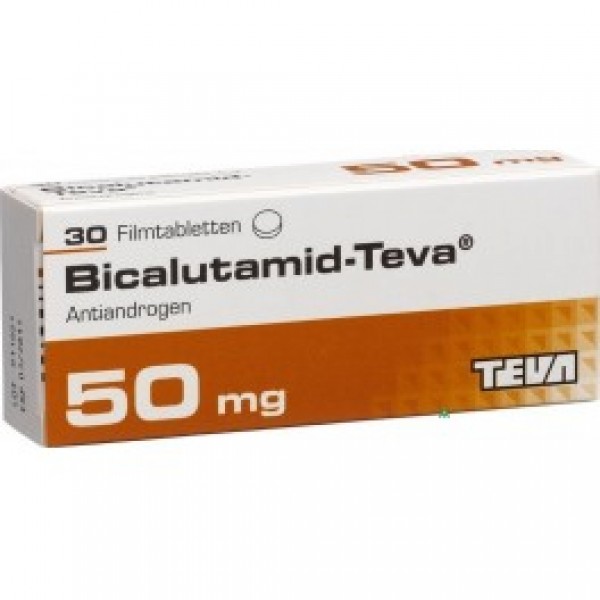
BICALUTAMIDE 50 mg. 30 tablets
Product Code: BICALUTAMIDE 50 mg. 30 tablets
Availability: In Stock
Product viewed: 1398


BICALUTAMIDE 50 mg. 30 tablets
What is Bicalutamide Accord and what it is used
Pharmacotherapeutic group: Hormone antagonists and related agents, anti-androgens.
Bicalutamide is used for treating prostate cancer in an advanced stage. It is in conjunction with a drug known as an analog of luteinizing hormone-releasing hormone (LHRH) - additional hormone treatment - or with concurrent surgical removal of the testes.
Bicalutamide is a group of medicines known as nonsteroidal antiandrogens. The active substance bicalutamide blocks the undesired effect of male hormones (androgens), and thus inhibits cell growth in the prostate.
2. What you need to know before taking Bicalutamide Accord
Do not take Bicalutamide Accord:
If you are allergic to bicalutamide or any of the other ingredients of this medicine (listed in section 6);
If you are a woman, teenager or child;
If you are taking terfenadine or astemizole (for hay fever or allergy) or cisapride (for stomach disorders) together with Bicalutamide 50 mg tablets.
Bicalutamide Accord should not be taken by women or children.
Warnings and Precautions
Talk to your doctor or pharmacist before taking Bicalutamide Accord:
If the functioning of your liver is moderately or severely impaired. In this case, the drug should only be taken after your doctor has carefully pondering the possible benefits and risks. If this is the case, your doctor will regularly conduct tests of liver function (bilirubin, transaminases, alkaline phosphatase). If severe liver dysfunction, treatment with bicalutamide should be discontinued;
If your kidney function is severely impaired. In this case, the drug should only be taken after your doctor has carefully pondering the possible benefits and risks;
If you have diabetes and are already taking an LHRH analog. Drugs of this type are goserelin, buserelin, leuprorelin and triptorelin.
Other medicines and Bicalutamide Accord:
Tell your pharmacist if you are taking, have recently taken or might take any other medicines.
Bicalutamide can be administered together with any of the following medications:
Terfenadine or astemizole (for hay fever or allergy) cisapride (for stomach disorders).
If you are taking Bicalutamide with one of these drugs, the effect of bicalutamide and other medicine may be influenced. Please consult your doctor before taking any of these medicines together with bicalutamide:
Warfarin or any similar medicine to prevent blood clots;
Cyclosporine (used to suppress the immune system to prevent and treat rejection of a transplanted organ or bone marrow);
Cimetidine (used to treat stomach ulcers);
Ketoconazole (used to treat fungal infections of the skin and nails);
Blockers of calcium channels (for the treatment of high blood pressure).
Taking bicalutamide with food and drink:
Taking food and drink does not affect your treatment with Bicalutamide Accord.
Pregnancy and lactation:
Accord Bicalutamide is contraindicated in women and must not be given to pregnant women or nursing mothers. Ask your doctor or pharmacist before taking any medicine.
Driving and using machines
It is unlikely that your medication adversely affect your ability to drive or operate machinery. However, some people may sometimes feel dizzy or drowsy after taking Bicalutamide Accord. If this happens to you, you need to approach with caution the performance of such tasks.
Bicalutamide Accord contains lactose
If your doctor has told you that you have an intolerance to some sugars, consult him before taking this medicine.
3. How to take Bicalutamide Accord
Always take this medicine exactly as you have been told by your doctor or pharmacist. If you're not sure, ask your doctor or pharmacist.
The usual dose of Bicalutamide Accord is one tablet daily. Swallow the tablet whole with water. Try to take the tablet at the same time each day.
If you take more dose Bicalutamide Accord
If you take more than the prescribed dose, consult your doctor. In case of overdose, immediately go to the nearest hospital. If possible, take your tablets or the box with you to show the doctor what you have taken.
If you forget to take Bicalutamide Accord
If you forget to take your medicine, take your dose as soon as you remember and then take the next dose at the usual time. Do not take a double dose to make up for a forgotten tablet.
If you stop taking Bicalutamide Accord
Do not stop taking your tablets even if you feel better, unless your doctor tells you. If you have any further questions on the use of this medicine, ask your doctor or pharmacist.
4. Possible side effects
Like all medicines, this medicine can cause side effects, although not everybody gets them.
Allergic reactions:
This is uncommon (affects less than 1 in 100 people). Symptoms may include sudden onset of:
rash, pruritus or urticaria in the skin;
swelling of face, lips, tongue, throat or other parts of the body;
shortness of breath, wheezing or difficulty breathing.
If this happens, seek medical attention immediately.
Also tell your doctor immediately if you notice any of the following:
Very common (affecting more than 1 in 10 people):
abdominal pain;
blood in the urine.
Common (affects less than 1 in 10 people):
Yellowing of the skin or whites of the eyes (jaundice). These may be signs of liver problems or rare (affecting less than 1 in 1,000 people) liver failure.
Uncommon (affects less than 1 in 100 people):
Severe shortness of breath or shortness of breath that suddenly worsens. This may be accompanied by cough and high temperature (fever). This may be signs of inflammation of the lungs, called "interstitial lung disease".
Very common (affecting more than 1 in 10 people):
low levels of red blood cells (anemia). This can make you feel tired or look pale;
dizziness;
swelling and tenderness of the breasts;
breast enlargement in men;
a feeling of weakness;
hot flashes;
constipation;
vomiting (nausea);
swelling.
Common (affects less than 1 in 10 people):
loss of appetite;
indigestion;
wind (flatulence);
weight gain;
itching;
dry skin;
skin rash;
problems getting an erection (erectile dysfunction);
decreased sex drive;
depression;
drowsiness;
hair loss;
re-germination of hair growth or additional hair;
chest pain;
decreased function of the heart;
heart attack;
liver toxicity;
changes in liver enzymes.
Sometimes Bicalutamide Accord may be associated with changes in your blood which may require your doctor to do certain blood tests.
If you get any side effects, contact your doctor or pharmacist. This includes all listed in this leaflet.
5. How to store Bicalutamide Accord
This medicinal product does not require any special storage conditions.
Keep out of reach of children.
Do not use Bicalutamide Accord after the expiry date stated on the carton (EXP / EXP). The expiry date refers to the last day of that month, for example. mm / yyyy.
Do not dispose of medications in wastewater or household waste. Ask your pharmacist how to dispose of medicines you no longer use. These measures will help to protect the environment.
6. Contents of the pack and further information
What Bicalutamide Accord:
The active substance is bicalutamide.
Each tablet contains 50 mg bicalutamide.
Excipients:
Core:
lactose monohydrate;
sodium starch glycolate (type A);
povidone K-30;
magnesium stearate.
Film Coating:
Hypromellose E5;
titanium dioxide E171;
macrogol 400.
Bicalutamide Accord looks like and contents of the pack:
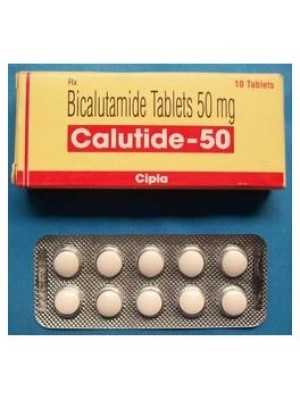
Bicalutamide 50 mg tablets are white to off-white, round biconvex, film-coated tablets debossed with "50" on one side and plain on the other.
Bicalutamide 50 mg tablets are packaged in blisters in packs of 14, 20, 28, 30, 60, 84, 90, 98 or 100 tablets.
Not all pack sizes may be marketed.
Write a review
Your Name:Your Review: Note: HTML is not translated!
Rating: Bad Good
Enter the code in the box below:
Related Products