Your shopping cart is empty!
Welcome visitor you can login or create an account.
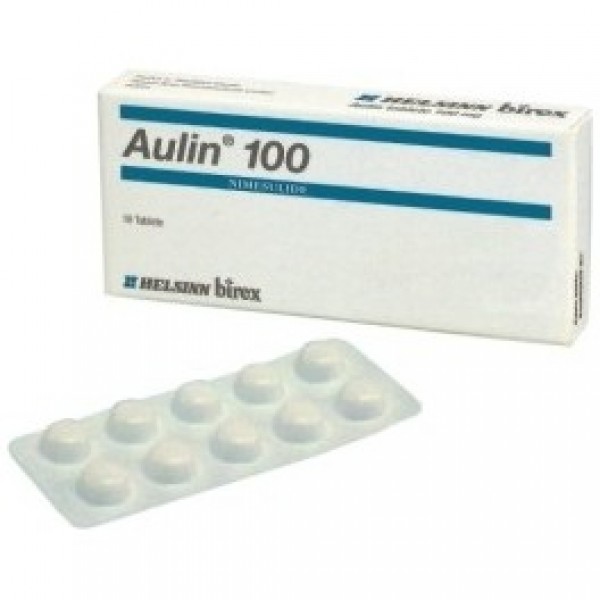
Aulin 100 mg. 10 tablets
Product Code: Aulin 100 mg. 10 tablets
Availability: In Stock
Product viewed: 1552


Aulin 100 mg. 10 tablets
Tablets Active substance:
nimesutide 100 mg tablet in I
Excipients:
cellulose, sodium docusate, lactose, vegetable oils, magnesium stearate, starch
pharmacological group
Nonsteroidal anti-inflammatory drug. ATC: M01AH17
action
Aulin is a non-steroidal anti-inflammatory drug having a functional group in the structure sulfonanilide. Aulin is a selective COX-2 inhibitor, which determines its high efficiency with a minimum manifestation of side effects on the gastrointestinal tract and kidneys. Eliminate oxygen free radicals, which are the basis of the inflammatory process. It has a powerful anti-inflammatory painkiller u and action.
evidence
- Osteoarthritis
- Ekstraartikularno rheumatic disease
- Pain and inflammation following surgery and / or acute trauma
- Dysmenorrhea
Contraindications
Patients with known hypersensitivity to the drug.
Patients with a history of hypersensitivity / eg. bronchospasm, rhinitis, urticaria / to salicylates or other NSAIDs.
Patients with intracranial hemorrhage.
Patients with active peptic ulcer disease, a history of recurrent ulcer or gastrointestinal bleeding.
Patients with inflammatory bowel disease.
Patients with severe disorders of blood coagulation.
Patients with severe renal insufficiency.
Patients with impaired hepatic Created opportunity.
Pregnant women after 6 months of pregnancy.
Children under 12 years.
special warnings
Applying Aulin requires caution in patients who have shown hypersensitivity to other nonsteroidal anti-inflammatory drugs and acetylsalicylic acid. Potential exists for cross-sensitivity to aspirin and other nonsteroidal anti-inflammatory drugs produkti.Aulin should be used with caution in patients with a history of peptic ulcer, and bleeding disorders.
Precautions must thou be taken in patients with mild to moderate renal insufficiency or heart failure with a predisposition to retention of water and salts, as the use of NSPVS- may cause deterioration of renal function. Hepatic function should be closely monitored in patients treated with Auli who reported symptoms associated with hepatic impairment, anorexia, nausea, vomiting, jaundice and / or changes in liver function / increased transaminases associated bilirubin, alkaline phosphatase, gamma GT /. Do not administer to patients with chronic hepatitis, including alcoholic hepatitis and cirrhosis. There is the potential to cause entsefalopatiya.Kakto at each NSAID has a potential risk of damaging the reproductive function in zhenite.Aulin should not be used in patients who have developed signs of asthma, nasal polyps, angioneurotic edema, urticaria or after use of aspirin or other NSPVS.Da monitor blood counts during concomitant use of methotrexate due to a possible risk of hematotoksichnost.Pri patients with lactase deficiency should be borne in mind that Auli tablets contain lactose.
drug interactions
Aulin is highly bound to proteins and can therefore be expected that the displacement of the other related lekarstva.Nyama clinically significant interactions with concomitant administration of warfarin, digoxin, theophylline, glibenclamide, cimetidine and antacid preparati.Aulin may counteract the effect of diuretics; in particular, it can block the rise of plasma renin activity induced by furosemide. Concomitant use of anticoagulants or antiplatelet agents, including aspirin, can have a cumulative effect. Its application together with salicylates or tolbutamide may increase serum concentrations of lecture halls, and therefore increases and the therapeutic response. In case Aulin apply to a patient who is being treated with lithium, lithium concentrations should be monitored regularly as Auli increases plasma concentration and toxicity. Concomitant use of methotrexate is a potential risk of haematotoxicity due to reduced renal clearance of methotrexate. When co-administered with cyclosporine A, there is a risk of nephrotoxicity in adults.
Pregnancy and lactation
As a precaution Aulin should not be used during pregnancy and lactation, as far clinical data nedostatachni.Protivopokazan is pregnant after six months due to a possible risk of prolonged bleeding time in both mother and fetus.
Effects on ability to drive and use machines
It is possible, in rare cases cause drowsiness, disorientation and visual disturbances, which may affect.
Adverse reactions
Adverse reactions in most cases are reversible and usually occur in the first few weeks of treatment. May occur: erythema, urticaria, pruritus and rare syndrome Stevens-Johnson, bullous erythema and toxic epidermal necrolysis; Isolated cases of encephalopathy; hypothermia; angioedema; from the digestive tract - stomatitis, vomiting, epigastric pain, abdominal pain, diarrhea, constipation, gastrointestinal bleeding and ulcers, perforated ulcers, liver system - changes in liver function tests, severe hepatic reactions including cholestasis and fulminant hepatitis ; nervous system and sensory organs drowsiness, headache, disorientation and in rare cases ocular reactions; urinary system, oliguria, edema, cases of hematuria and renal failure; Hematologic - purpura, thrombocytopenia, pancytopenia, granulocytopenia; respiratory system - anaphylactic reactions like shortness of breath and asthma.
Dosage and method of administration
For adults and children over 12 years:
Tablets 100 mg - 1 tablet two times daily after meals (morning and evening).
Where necessary, according to instructions from the physician, the dosage may be increased to 400 mg daily for a short time (1-3 days). A single dose should da.nadvishava 200 mg.V case of overdose There is no specific antidote. It should be gastric lavage and introduce maintenance treatment study and restoration of water and electrolyte balance.
storage
Under ordinary conditions.
Expiry date:
Five years.
Be kept out of reach of children.
Write a review
Your Name:Your Review: Note: HTML is not translated!
Rating: Bad Good
Enter the code in the box below:
Related Products