Your shopping cart is empty!
Welcome visitor you can login or create an account.
Amplodipin 5 mg. 30 capsules
Product Code: Amplodipin 5 mg. 30 capsules
Availability: In Stock

Product viewed: 2900


WHAT AMLODIPIN IS AND WHAT IT IS USED FOR
AMLODIPIN belongs to the group of medicines known as calcium antagonists.
AMLODIPIN is used to treat high blood pressure (hypertension). It is used alone or in combination with other blood pressure lowering products. It is also used for the treatment of angina (a stable angina) and a rare form of Princeton's angina or angina. AMLODIPIN MEDICA expands blood vessels, incl. the vessels of the heart. Thus, blood passes through them more easily, improves blood supply to the tissues, improves the supply of oxygen, reduces the vasoconstriction of the vessels of the heart, and as a result, prevents chest pain. AMLODIPIN MEDICA does not provide rapid relief of chest pain in angina.
2. WHAT YOU NEED TO KNOW BEFORE YOU TAKE AMLODIPIN .
Do not take AMLODIPIN .
- if you are allergic to amlodipine and any of the other ingredients of the medicine or other calcium antagonists.
- if you have very low blood pressure (hypotension).
- if you have a narrowing of the aortic valve, unstable angina or cardiogenic shock.
- if you are pregnant or breast-feeding.
Take special care with AMLODIPIN
Tell your doctor if you have or recently had:
- heart attack;
- hypertensive crisis;
- liver disease:
Tell your doctor if you are taking any of these medicines. They may weaken the action of Amlodipine .
- Trimethoprim and co-trimoxazole (for infections caused by bacteria).
- Temsirolimus (for cancer).
- Everolimus (for prophylaxis of graft rejection).
- Tacrolimus (used to control the immune response that allows your body to accept the transplanted organ).
- Clarithromycin (for infections caused by bacteria).
Use in children.
Safety and efficacy have been studied in boys and girls aged 6-17 years. Amlodipine has not been studied in children under 6 years of age. Contact your doctor for more information.
Use in elderly patients.
The dose should be increased with caution.
Taking other medicines.
Tell your doctor or pharmacist if you are taking or have recently taken any other medicines, including medicines obtained without a prescription.
Taking AMLODIPIN with food and drink.
AMLODIPIN can be taken before or after food and beverages. Concomitant intake of grapefruit or grapefruit juice is not recommended, as it may lead to an increase in the effect of the medicinal product in some patients.
Pregnancy, breastfeeding and fertility
If you are pregnant or are planning to become pregnant, tell your doctor before taking AMLODIPIN
Women of childbearing potential should use effective contraception.
Breastfeeding.
You should not take AMLODIPIN if you are breast-feeding.
Ask your doctor or pharmacist for advice before taking any medicine.
Driving and using machines
AMLODIPIN may have minor effects on the ability to drive and use machines. If dizziness, headache, fatigue or nausea develop after taking the medicine, your ability to react may be impaired.
3. HOW TO TAKE AMLODIPIN .
Always take AMLODIPIN exactly as your doctor has told you. If you are not sure, ask your doctor or pharmacist.
The usual dose is one tablet a day. Take the tablets at the same time each day with a glass of water. The duration of treatment is determined by your doctor.
Use in children.
The recommended usual starting dose for children aged 6 to 17 years is 2.5 mg per day. The maximum recommended dose is 5 mg per day.
If you take more AMLODIPIN than you should.
If you take too many AMLODIPIN tablets at once, contact your doctor or the nearest emergency department immediately.
If you forget to take AMLODIPIN
Do not take an extra dose if you miss it. Restore your usual schedule of treatment.
If you stop taking AMLODIPIN
Your doctor will determine how long to take AMLODIPIN . If you suddenly discontinue treatment, your symptoms may recur. Do not stop treatment without discussing it with your doctor.
AMLODIPIN is generally used for long-term treatment.
4. POSSIBLE SIDE EFFECTS.
Like all medicines, AMLODIPIN can cause side effects, although not everybody gets them.
IMMEDIATELY contact your doctor or emergency department if you experience the following symptoms after taking this medicine. Although very rare, symptoms can be serious: difficulty in breathing, wheezing, swelling of the face, swelling of the lips and tongue, rash and itching all over the body.
During treatment with amlodipine, the following side effects have been observed. If these reactions cause you problems or persist for more than a week tell your doctor.
Common (affects more than 1 user in 100 but less than 1 in 10):
- drowsiness, dizziness, headache
- redness of the skin
- abdominal pain, nausea
- swelling of the ankles
- easy fatigue
Uncommon (affects more than 1 in 1,000 but less than 1 in 100):
- insomnia, mood swings (including anxiety), depression; tremor, changes in taste, fainting, reduced sensitivity to touch, paraesthesia;
- visual disturbances;
- noise in the ears;
- palpitations (heart throbbing sensation);
- low blood pressure;
- shortness of breath, runny nose;
- vomiting, stomach discomfort after eating, alteration of the intestinal peristalsis (including diarrhea and constipation), dry mouth
- changes in skin color, red spots on the skin, hair loss, increased sweating, skin rash;
- muscle or joint pain, muscle spasms, back pain;
- impaired urination, night urination, increased urination frequency;
- impotence, breast enlargement in men;
- chest pain, weakness, pain and general malaise; - increase or decrease in body weight
Rare (affects more than 1 user in 10,000 but less than 1 in 1,000)
-friendlyness
Very rare (affects 1 or less in 1 in 10,000 patients):
- abnormal bruising or bleeding (damage to red blood cells)
- increased blood sugar
- increase in blood pressure, peripheral neuropathy
- myocardial infarction, arrhythmia
- coughing
- inflammation of the pancreas, gastritis, swelling (hyperplasia) of the gums
- inflammation of the liver, yellowing of the skin, elevated liver enzymes
- severe allergic reactions
sensitivity to light
Not known:
- Concentrated urine (dark in color), nausea or vomiting, muscle cramps, confusion and fainting which may be due to inadequate secretion of ADH (antidiuretic hormone). If you have these symptoms, contact your doctor as soon as possible
- shaking, stiff posture, mask-like facial expression (jerky face), slow movement and leg traction, unsteady gait.
If any of the side effects gets serious, or if you notice any side effects not listed in this leaflet, please tell your doctor or pharmacist.
HOW TO STORE AMLODIPIN .
Keep out of the reach and sight of children.
Store below 25 ° C.
Do not use AMLODIPIN after the expiry date which is stated on the pack. The expiry date refers to the last day of that month. Medicines should not be disposed of via wastewater or household waste. Ask your pharmacist how to dispose of your unnecessary medicines. These measures will help to protect the environment.
6. CONTENTS OF THE IMMEDIATE PACKAGING AND ADDITIONAL INFORMATION.
What AMLODIPIN contains.
AMLODIPIN 5mg tablets.
The active substance is amlodipine. Each tablet contains 5 mg of amlodipine as besylate.
The other ingredients are: microcrystalline cellulose, calcium hydrogen phosphate dihydrate, sodium starch glycollate, colloidal anhydrous silica, magnesium stearate.
What AMLODIPIN looks like and contents of the pack
The tablets are white round biconvex with a line breaker on one side.
10 tablets are in a blister of PVC / aluminum foil, and 3 blister packs are placed in a pack.
Write a review
Your Name:Your Review: Note: HTML is not translated!
Rating: Bad Good
Enter the code in the box below:
Related Products
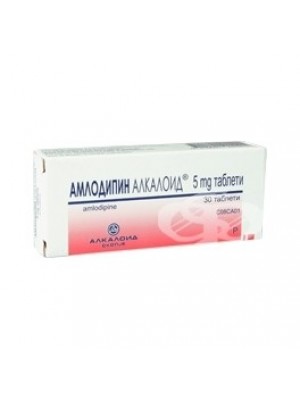
Amlodipine table . 5mg. 30 alkaloids table WHAT amlodipine ..
9.00€
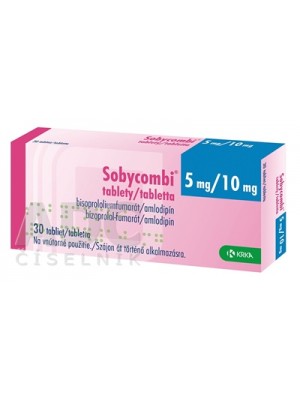
What is Sobycombi and what it is used for
Sobycombi contain..
14.00€
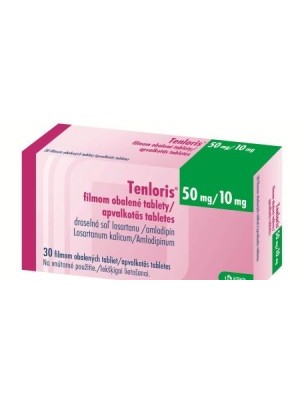
What is Tenloris and what it is used for
Tenloris contains ..
14.00€