Your shopping cart is empty!
Welcome visitor you can login or create an account.
SIMBRINZA suspension 5ml.

Product viewed: 2561


What SIMBRINZA is and what it is used for
SIMBRINZA contains two active substances, brinzolamide and brimonidine tartrate. Brinzolamide belongs to a group of medicines called carbonic anhydrase inhibitors, and brimonidine tartrate belongs to a group of medicines called alpha2 adrenergic receptor agonists. The two substances act together to lower the eye pressure.
SIMBRINZA is used to lower the eye pressure in adult patients (over 18 years of age) who have eye diseases known as glaucoma or ocular hypertension and whose high ocular pressure can not be controlled effectively by just one drug.
2. What you need to know before using SIMBRINZA
Do not use SIMBRINZA:
If you are allergic to brinzolamide or brimonidine tartrate or any of the other ingredients of this medicine (listed in section 6);
If you are allergic to sulphonamides (examples include medicines used to treat diabetes and infections, as well as diuretics (drainage tablets));
If you are taking monoamine oxidase (MAO) inhibitors (examples include medicines to treat depression or Parkinson's disease) or some antidepressants. You should tell your doctor if you are taking any antidepressants;
If you have severe kidney problems;
If you have excessive blood acidity (a condition called hyperchloraemic acidosis);
Infants and young children under the age of 2 years.
Warnings and precautions
Talk to your doctor, optometrist (optician) or pharmacist before using SIMBRINZA if you have or have had in the past:
Liver problems;
A high eye disease called narrow-angle glaucoma;
Dry eye or corneal problems;
Ischemic heart disease (symptoms may include chest pain or tightness, shortness of breath or suffocation), heart failure, high or low blood pressure;
Depression;
Impaired or insufficient blood supply (such as Raynaud's disease or Raynaud's syndrome or cerebrovascular insufficiency).
If you wear soft contact lenses, do not use the drops until the lenses are in your eyes. See section "Carrying Contact Lenses - SIMBRINZA contains Benzalkonium Chloride", below.
Children and adolescents
SIMBRINZA is not recommended for children and adolescents under 18 years of age. It is especially important that the medicine is not used in children under 2 years of age (see section "Do not use SIMBRINZA" above). SIMBRINZA should not be used in children due to the possibility of serious side effects (see section 3).
Other medicines and SIMBRINZA
Tell your doctor, optometrist (optician) or pharmacist if you are taking, have recently taken or might take any other medicines.
SIMBRINZA can affect or be affected by other medicines you are using, including other eye drops to treat glaucoma.
Tell your doctor if you are taking or intend to take any of the following medicines:
Medicines to lower blood pressure;
Heart medicines, including digoxin (used to treat heart disease);
Other medicines for the treatment of glaucoma, also used for the treatment of high disease, known as acetazolamide, metazolamide and dorzolamide;
Medicines that may affect metabolism, such as chlorpromazine, methylphenidate and reserpine;
Anti-viral, antiretroviral drugs (a type of medicine used to treat human immunodeficiency virus (HIV)) or antibiotics;
Anti-fungal or yeast medications;
Monoamine oxidase (MAO) inhibitors or antidepressants, including amitriptyline, nortriptyline, clomipramine, mianserin, venlafaxine and duloxetine;
Anesthetics;
Sedatives, opiates or barbiturates;
Or if the dose of any of your current medicines has changed.
SIMBRINZA with alcohol
If you regularly consume alcohol, talk to your doctor, optometrist (optician) or pharmacist for advice before using this medicine. Simbrinza may be affected by the use of alcohol.
Pregnancy and breastfeeding
If you are pregnant, think you may be pregnant or plan to become pregnant, ask your doctor, optometrist (optician) or pharmacist before taking this medicine.
Women who may become pregnant should use effective contraception during treatment with SIMBRINZA. The use of SIMBRINZA is not recommended during pregnancy. Do not use SIMBRINZA unless clearly prescribed by your doctor.
If you are breast-feeding, SIMBRINZA may pass into breast milk. The use of SIMBRINZA is not recommended during breast-feeding.
Driving and using machines
You may find that your vision is blurred or changed for some time immediately after inserting SIMBRINZA. SIMBRINZA may also cause dizziness, drowsiness or fatigue in some patients.
Do not drive or operate machinery until the symptoms have subsided.
Contact lenses - SIMBRINZA contains benzalkonium chloride
SIMBRINZA contains a preservative (benzalkonium chloride) that can cause eye irritation and is known to change the color of soft contact lenses. Avoid contact of the drug with soft contact lenses. Remove the contact lenses before administration and wait for at least 15 minutes after using SIMBRINZA before putting the contact lenses back.
3. How to use SIMBRINZA
Always use this medicine exactly as your doctor, optometrist (optician) or pharmacist has told you. If you are not sure, ask your doctor, optometrist (optician) or pharmacist.
Use SIMBRINZA only for your eyes. Do not swallow or inject.
The recommended dose is one drop in the affected eye or eyes twice a day. Use at the same time each day.
How to use
Wash your hands before you start.
Shake well before use.
Unscrew the bottle cap. Once the cap is removed, if the protective ring is loose, remove it before using the medicine.
Do not touch the flip-flop with your fingers when opening and closing the bottle. This can pollute the drops.
Keep the bottle pointing down between your thumb and fingers.
Tilt your head back.
Pull down your lower eyelid with clean finger to form a "pocket" between it and the eye.
The drop will fall right in this place.
Approach the top of the bottle near the eye. Do this in front of a mirror if it will make it easy for you.
Do not touch the eye, eyelids, surrounding areas or other surfaces with the tip of the flip-flop. Droplets may become dirty.
Gently push the base of the bottle to drop a drop of SIMBRINZA.
Do not squeeze the bottle: it is specially designed so that only slight pressure is required on the bottom.
To reduce the amount of medicine that may fall into other parts of the body after applying eye drops, close your eye and press gently with your finger at the corner of the eye near your nose for at least 2 minutes.
If you use the drops for both eyes, repeat the steps for the other eye. There is no need to close and shake the bottle before using the drops for the other eye.
Close the bottle well immediately after use.
If you use other eye drops, wait at least 5 minutes between inserting SIMBRINZA and the other drops.
If the drop does not fall into the eye, try again.
If you use more than the necessary dose of SIMBRINZA
Rinse your eye with warm water. Do not put more drops until there is time for the next dose.
Adults who have inadvertently ingested brimonidine-containing medicines have reduced heart rate, decreased blood pressure, which may be followed by increased blood pressure, heart failure, difficulty in breathing, and nervous system effects. If this happens, contact your doctor immediately.
Serious side effects have been reported in children who have accidentally taken medicines containing brimonidine. Signs include drowsiness, looseness, low body temperature, pallor, and difficulty in breathing. If this happens, contact your doctor immediately.
If SIMBRINZA is accidentally swallowed, you should contact your doctor immediately.
If you forget to use SIMBRINZA
Continue with the next dose as planned. Do not put a double dose to make up for the missed dose. Do not use more than one drop in the affected eye (s) twice a day.
If you stop using SIMBRINZA
Do not stop using SIMBRINZA without consulting your doctor. If you stop using SIMBRINZA, the pressure in your eye will not be controlled, which may cause loss of vision.
If you have any further questions on the use of this medicine, ask your doctor, optometrist (optician) or pharmacist.
4. Possible side effects
Like all medicines, this medicine can cause side effects, although not everyone gets them.
If you experience any of the following side effects, please stop using it
If you experience any of the following side effects, please stop using the medicine and seek immediate medical attention as these may be signs of a drug reaction. The frequency of allergic reactions to the medicine is unknown (can not be estimated from the available data).
Severe skin reactions, including rash or redness, or itching of the body or eyes;
Difficulty breathing;
Chest pain, irregular heartbeat.
Contact your doctor immediately if you experience significant fatigue or dizziness.
The following side effects have been reported with SIMBRINZA and other medicines containing brinzolamide or brimonidine alone.
Common side effects (may affect up to 1 in 10 people):
Eye side effects: allergic conjunctivitis (eye allergy), eye irritation, eye pain, eye discomfort, blurred or disturbed vision, redness of the eye;
General side effects: drowsiness, dizziness, poor taste in the mouth, dry mouth.
Uncommon side effects (may affect up to 1 in 100 people):
Eye side effects: eye damage by cell loss, eyelid inflammation, ocular surface deposition, sensitivity to light, swelling of the eye (affecting the cornea or eyelid), dry eye, secretion of the eye, eye watery, Reddening of the eyelid, abnormal or reduced sensation in the eye, tired eyes, decreased vision, double vision, drug particles in the eyes;
General side effects: low blood pressure, chest pain, abnormal heart beat, slow or fast heart rate, palpitations, sleep problems (sleeplessness), nightmares, depression, general weakness, headache, dizziness, nervousness, irritability, general malaise, Dyspnoea, asthma, nasal bleeding, cold symptoms, dry nose or throat, sore throat, sore throat, cough, runny nose, nasal congestion, sneezing, sinus infection, bronchospasm, Indigestion, gas in the gut or bo Stomach, nausea, diarrhea, vomiting, abnormal mouthfeel, increased skin allergic symptoms, rash, abnormal skin sensation, hair loss, itching all over the body, increased levels of chloride in the blood or decreased red blood cell count In the blood, pain, back pain, muscle pain or cramps, kidney pain, such as back pain, decreased libido, impaired sexual function in men.
Very rare (may affect up to 1 in 10,000 people):
Eye side effects: bruised pupils;
General side effects: seizure, increased blood pressure.
Not known (can not be estimated from the available data):
Eye side effects: decreased eyelashes growth;
General side effects: shaking, decreased sensitivity, loss of taste, abnormal liver function tests, blood swelling, swelling of the face, joint pain, frequent urination, chest pain, swelling of the limbs.
Reporting of side effects
If you get any side effects, talk to your doctor, optometrist (optician) or pharmacist. This includes all possible side effects not listed in this leaflet. You can also report side effects directly through the national reporting system. As you report side effects, you can contribute to getting more information about the safety of this medicine.
5. How to store SIMBRINZA
Keep out of the reach and sight of children.
Do not use this medicine after the expiry date which is stated on the bottle and the box after EXP. The expiry date refers to the last day of that month.
This medicine does not require any special storage conditions.
Discard the bottle 4 weeks after the first opening to avoid possible infections and use a new bottle. Write the date of opening the marked box on the carton.
Do not dispose of medicines in the sewer or in the household waste container. Ask your optometrist or pharmacist how to dispose of medicines you no longer use. These measures will help to protect the environment.
6. Package Contents and Additional Information
What SIMBRINZA contains:
The active substances are brinzolamide and brimonidine tartrate. One milliliter of the suspension contains 10 mg brinzolamide and 2 mg brimonidine tartrate equivalent to 1.3 mg brimonidine.
The other ingredients are: benzalkonium chloride (see section 2 "Carrying of contact lenses - SIMBRINZA contains benzalkonium chloride"), propylene glycol, carbomer 974P, boric acid, mannitol, sodium chloride, tyloxapol, hydrochloric acid and / or sodium hydroxide and purified water.
Very small amounts of hydrochloric acid and / or sodium hydroxide are added to maintain a normal level of acidity (pH level).
What SIMBRINZA looks like and contents of the pack
SIMBRINZA eye drops, suspension is a liquid (white to off-white suspension) and comes in a pack containing one or three 5 ml plastic bottles with a screw cap.
Not all pack sizes may be marketed.
Write a review
Your Name:Your Review: Note: HTML is not translated!
Rating: Bad Good
Enter the code in the box below:
Related Products
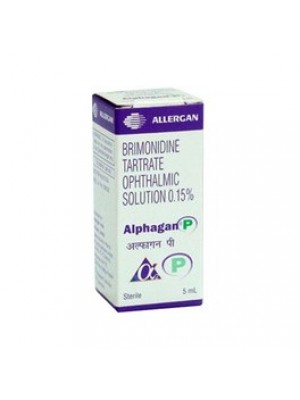
Brimonidine eye drops 2mg. / Ml. 5 ml. WHAT Brimonidine Ta..
14.00€