
Your shopping cart is empty!
Welcome visitor you can login or create an account.
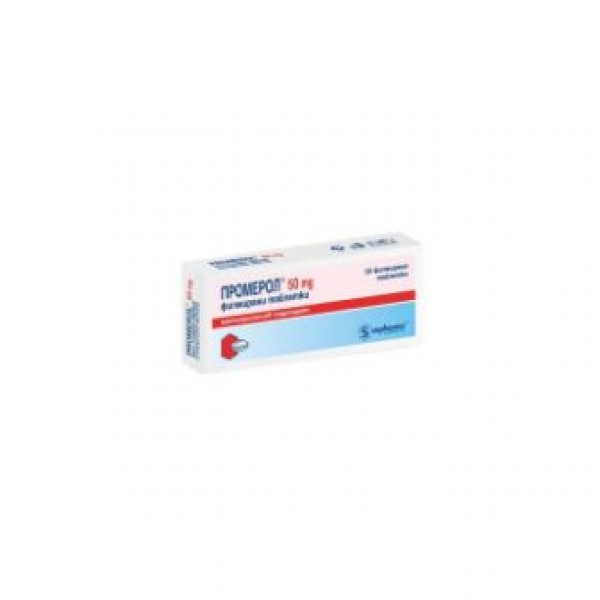
Promerol 50 mg. 30 tablets
Product Code: Promerol 50 mg. 30 tablets
Availability: In Stock
Product viewed: 1


1. What Promerol is and what it is used for
Promerol contains the active substance metoprolol tartrate, which belongs to a group of medicines called beta-blockers. These medicines block the action of the sympathetic nervous system on the heart and blood vessels, resulting in a slowing of the heart rate, a reduction in high blood pressure, and a decrease in the workload on the heart.
Promerol is used for the treatment of arterial hypertension (high blood pressure), angina pectoris, and heart rhythm disorders; for the prevention of recurrence following a heart attack; as an adjunct in the comprehensive treatment of thyrotoxicosis; and for the prevention of migraines.
2. What you need to know before you take Promerol
Do not take Promerol:
if you are allergic (hypersensitive) to the active substance or any of the other ingredients of this medicine (listed in section 6);
if you have severe bronchial asthma or conditions associated with bronchospasm;
if you have conduction disorders (second- or third-degree atrioventricular block or sinoatrial block);
if you have uncontrolled heart failure;
if you have a slow heart rate (pulse below 50 beats per minute) before starting treatment;
if you have sick sinus syndrome;
if you have severe peripheral circulatory disorders;
if you are in cardiogenic shock;
if you have low blood pressure; if you have increased acidity in your blood and tissues;
metoprolol is not used in cases of myocardial infarction (heart attack) accompanied by a heart rate below 50 beats/min or a specific systolic blood pressure level;
Warnings and precautions
if you suffer from bronchitis or other conditions involving bronchospasm;
if you have diabetes and are being treated with insulin or other antidiabetic medications;
if you have an overactive thyroid gland;
if you suffer from a serious kidney or liver disease;
if you have previously experienced allergic reactions to other medications, various substances, foods, or insect stings;
if you are known to have Prinzmetal’s angina, congestive heart failure, or a history of other heart conditions;
in the event of a marked, persistent slowing of the heart rate (bradycardia) during treatment with Promerol;
if you are scheduled to undergo surgery requiring general anesthesia;
if metoprolol is administered to patients with pheochromocytoma, an alpha-blocker must be taken concurrently;
treatment with Promerol must not be stopped abruptly; discontinuation should be gradual and carried out under the supervision of your attending physician.
Other medicines and Promerol
Please inform your doctor or pharmacist if you are taking, or have recently taken, any other medicines, including those obtained without a prescription. The treatment may be affected if you are taking: other medicines for lowering blood pressure or for other heart conditions, such as calcium channel blockers (verapamil), antiarrhythmic agents (quinidine, amiodarone), medicines for the treatment of depression (paroxetine, fluoxetine), anti-tuberculosis drugs (rifampicin), anti-ulcer drugs (cimetidine), inhalational anesthetics, anti-inflammatory agents (indomethacin), other beta-blockers (including eye drops), other substances (alcohol, certain hormones), insulin, or oral antidiabetic agents. If you are taking both clonidine and metoprolol and need to discontinue your treatment with clonidine, the use of metoprolol must be stopped several days before stopping the clonidine.
Promerol with food, drinks, and alcohol
The consumption of alcohol is not recommended during treatment with Promerol, as it may enhance the effects of the alcohol.
Pregnancy and breastfeeding
Consult your doctor or pharmacist before using any medicine.
During pregnancy (especially in the first trimester), metoprolol is prescribed only when strictly indicated—that is, when the expected therapeutic benefit outweighs the potential risk to the fetus or newborn. Treatment with metoprolol should be discontinued 48–72 hours before a planned delivery. If this is not possible, newborns must be carefully monitored for the first 48–72 hours after birth. Metoprolol is excreted in breast milk. The use of Promerol is not recommended during breastfeeding. If use is absolutely necessary, breastfeeding must be discontinued.
Driving and using machines
Promerol may cause dizziness, fatigue, visual disturbances, or drowsiness, especially at the start of treatment or when the dose is increased. Due to these potential effects, caution should be exercised when the medication is used by drivers or operators of machinery, following a careful assessment of the benefit-risk ratio.
Promerol contains lactose
If you have been told by your doctor that you have an intolerance to certain sugars, consult your doctor before taking this product.
3. How to take Promerol
Always take Promerol exactly as your doctor has told you. If you are unsure about anything, ask your doctor or pharmacist.
It is administered orally; the tablets should be swallowed whole with a sufficient amount of water. The score line is intended only to facilitate breaking the tablet for easier swallowing, not for dividing it into equal doses.
The dosage is determined by the attending physician based on the patient's individual needs, starting with a low dose which...
...gradually increased until a therapeutic effect is achieved.
Adults
Arterial hypertension
The initial dose is 50 mg once daily. If necessary, the dose may be increased to 100 mg. For most patients, a daily dose of 100–200 mg, divided into 2 doses, is sufficient to achieve a therapeutic effect.
Angina pectoris (chest pain)
The initial dose is 50 mg daily. If necessary, the dose may be gradually increased to 100–200 mg daily, divided into 2 doses.
Cardiac arrhythmias
An initial dose of 50 mg twice daily. If necessary, the dose may be increased at weekly intervals until a therapeutic effect is achieved.
Long-term treatment following myocardial infarction (prevention of recurrent infarction)
A maintenance dose of 100 mg twice daily for 3 months.
Thyrotoxicosis
The usual dose is 50 mg four times daily.
Migraine prophylaxis
100–200 mg daily, taken in the morning and evening.
Patients over 65 years of age
No dosage adjustment is required. As with other patients, the dose is determined individually by the attending physician.
In patients with severe hepatic impairment, a reduction in the dose may be necessary. Use in children and adolescents
Due to insufficient data regarding the efficacy and safety of Promerol, its use in children is not recommended.
If you have taken more Promerol than you should
If you accidentally take a higher dose than prescribed, go immediately to the nearest emergency department or contact your doctor or pharmacist. In the event of an overdose, some of the following symptoms may occur: slow or irregular heartbeat, shortness of breath, swelling of the ankles, dizziness, chest pain, cold skin, a feeling of tightness in the chest, confusion, anxiety, nausea, vomiting, and—in rare cases—partial or complete loss of consciousness.
If you have missed a dose of Promerol
If you miss a dose, take it as soon as possible. If it is almost time for your next dose, take it as usual. Do not take a double dose to make up for a missed dose. Continue taking the medication as prescribed.
If you have any further questions regarding the use of this medicine, please ask your doctor or pharmacist.
4. Possible side effects
Like all medicines, Promerol can cause side effects, although not everyone experiences them. Adverse reactions are classified by frequency as follows: very common (≥1/10), common (≥ 1/100 to < 1/10), uncommon (≥ 1/1,000 to < 1/100), rare (≥ 1/10,000 to < 1/1,000), very rare (< 1/10,000), and not known (cannot be estimated from the available data).
Likelihood of occurrence in 1 out of 10 patients:
fatigue, headache, dizziness;
reduced heart rate;
drop in blood pressure upon a sudden change in body position (sometimes accompanied by fainting);
shortness of breath during exertion;
nausea, vomiting, abdominal pain.
Likelihood of occurrence in 1 out of 1,000 patients:
drowsiness or insomnia, nightmares;
impaired concentration;
coldness, stiffness, or numbness/tingling in the hands and feet;
depression;
muscle cramps;
heart failure or irregular heartbeat;
fluid retention (edema/swelling);
shortness of breath or wheezing;
diarrhea or constipation;
skin rashes and/or itching.
Likelihood of occurrence in 1 out of 10,000 patients:
weight gain;
hallucinations or personality changes (mood swings, transient amnesia); dryness or inflammation of the eyes, as well as vision problems;
ringing in the ears (tinnitus); hearing impairment at doses exceeding those recommended;
gangrene;
increased nasal discharge, dry mouth;
abnormal liver test results;
skin lesions or increased skin sensitivity to light, worsening of existing psoriasis;
increased sweating, hair loss;
disturbances in libido and potency;
joint pain;
chest pain.
Frequency unknown:
5. How to store Promerol
Store in the original packaging, protected from light, at a temperature below 25°C.
Keep out of the reach of children.
Do not use Promerol after the expiry date stated on the packaging. The expiry date refers to the last day of the month indicated.
Do not dispose of medicines via wastewater or household waste. Ask your pharmacist how to dispose of medicines no longer in use. These measures will help to protect the environment.
6. Contents of the pack and other information
What Promerol contains
The active substance is: metoprolol tartrate, 50 mg or 100 mg.
The other ingredients are: lactose monohydrate; microcrystalline cellulose (type 101); magnesium stearate; povidone K25; croscarmellose sodium; colloidal anhydrous silica; talc. Film coating: partially hydrolyzed polyvinyl alcohol; macrogol 3350; talc; titanium dioxide (E171); red iron oxide (E172) – for the 50 mg strength only; yellow iron oxide (E172) – for the 50 mg strength only; black iron oxide (E172) – for the 50 mg strength only. What Promerol looks like and contents of the pack
Film-coated tablets 50 mg
Round, biconvex, cream-pink film-coated tablets with a score line; diameter 8 mm.
The score line is intended only to facilitate breaking the tablet for easier swallowing, not for dividing it into equal doses.
10 film-coated tablets in a PVC/aluminium foil blister; 3 or 5 blisters per carton, together with a package leaflet.
Film-coated tablets 100 mg
Round, biconvex, white film-coated tablets with a score line; diameter 10 mm. The score line is intended only to facilitate breaking the tablet for easier swallowing, not for dividing it into equal doses.
10 film-coated tablets in a PVC/aluminium foil blister; 2 or 3 blisters per carton, together with a package leaflet.
Write a review
Your Name:Your Review: Note: HTML is not translated!
Rating: Bad Good
Enter the code in the box below: